The National Cherry Blossom Festival in Washington, D.C.
Disclaimer: We are not paid to promote any restaurant, hotel, activity, product, or attraction. All opinions are subjective and based on our personal experience. Your experience may be different.
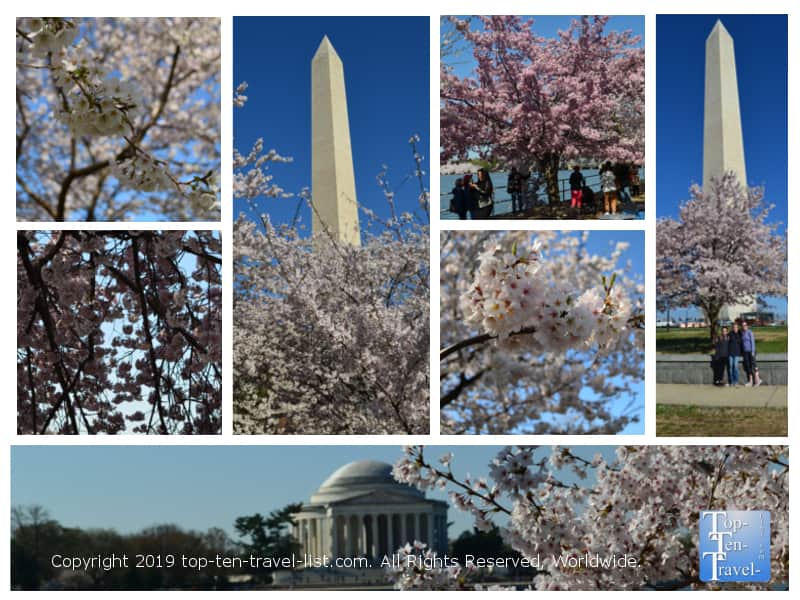
The blooming of the colorful cherry blossoms marks the arrival of spring in “The Nation’s Capital.” Millions of visitors make their way to D.C. every spring to enjoy the annual National Cherry Blossom Festival. Over a 4 week period, a variety of events celebrating both US and Japanese culture are held.
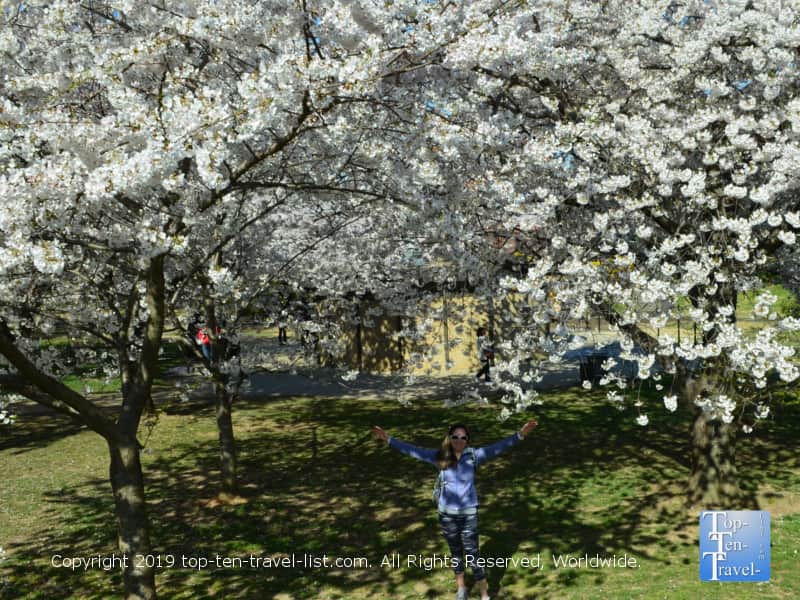
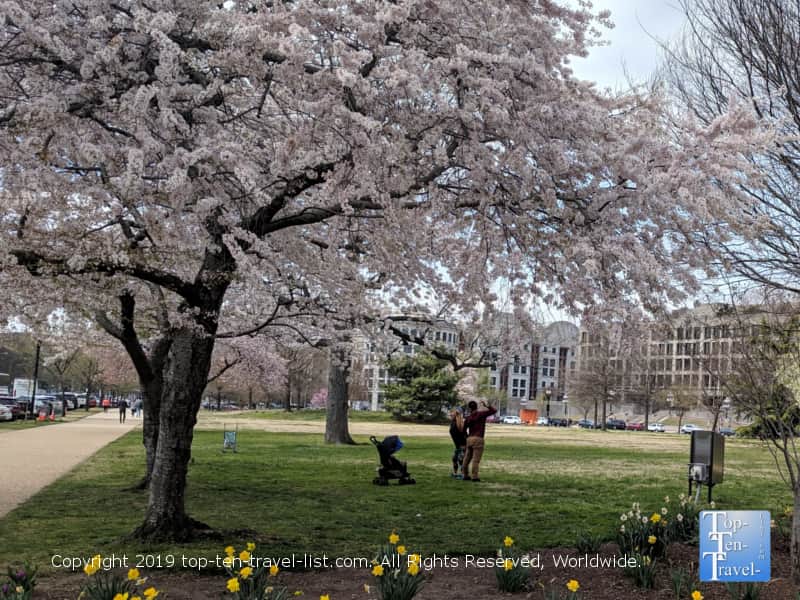
More than 4000 of these trees brighten up the oftentimes dreary spring skies in the Capitol Hill region and beyond. I have visited D.C. many times and Cherry blossom festival is definitely my favorite time to take pics and also enjoy the mild spring temps. I was lucky enough to time my visit just right, so I got to see the wonderful trees at their peak. These beautiful trees provide such a stunning backdrop to the historical monuments.
What are Cherry Blossoms?
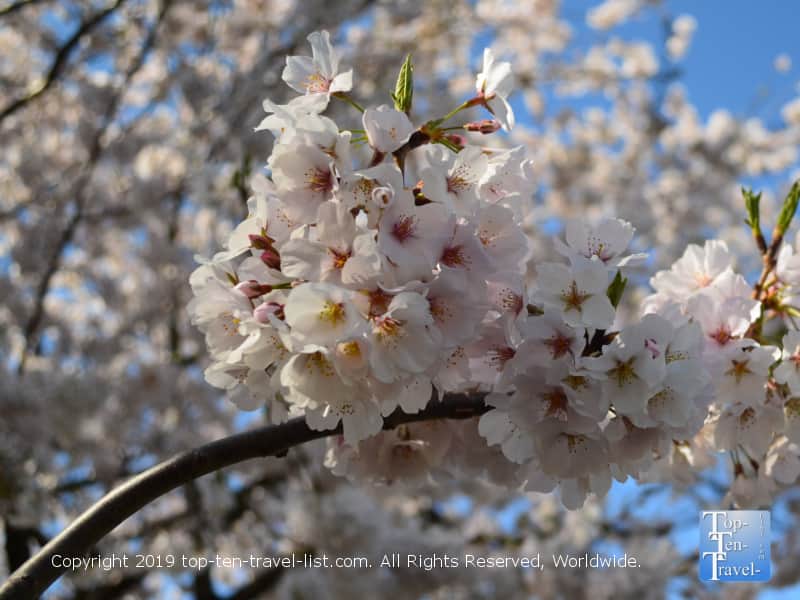
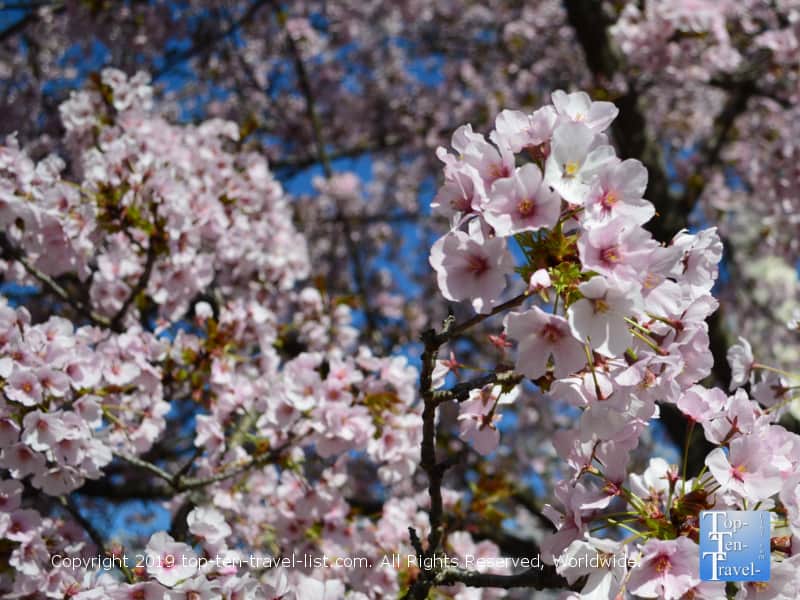
A Cherry Blossom, is a flower of several trees of genus Prunus, especially the Japanese Cherry. Most have a short life span, living only 30 to 40 years. The flowers can range from pure white to different shades of pink during the blooming period, depending on the variety. Peak blooming dates vary based on the region. In the US, April is typically the month when 70% of the flowers of the trees are open.
Where do these trees grow?
Cherry trees are located throughout the Northern hemisphere, especially in temperate regions. Asian countries such as Japan, India, Nepal, China, Korea, and Taiwan, and European countries such as Denmark, Germany, and France are home to the highest concentrations.
No one knows where these trees originate, although recent researchers from The Huffington Post speculate that they originated somewhere in Eurasia near the Himalayans before migrating to Japan.
On an interesting side note, all cherry blossoms produce edible fruit. In numerous D.C. gift shops, you can purchase tea. You will also find handmade cherry blossom soap and perfumes and they smell wonderful!
How they came to the US
In the early 1900’s, Botanist and traveler David Fairchild was instrumental in the ultimate decision to bring these trees to the US. Fairchild traveled around the world and appreciated the beauty of these lovely trees.
At the time, many people believed that Washington D.C. was ugly and could be beautified by adding cherry blossoms to the Tidal Basin area. In 1909, Fairchild gave a series of lectures urging the planting of trees near the Tidal Basin speedway. A newspaper at the time reported “Washington would one day be famous for its flowering cherry trees.” And how right they were with the city seeing millions of tourists each spring! On our spring trip, it was pretty loaded with crowds. Thankfully, these trees are all over the place so you can still obtain some great photos.
You can read more about how these trees came to the US via this National Geographic article.
The trees almost didn’t make it
Due to discrimination faced by Japanese immigrants in the US, relations were not that great in the early 1900’s. In an attempt to improve this relationship, in 1909, President Taft approved of bringing in the cherry trees as a way to possibly sooth relations.
Japan appreciated the opportunity to show off a piece of its’ cultural heritage in the capital city, and the mayor of Tokyo, Yukio Ozaki, began the task of selecting 300 trees (which eventually became 2000). Unfortunately, in 1910, Taft ordered the burning of the trees, as a result of infestation.
The Japanese sent more trees to the US in 1912. In return, the US sent Japan a shipment of native flowering dogwoods, a beautiful tree which blooms bright white.
You can read more about the history of these trees via this NPS article. I always like to read a little background info before arriving at my destination.
Best places to see these trees in the US
In the US, the best places to see these trees include cities located in Hardiness Zone 5-8, with subtropical to temperate climates. You can see hundreds of these trees walking around the University of Washington (Seattle campus). And, the city of Nashville has planted thousands of the trees.
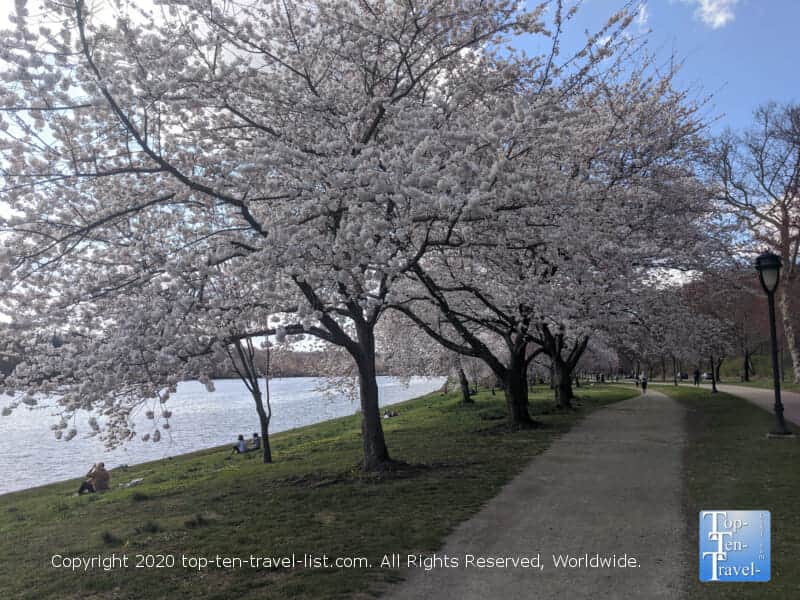
I also enjoyed seeing the cherry blossoms while living in Philly. While the city isn’t mentioned frequently, there really are some gorgeous photo opps every spring, especially in Fairmount Park.
Macon Georgia is actually “the cherry blossom capital of the world,” despite D.C. getting most of the attention. The city is home to more than 350,000 cherry blossom trees. This is 90 times more than D.C.! While Macon might win the numbers game, the Capitol Hill region still easily wins for most scenic destination, with the advantage of monumental buildings comprising the backdrop. Plus, the historical backstory of how the trees came to D.C. is quite interesting.
The national flower of Japan
In Japan, cherry blossoms are the national flower. Called Sakura, the cherry blossoms represent renewal and hope. Hanami, which translates into “cherry blossom viewing,” is an annual festival in Japan where they picnic and enjoy the blooming trees. Throughout Japan, more than 200 species of cherry trees have been found.
To the Japanese, cherry blossoms represent the fragility and beauty of life. The beauty of cherry blossoms can remind us all of life’s beautiful, yet sadly all-too-brief nature.
Cherry blossoms became associated with Japanese kamikaze pilots, who during World War 2, decorated their aircraft with the flowers before going on their suicide missions and dying “like beautiful falling cherry petals for the emperor.”
To the Japanese, cherry blossoms signify “the cycle of life, death, and rebirth, on the one hand, and of productive and reproductive powers, on the other.”
To the Chinese, the cherry blossoms represent love and feminine beauty. Japanese monk Kukai donated many of the trees found in China’s most famous cherry blossom parks. In 806 BC, Kukai gave the trees as a gift to commemorate his time at the Qinglong Temple – Xi’an.
History of the National Cherry Blossom Festival
2026 marks the 91st anniversary of the National Cherry Blossom festival, which began in 1935. The event commemorates the 1912 Japanese gift of 3000 trees to the city, and also the friendship between Japanese and the US. More than 1.5 million people come out to D.C. to enjoy 4 weeks of diverse events, which includes films, a parade, a 5k, fireworks, street festivals and much more.
For more info on the festival, check out the Washington D.C. guide to cherry blossoms.
Types of Cherry Blossoms found in D.C.
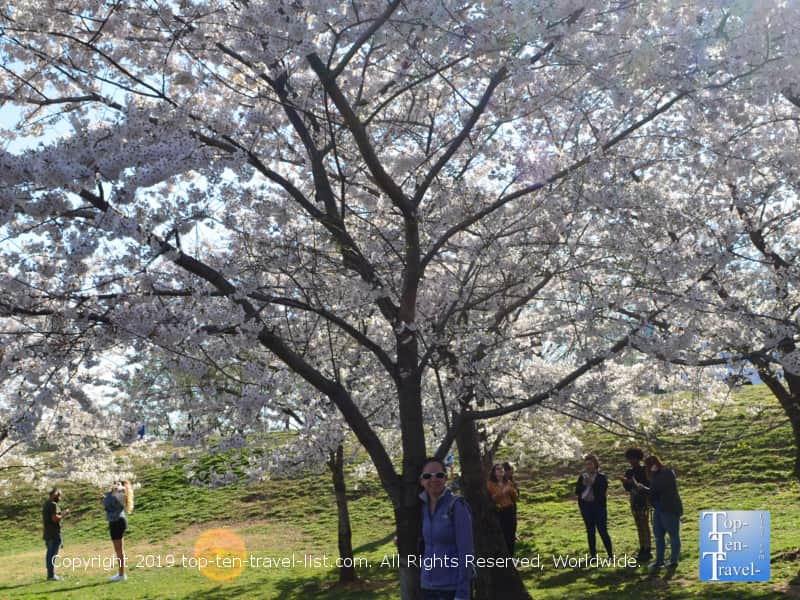
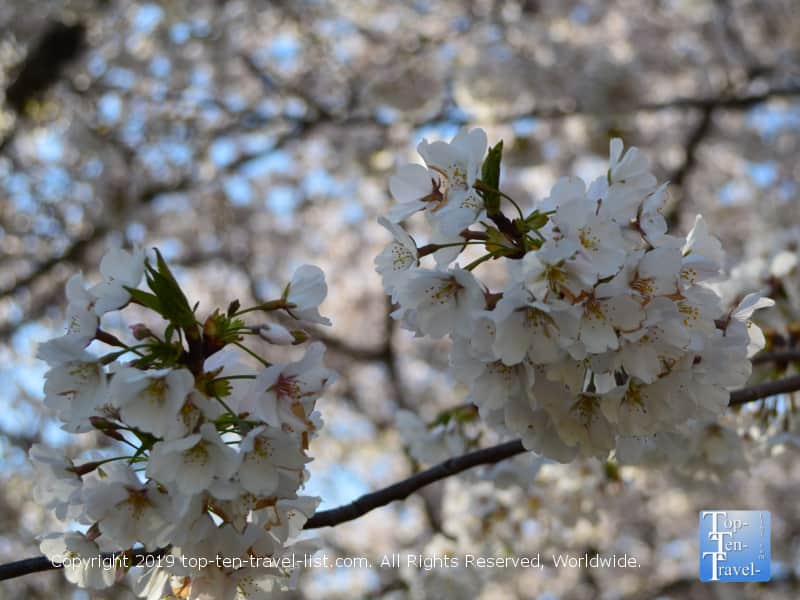
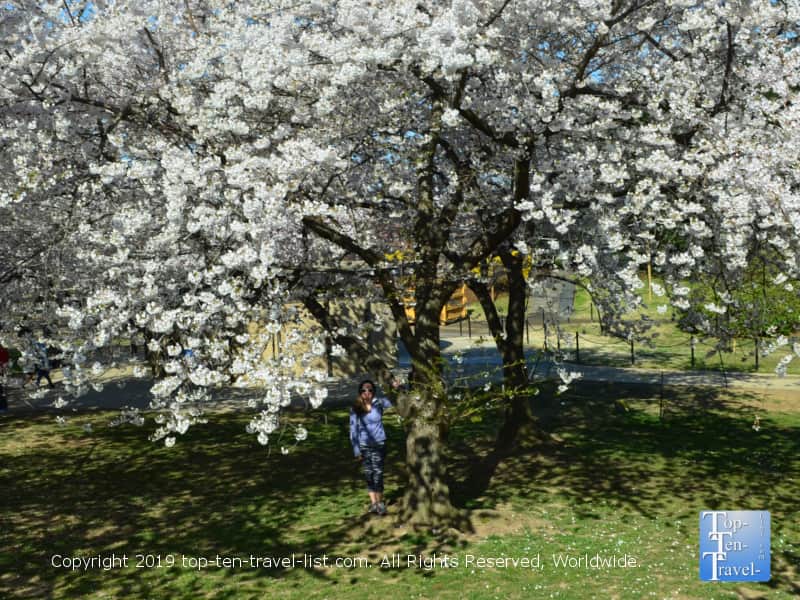
In D.C., the Yoshino cherry tree is most commonly found. The Yosino comprises about 70% of the total population. The flowers on the Yoshino are pure white. The trees grow to a height of just 20-30 feet and only bloom for a week before losing their leaves.
Cherry tree varieties with pink colored petals found in D.C. include the Kwanzan Cherry (over 400 found at Potomac Park), the Sargent Cherry (found at Potomac and Tidal Basin), and the Fugenzo Cherry tree (found at Tidal Basin).
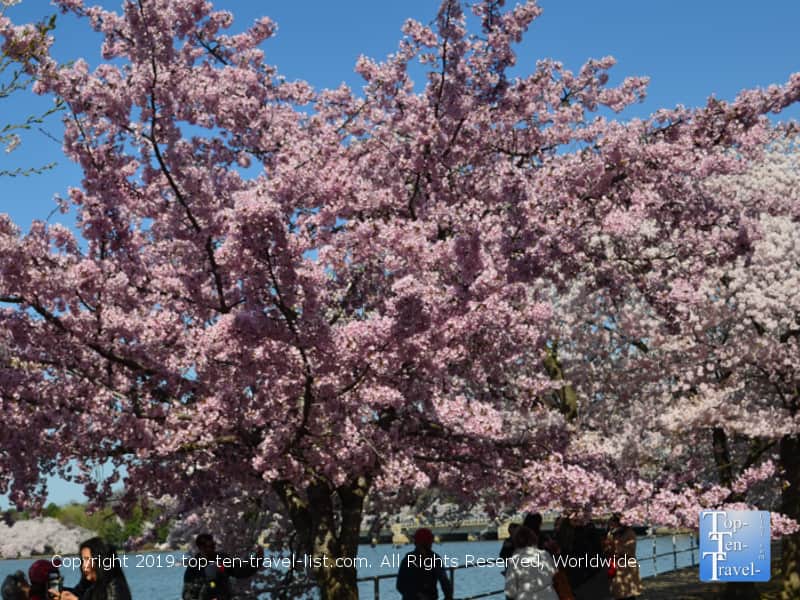
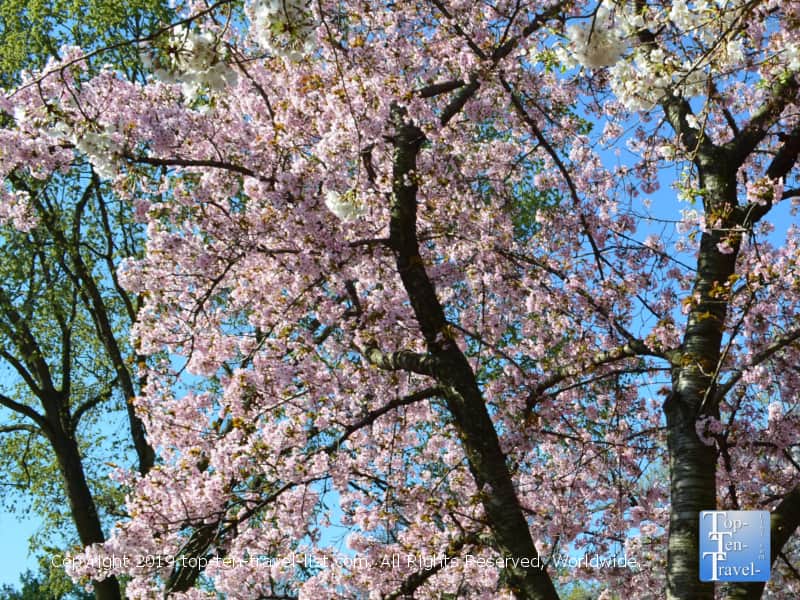
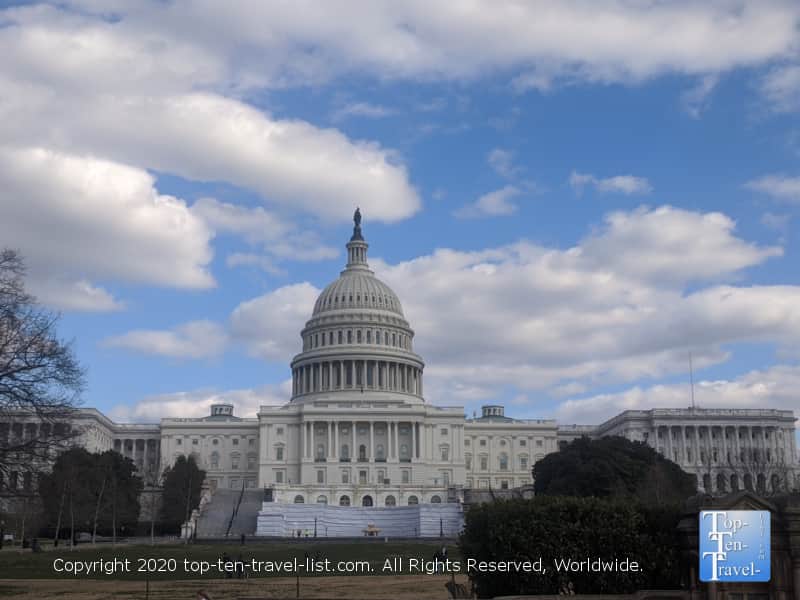
If you are able to time your visit just right during the peak blooming season, you will see these beautiful trees all around the Capitol Hill area. The trees provide a lovely backdrop for all your touristy monument photos. More on the best spots to see a high concentration of these trees later on.
Seeing the petals flutter off the trees in the wind is as awe-inspiring as seeing the trees blooming. It’s quite sad as the flowers are so beautiful, yet also mesmerizing all the same as the petals seem to romantically flutter about in the wind before covering the ground with beautiful pink and white hues.
Peak blooming time
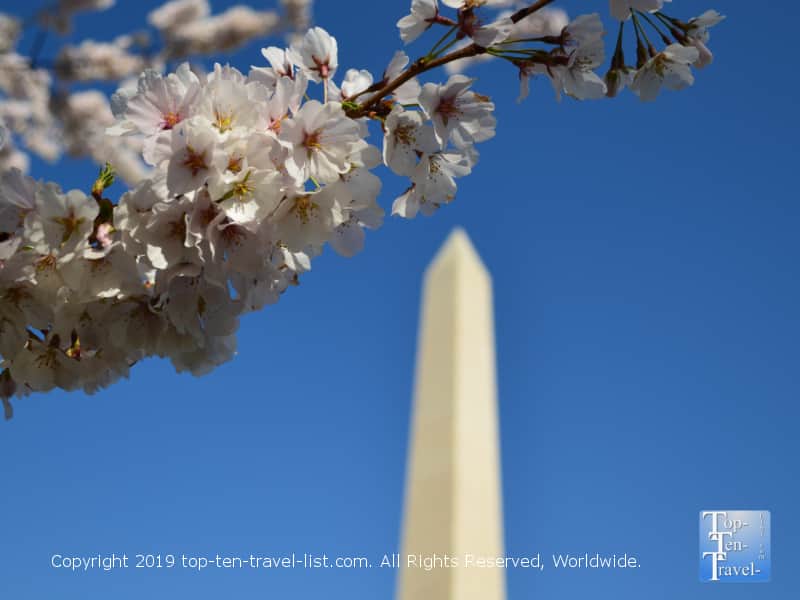
The blooming period is very short so it takes expert planning (and a bit of luck) to time your visit just right. April 1st was the predicted bloom the year I attended this festival. The average date each year is April 4th, with extreme weather conditions moving the date earlier or later. You have about a week post-bloom to enjoy the trees. Of course, adverse weather conditions can abruptly cause the trees to lose flowers faster.
Sadly, the beautiful flowers make such a brief appearance that it is near impossible to time your visit just right. Consider yourself lucky if you manage to time your trip perfectly!
“Due to their short bloom time, Sakura blossoms are a metaphor for life itself: beautiful yet fleeing. You’ll realize when you’re as old as me to hang on to the good times because they won’t last forever.”
The wise words of Shannon Mullen, Canadian writer
The earliest D.C. blooming period was March 15th, 1990, and the latest was April 18th, 1958. As you can see, it’s really hard to predict the exact date. In fact, park staff cannot predict the bloom more than 10 days in advance. Unfortunately, you only have 2 options. One, you can book your trip around average peak bloom. Two, you can wait until the exact prediction, and thus, pay more for hotel and flights due to last minute booking.
Your best best is to keep up to date by checking the National Park Service Bloom watch.
Best places to take pics around D.C.
Tidal Basin Park
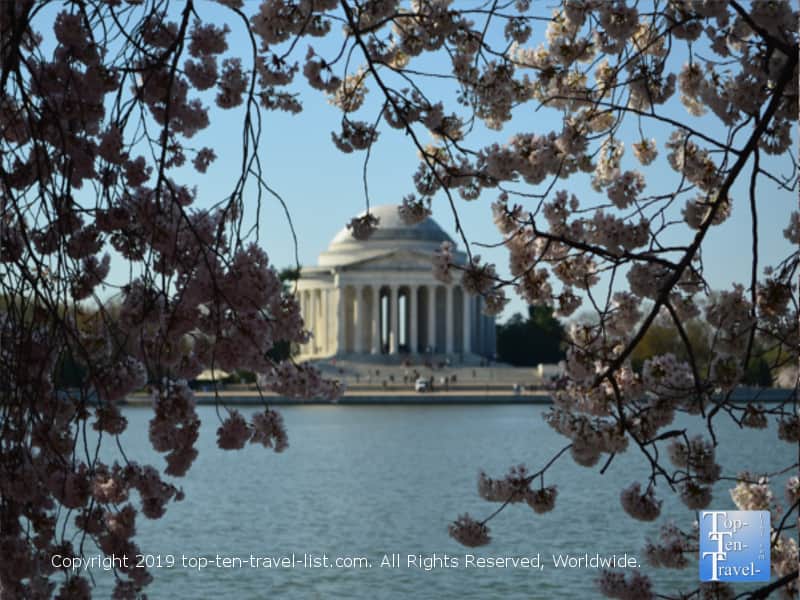
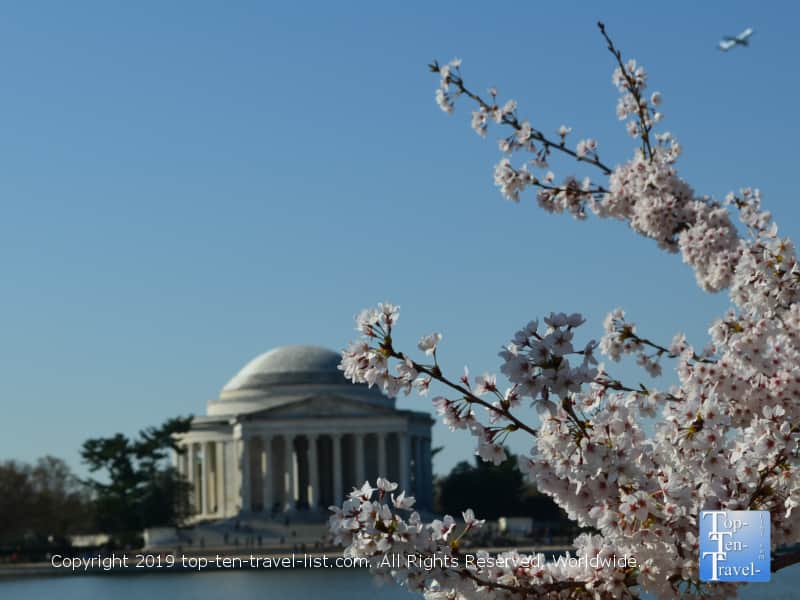
Tidal Basin, a reservoir between the Washington Channel & the Potomac River, is part of West Potomac Park. From here, you can see numerous historic sights including the Jefferson Memorial, the FDR memorial, and numerous others via the 2 mile Tidal Basin Loop trail.
Tidal Basin is the most popular place in the city to see lots of these gorgeous trees – over 3700 to be exact. Although it’s usually pretty busy here, there are some really nice pictures to take with the scenic water backdrop and the Jefferson Memorial in view.
The Washington Monument
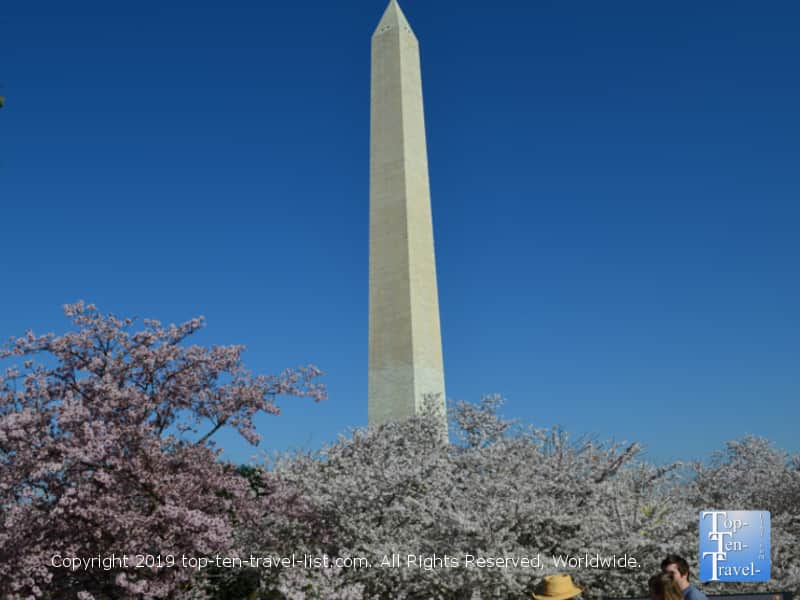
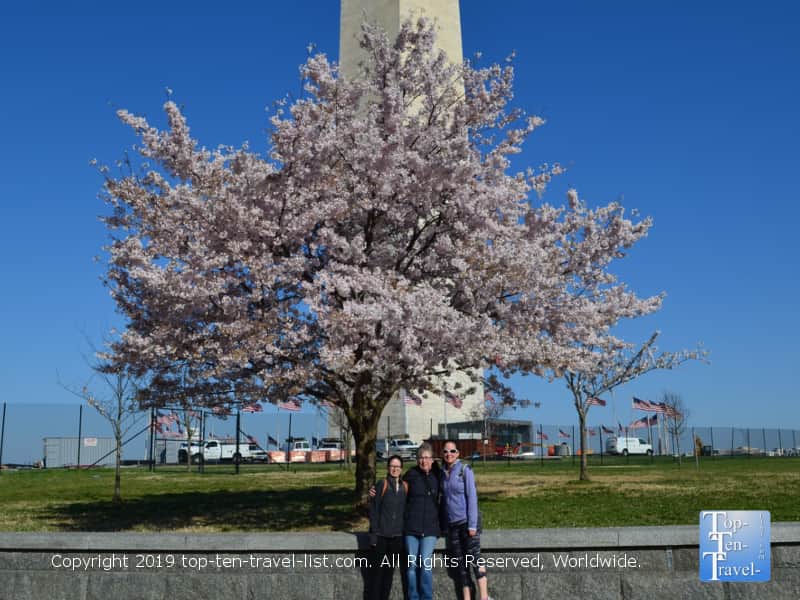
The grandiose 555 foot tall Washington Monument is a sight to behold anytime of the year, and even more fantastic when surrounded by the gorgeous cherry blossoms in bloom. Springtime near the monument is one of my favorite photo opportunities in the entire city.
Georgetown
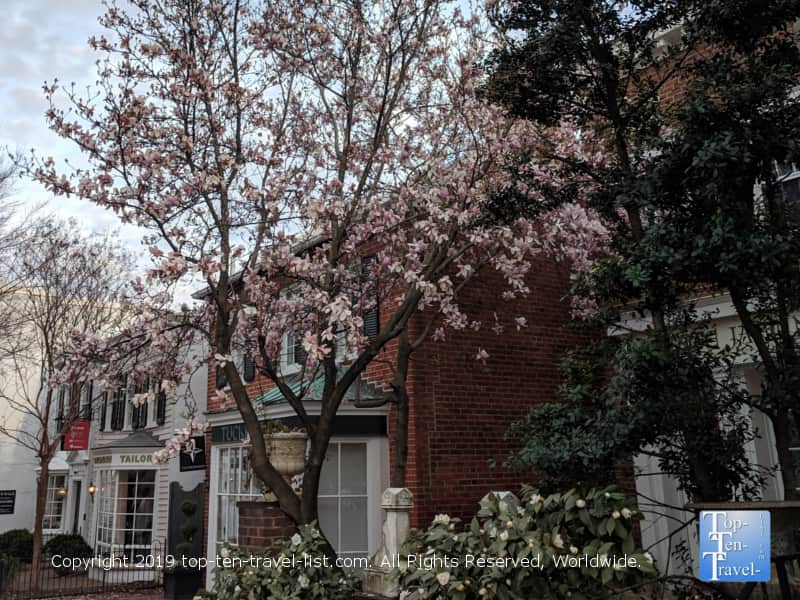
Georgetown is a gorgeous, charming neighborhood of D.C. The cobblestone streets and historic charm make this a great daytrip for architecture lovers. A stroll around this historic neighborhood is a great way to enjoy the scenery sans all the crowds at Tidal Basin.
Although you will not see nearly as many trees here, the quaint atmosphere, gorgeous architecture, and historical charm make the ride over here more than worthy of the small Lyft/Uber fee.
In downtown Georgetown, you will find an abundance of specialty shops and great restaurants. It’s a great place to shop and dine local. Il Canale is a wonderful local Italian restaurant – their ravoli and apps are delicious! A stroll around Georgetown University, widely considered one of the most gorgeous college campuses, is a must-see if you have the time. Harry Potter fans will enjoy strolling past the exotic Gothic architecture which is reminiscent of Hogwarts.
Arlington National Cemetery
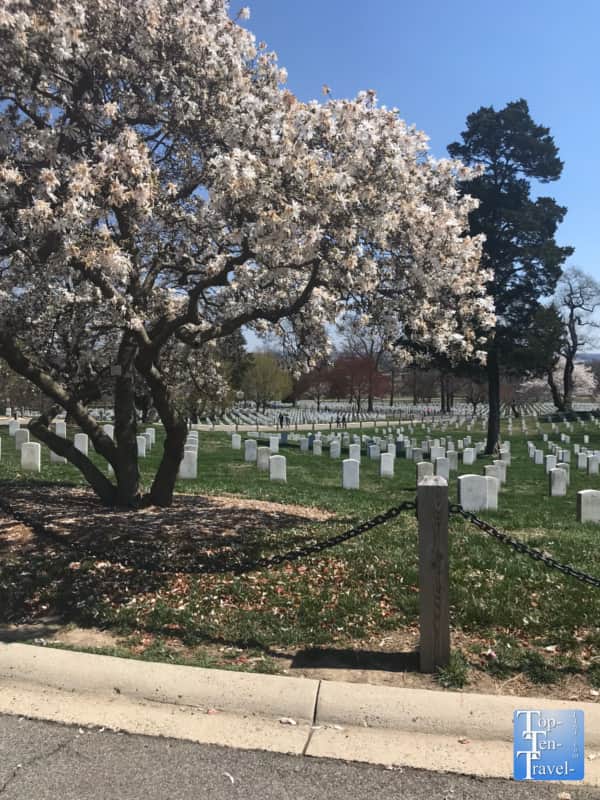
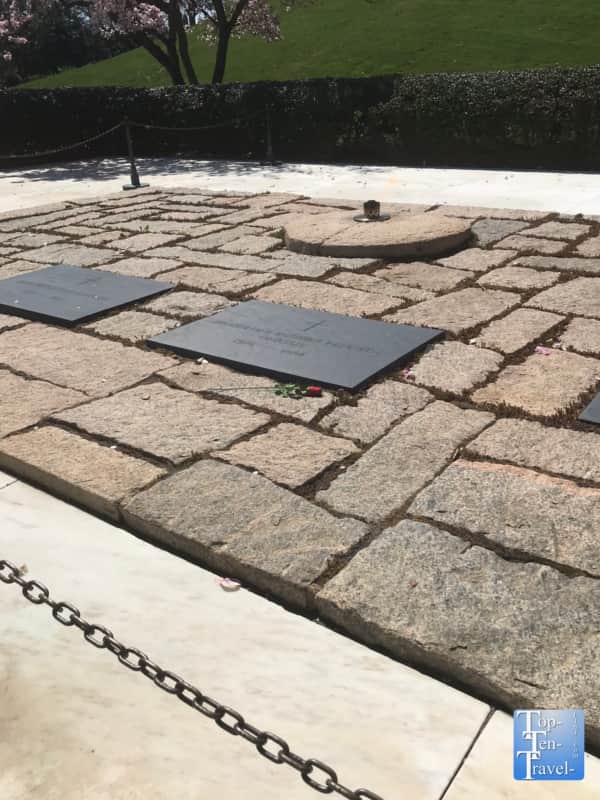
Arlington National Cemetery is a popular D.C. daytrip destination, most famous for being the final resting place of Presidents William Taft and John F. Kennedy. There are 400 of these trees on the grounds of this historic US cemetery.
Although it’s a bit of a hassle to get to as it is a 10 minute drive out of the city, it’s well worth a visit for history and/or military buffs. Besides the Yoshino variety found around the Capitol, Arlington is also home to the very beautiful Weeping Higan cherry tree.
Additional info
As an added side note, it is illegal to to climb the trees or pick a cherry blossom. Don’t be tempted to take one home with you as it is considered vandalism to federal property in D.C.
In short, every nature lover, photographer, and/or history buff should plan a visit here over the spring to see the cherry blossoms (at least once).
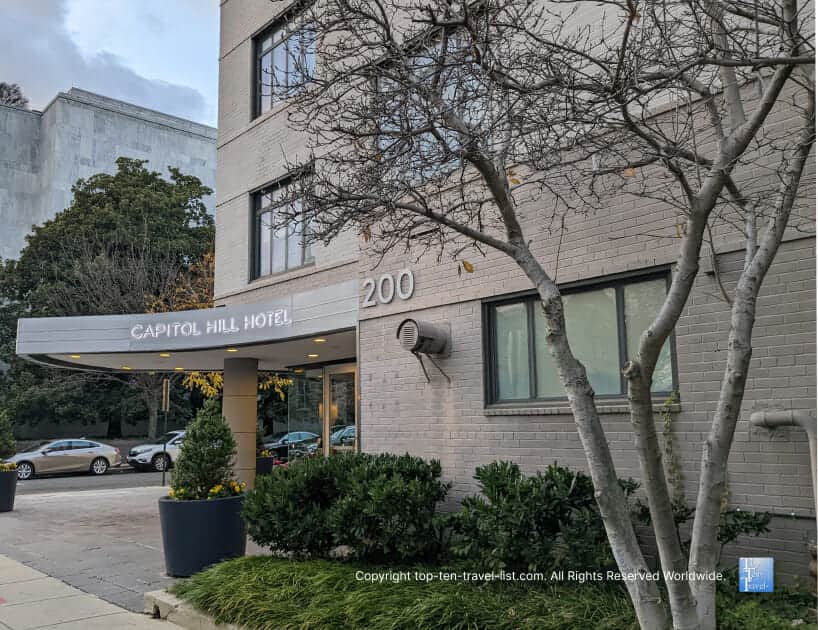
Where to stay?: I recommend the Capitol Hill Hotel. This local gem is walkable to almost all of attractions, moderately priced, and offers a number of amenities including a free breakfast and bike rentals.

What else to do?: Check out my top attractions guide for the best things to do within a limited time frame. You will definitely want to plan some time to check out all the wonderful free Smithsonian museums.