Exploring Walnut Canyon National Monument in Northern Arizona
Disclaimer: We are not paid to promote any restaurant, hotel, activity, product, or attraction. All opinions are subjective and based on our personal experience. Your experience may be different.
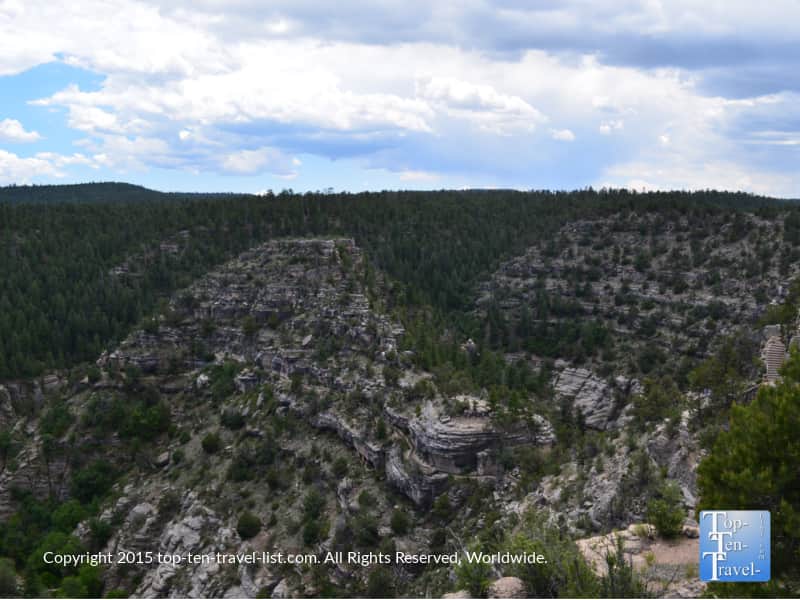
Walnut Canyon National Monument is one of my favorite historical sites I have visited since moving to Northern Arizona. It’s one of 7 easily accessible marvels of nature which has earned Flagstaff the nickname, “the city of seven wonders.” I have been taking so many incredible daytrips throughout the northern part of this state. There are so many historical natural wonders which are 100% bucket list contenders.
Visiting is both an educational and fitness experience, and thus, I recommend all history buffs and hikers to make plans in their itinerary for this ancient site. During your time here you will be able to explore numerous cliff dwellings used over a thousand years ago by the Sinagua tribes.
The Singua once inhabited the canyon
We learned a lot of new info by starting our visit off at the visitor center. Historic artifacts have shown that archaic people occupied the canyon over a thousand years ago. The first permanent settlers, known as the Sinagua (from the Spanish name for the region meaning “mountains without water”), lived in the area from approximately 600 to 1400 AD.
Although they left behind no written history, archaeologists have learned about their living situations through various means such as exploring the rimtop and canyon cliff dwelling sites, studying left behind objects such as tools and ornaments, and comparing the Sinagua to other ancient peoples of the Southwest.
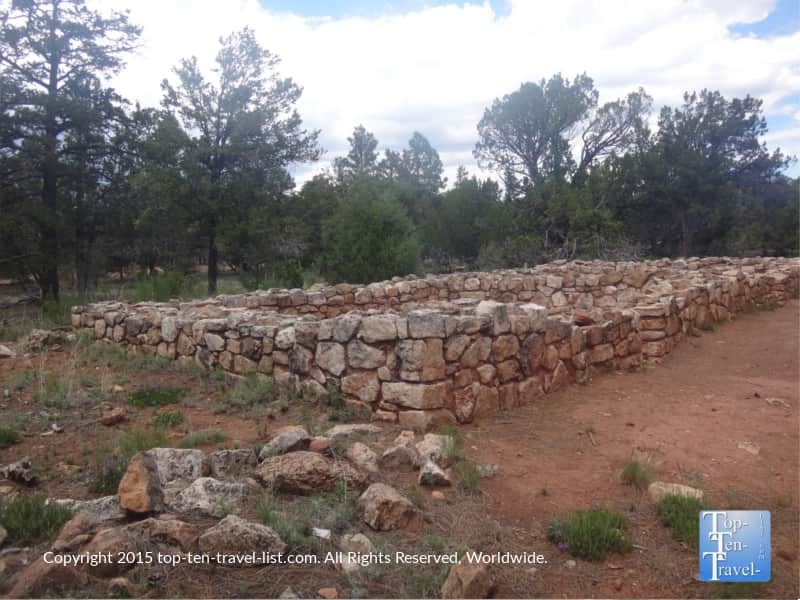
The canyon rim was used primarily for farming, mainly drought resistant crops like corn and beans. More than 20 varieties of plants, used for food and/or medicine, still exist today. These include elderberry, yucca, and wild grape. If you have ever looked towards natural remedies during a bad cold or flu, you have probably tried elderberry tea or syrup at some point. Homes were usually built on cliff sides, which faced the south and east. This was done to take advantage of the sunlight.
This canyon, historical significance aside, is such an amazing site. It is over 60 million years old and it’s massive at 20 feet long, 400 feet deep, and 1/4 mile wide. As you hike the trails, you will notice a diverse assortment of plant life including ponderosa pine, juniper woodland, upper Sonoran desert, mixed conifer forest, and riparian bottomlands. It’s surprisingly lush and green for a desert.

Read more about Walnut’s history or better yet explore via embarking on one of the canyon’s amazing hiking trails.
Hiking at the Canyon

There are 2 trails to enjoy the beautiful scenery and explore history: The Rim trail and the Island trail. Because of the short distance, I would say it is best to combine both trails into a single visit. The Island Trail is a bit more challenging especially with the rough staircase climb. I would recommend anyone with bad knees or joint problems to skip this trail and opt for the Rim where you will still see a pueblo.

The Rim Trail follows a short, easy 0.7 mile course along the canyon’s edge. You will pass beautiful ponderosa pine forests and there are some nice views into the canyon. It should only take about a half hour max. There are 2 scenic overlooks to enjoy the beautiful views and you might even get a hint of the San Francisco Peaks on a clear day. This trail is very easy and suitable for almost everyone. The Island Trail is not accessible, while the Rim Trail is wheelchair friendly until the first overlook.
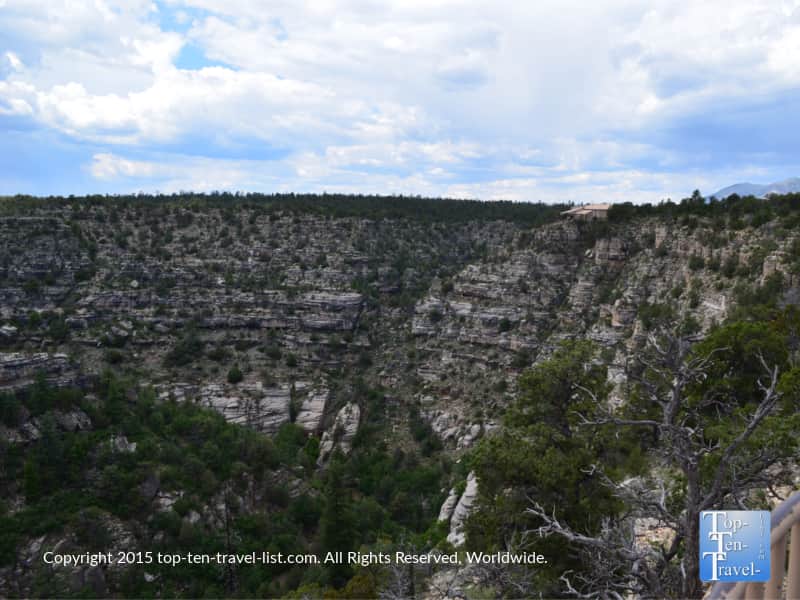
The mesmerizing Island Trail: a 273 step scenic climb
The Island Trail is a challenging trek, with a 273 step downhill and uphill climb on a steep staircase. My lungs and legs got in a great workout despite the fact that I hike almost every weekend. Climbing up stairs always feels hard to me no matter how many times I do it.
The trail could be rough for anyone not accustomed to the high elevation (7000 feet). The air is thinner this high up so you may run out of breath faster especially going up so many stairs. Experts recommend taking it easy, drinking extra water, and following high altitude safety precautions.
The views are incredible, so if you are up for it, go for it, just be sure to just take plenty of breaks along the way. You will see tourists of all different fitness levels out here enjoying the tremendous views. I recommend not focusing on how many times you have to stop, rather that you complete the journey!
Check out these fabulous views!


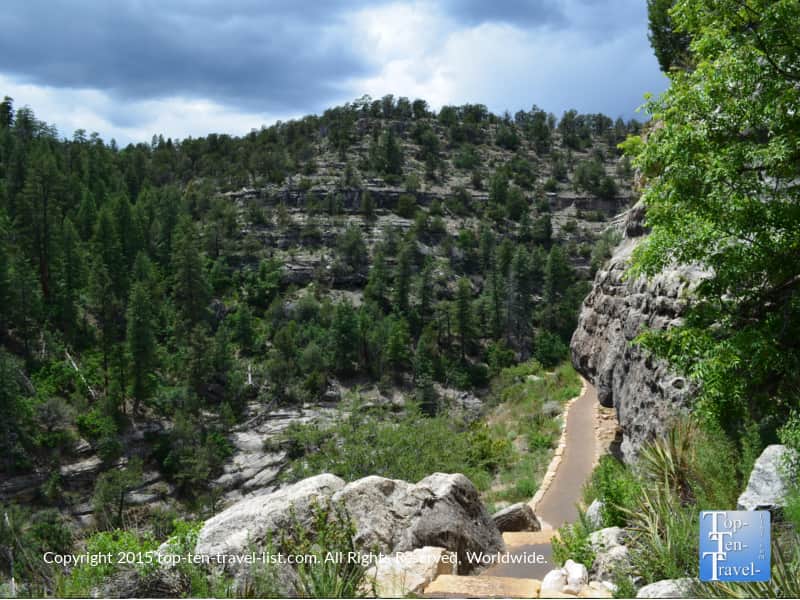
The Island trail is about 2 miles round-trip (it should take about an hour-1.5 total) and consists of breathtaking canyon scenery, including 25 cliff dwellings. It’s crazy to walk past these small cliff homes and image ancient people living in them. They seem to have held us pretty well and I am surprised that they are still in such good condition with all the monsoons this area sees. The storms in this area can get pretty scary (I’ve been caught in a few myself hiking), and the park recommends taking cover in a cliff until the lighting passes.
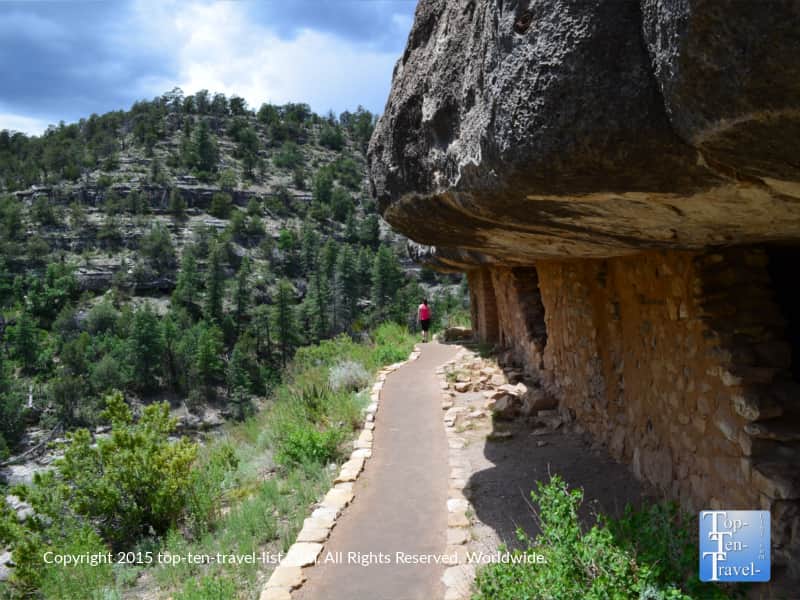
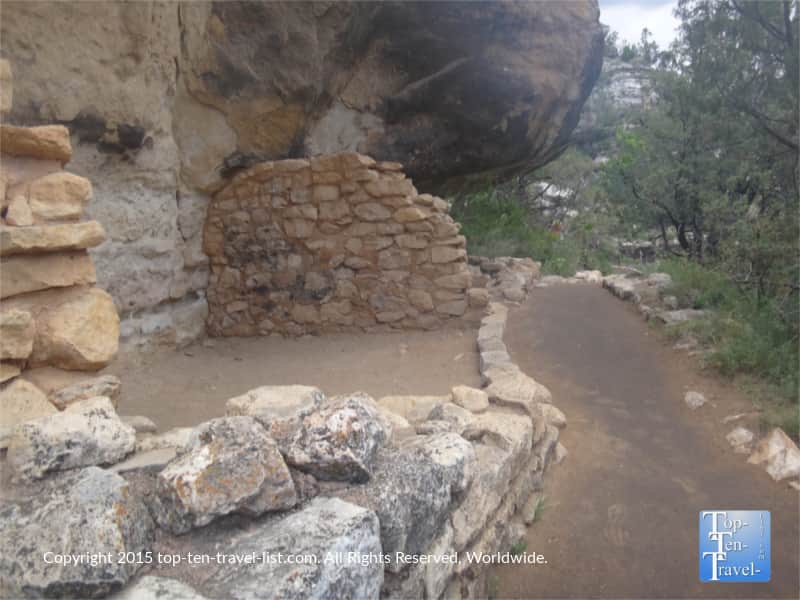
As you make your way along the mile long trail, you will come across diverse plant life, from Upper Sonoran desert natives (cactus and yucca) to pretty mixed conifer forests. It’s really neat to be able to travel through such diverse scenery in such a short period of time.
Overall, both trails feature wonderful views and are well worth the short walk if you have the fitness ability. Both trails combined come in at under 2 miles – it took us around 2 hours to hike both and that is with stopping for a lot of photos.
Wildlife at the canyon
The diverse vegetation and rocky terrain supports a diverse group of wildlife, with coyotes, pronghorn antelope, wild turkeys, mountain lions, black bears, and elk listed as some of the interesting sightings in the area. Wildlife will vary depending on different environmental factors.
More likely than not, you will not see any major animals like bears and mountain lions unless you visit early in the morning during the off season. And even then, it’s rare to see any animals out and about. I’ve visited on many occasions and have not seen anything thus far. You just have to get lucky (or unlucky if the thought of seeing bears and lions scares you).
Tips for a great visit
- Wear sunblock – there isn’t much shade available! It’s easier to get burnt this high up.
- Wear your hiking/gym shoes as you will be climbing both uphill and downhill. You will definitely work up a sweat!
- Be prepared to go down and back up 273 steps. It’s a leg workout for sure!
- Pack a picnic lunch. There are plenty of shady areas to enjoy your meal out in nature after your hikes.
- Don’t hike this trail until you are acclimated to the high altitude. Experts recommend adjusting in town for a few days beforehand. Hiking 2 miles at high elevation is a much harder experience.
- Bring a water bottle. You should always carry water when hiking, especially in dry, high altitude areas.
- Hike in the morning hours during the summer months to avoid the intense, dry afternoon heat and sunshine. It is cooler than Phoenix, but still quite hot in the direct sunlight.
- Check out my full guide to all the wonderful sights in Northern Arizona. This is just one of a seemingly never ending list.
Address, Hours, & Admission Fees
Location: 3 Walnut Canyon Rd, Flagstaff, AZ 86004
Hours: 9am-5pm, 7 days a week. The park is closed Dec. 24th, Dec. 25th, and Jan 1st. The Island Trail closes at 4.
Entry is $15 per person or $25 per vehicle. An annual pass is $45 and thus easily pays for itself in less than 2 visits. This is a great deal if you live in the region as you also get to access Sunset Crater and Wupatki National Monument (both highly worthy of a visit in my opinion esp if you are into history). Pricing current as of 2025.
Pet friendly: Leashed dogs are only welcome on the Rim trail, not on the Island or in the visitors center.