Attraction of the Week: The Smithsonian National Museum of Natural History
Disclaimer: We are not paid to promote any restaurant, hotel, activity, product, or attraction. All opinions are subjective and based on our personal experience. Your experience may be different.
Visiting all the wonderful museums is by far my favorite thing to do on any trip to D.C. The National Mall is easily the top tourist attraction to add to your bucket list. A wonderful combination of museums, monuments, memorials, and cultural attractions, are all jam packed within a 2 mile span. For history buffs, there is so much to see and explore including more than a dozen free museums. I recommend The Natural History museum as a nice family friendly choice.
There are 19 Smithsonian museums in D.C., 11 of which are conveniently located in The National Mall. This museum has long been a favorite of tourists. In 2024, this museum saw almost 4 million visitors according. I’ve seen a line wrapped around the outside at times, so a weekday visit outside of the prime summer and cherry blossom season would definitely be my top choice.
I recommend getting to this one right at opening so you can bypass some of the afternoon crowds. Also, booking a hotel within walking distance is a great idea as you can get out there early and explore (I recommend the Capitol Hill Hotel for affordability and convenience).

What to do & see
First off, this place is huge, as are all D.C. museums. The space is just so much more massive than you would expect. Over 126 million specimens and cultural artifacts are on display. It can be quite overwhelming when you first walk in amongst the throng of crowds.
I recommend scanning the list of natural history exhibits online in advance. Concentrate on getting to your top attractions first, and then, see if you have extra time for any other exhibits. With so many interesting museums in the region, it’s best to budget your time! Of course, if you are planning a longer stay (which I recommend), I would advise scheduling just 1 or 2 museums each day.
For those limited on time, here are a few of favorite exhibits that I recommend budgeting time for!
African Bush elephant
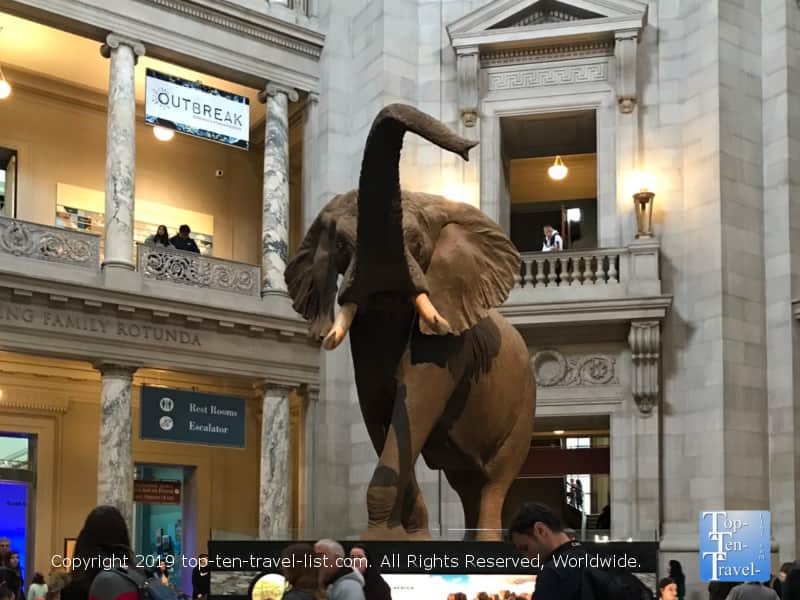
One of the most recognizable sights at this Smithsonian is the iconic 11 ton, 13 foot tall African elephant named Henry. Henry, the largest elephant ever recorded, continues to wow visitors from all over, as he has since his debut in 1959. I was definitely impressed!
At this exhibit, you will learn more about African elephants, including poaching threats. Henry greets you in the rotuna as soon as you enter, so it’s quite impossible to miss. Many tourists will be congregated around this area!
The history of taxidermy

All the animals at the museum look incredibly lifelike and real, because they are real. Taxidermy is the practice of preserving an animal’s body through stuffing or mounting. To be honest, it creeps me out a bit. Many believe the ancient Egyptians actually started the practice. Although the Egyptians preserved cats & dogs, taxidermy as we know it today began to thrive in 19th century England.
Natural history museums began using taxidermy as a way to research animals. Unfortunately, in the past, big game hunters donated the majority of the animals. Today, most donations come from zoos or private collectors. Taxidermy is a bit strange to many, although I also find it incredible that museums were able to preserve historically important animals. In a time before internet and TV, these displays were quite educational and extremely popular.
Hall of Mammals
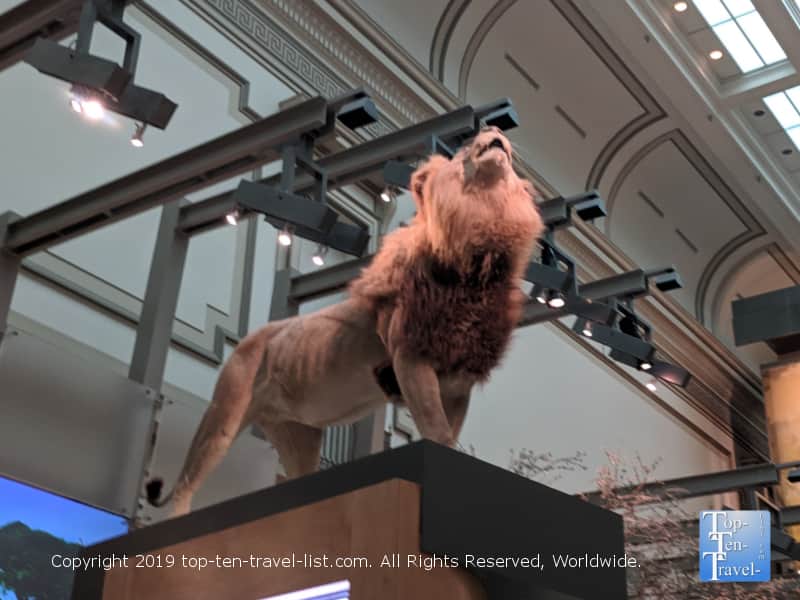
In 2003, the Hall of Mammals replaced an old 1950’s style exhibit which featured many dioramas. Dioramas were popular glass enclosures which spotlighted recreated scenes from the wild. Staff placed taxidermied animals in scenes resembling their natural environment. Back in the days when these dioramas were popular, museums would employ a full staff of taxidermists. On a side note, one museum that still has an amazing wildlife diorama display is The Carnegie in Pittsburgh. I recommend checking it out if you still love these old school displays.
At one time in history, these animals served an educational purpose for the millions of visitors wanting to learn more about these animals. This was back in the days before we had National Geographic and the Animal Planet. “They were the virtual reality machines of their age, the pre-television era, says David Skelley director of the Yale Peabody Museum of Natural History.
In recent years, removal of these dioramas became the norm at many museums. Visitors saw these displays as outdated, and began to demand more modern tech friendly alternatives. In 2003, The Smithsonian removed most of these dated dioramas in favor of a new exhibit called the Hall of Mammals. This new section focused on displaying the animals in a scientific manner, emphasizing all the features mammals have in common.
Most of the animals for this exhibit came from zoos or private taxidermy collections. The last taxidermist retired from the Smithsonian in 2010. Strangely enough, a dated practice has once again has become popular. Museums today are seeing a resurgence in the popularity of taxidermy, which is now seen by many as a valuable throwback to the past. You can read more about the history of taxidermy at the Smithsonian for more details.
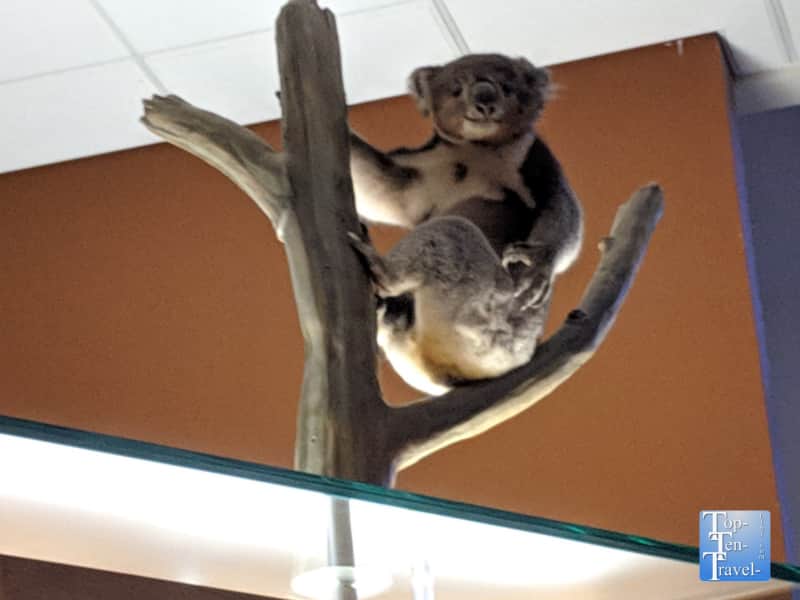
Within this exhibit, you will see over 270 animals, some of which are now rare or extinct. Below are a few pictures from this exhibit.

Hall of Fossils
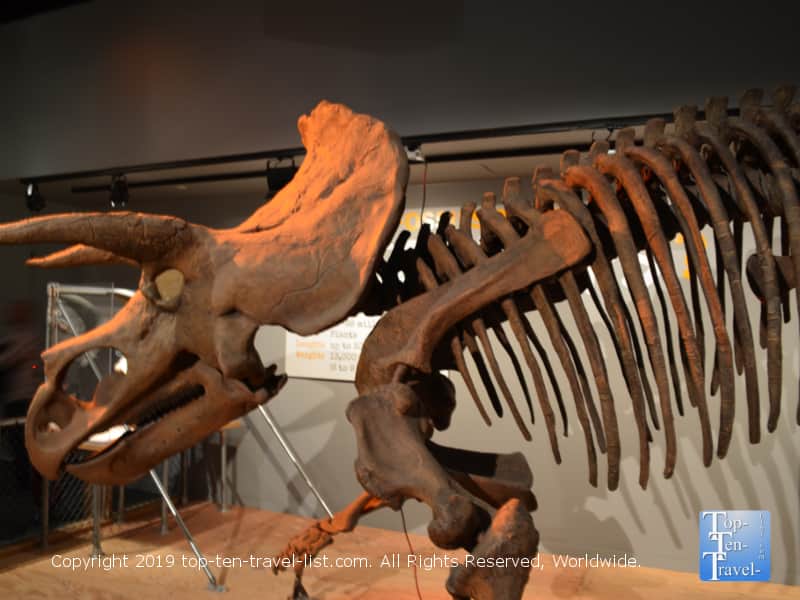
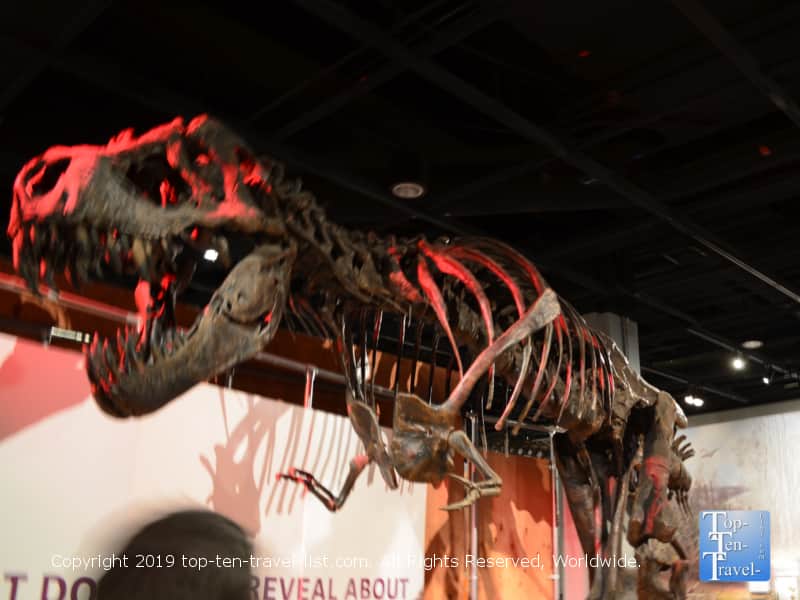
In this exhibit, you will be able to explore over 700 ancient fossils. You will take a step back in time 4.6 billion years ago through various ecosystems, exploring the evolution of various animals and plants. Dinosaur lovers will love the Tyrannosaurus rex and Diplodocus fossils. As a fan of dinosaurs, I loved this exhibit. It’s not quite on par with Chicago’s iconic Field Museum (in my opinion) but still fantastic.
Eternal Life in Anicent Egypt
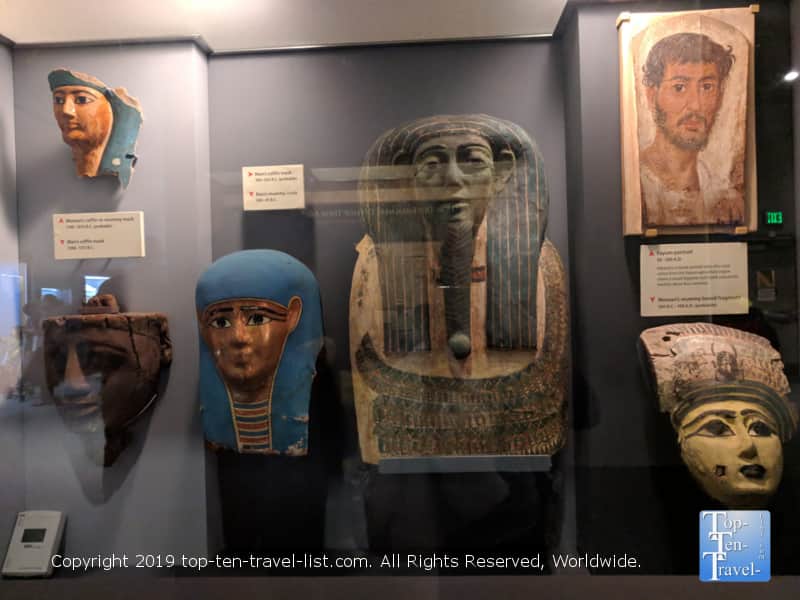
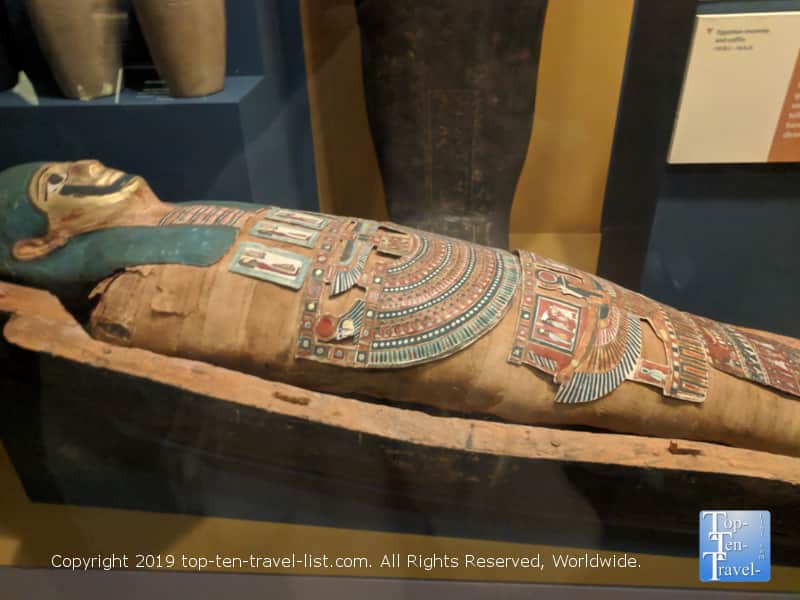
This is one of the most intriguing and strange exhibits at the museum. Not as extensive as The Field Museum’s wonderful Inside Egypt exhibit, but still quite intriguing. You will be able to see how modern science was able to recover mummies from over 2000 years ago.
Seeing all the different tools Egyptians used for their ancient mummification practice has always been a bizarre experience to me. I find much of it creepy but also fascinating at the same time. I always find myself spending the most time reading about all these odd Egyptian afterlife practices at any museum.
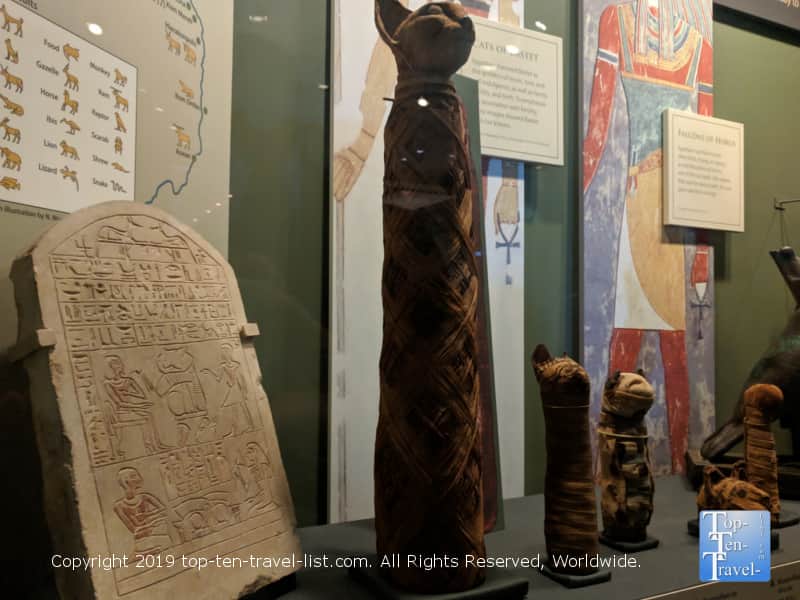
This exhibit is very informative with much detail as to how and why the Egyptians preserved and entombed their dead, the significance of amulets, why Egyptians worshipped cats, examples of ancient hieroglyphics, and much more. Three human and 16 animal mummies are currently on display.
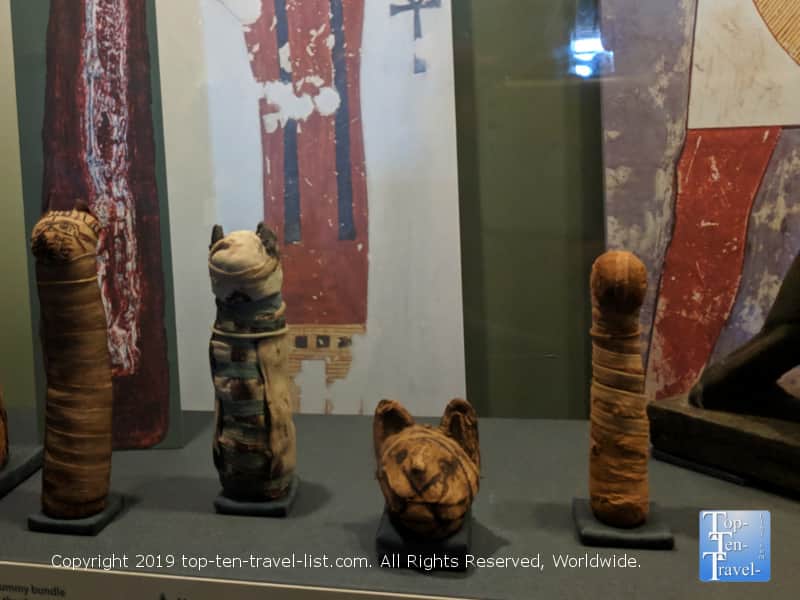
The Egyptians also mummified cats, crocodiles, and other small animals. Egyptians worshipped the cat goddess Bastet. They believed that gods and goddesses could transform into animals. Some were mummified as offerings to the god, while others were mummified in hopes of joining their owners in the afterlife. This is so weird to me and also intriguing. As a cat lover (and current owner of 2 cats), I love reading about Egyptian cat worship.
Below are a few of the cat mummies on display
Nature’s Best photography

During our visit, we got to explore a special exhibit dedicated to nature photography. The museum featured beautiful pieces from over 60 talented artists who perfectly captured nature in action. This is a temporary exhibit which will run through September 2019.
The photographs featured were selected amongst 29,000+ entries! All of the artwork is breathtaking, including some amazing shots taking by young, extremely talented photographers. I really enjoyed seeing all the incredible wildlife shots: I imagine it took quite a lot of work and waiting to capture the perfect photos.
A look at some of the winning selections


Hall of Geology, Gems, and Minerals
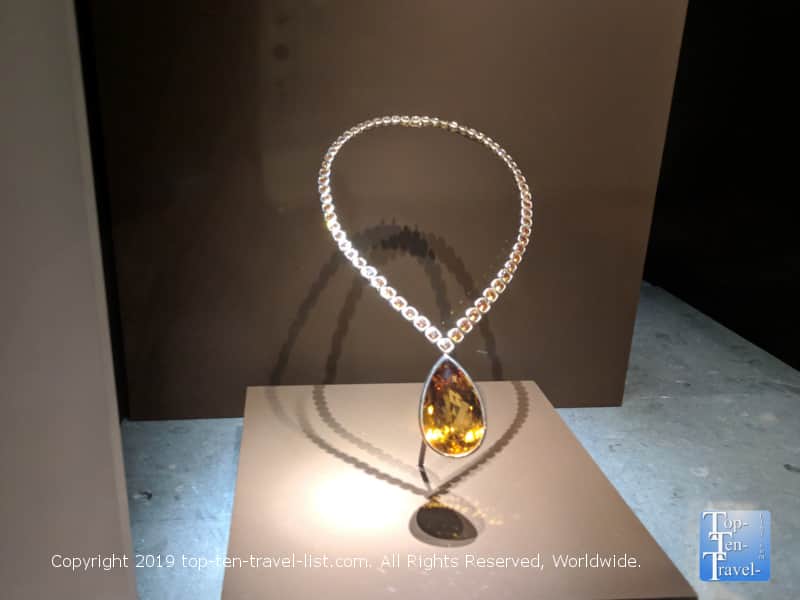
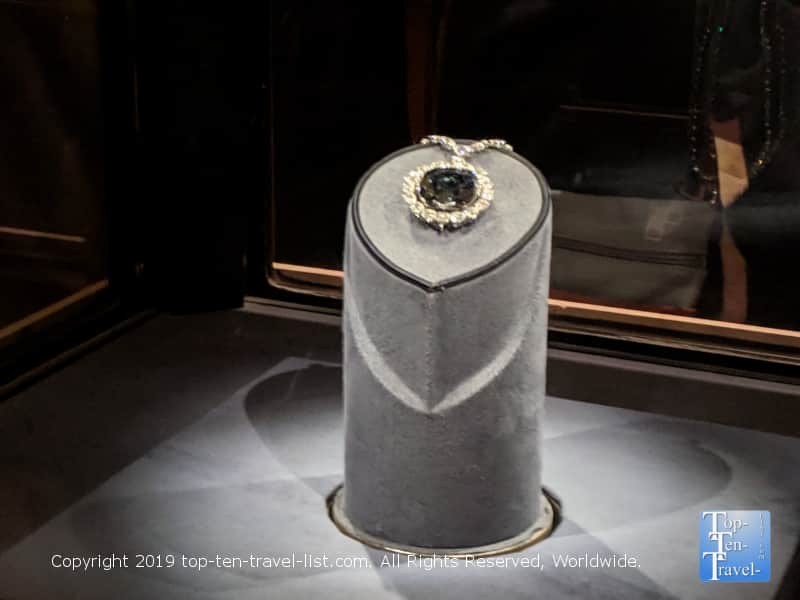
This exhibit is most famous for the massive 45 carat “Hope Diamond,” donated by Harry Winston in 1958. You will also able to feast your eyes on the largest ruby ever found, a massive 168 carat MacKay Emerald, and basically browse through dazzling gems and minerals of every size and shape.
For anyone who loves anything sparky, this is the exhibit for you. I also found it interesting to read through some of the historical info on how meteorites brought these precious gems to Earth.
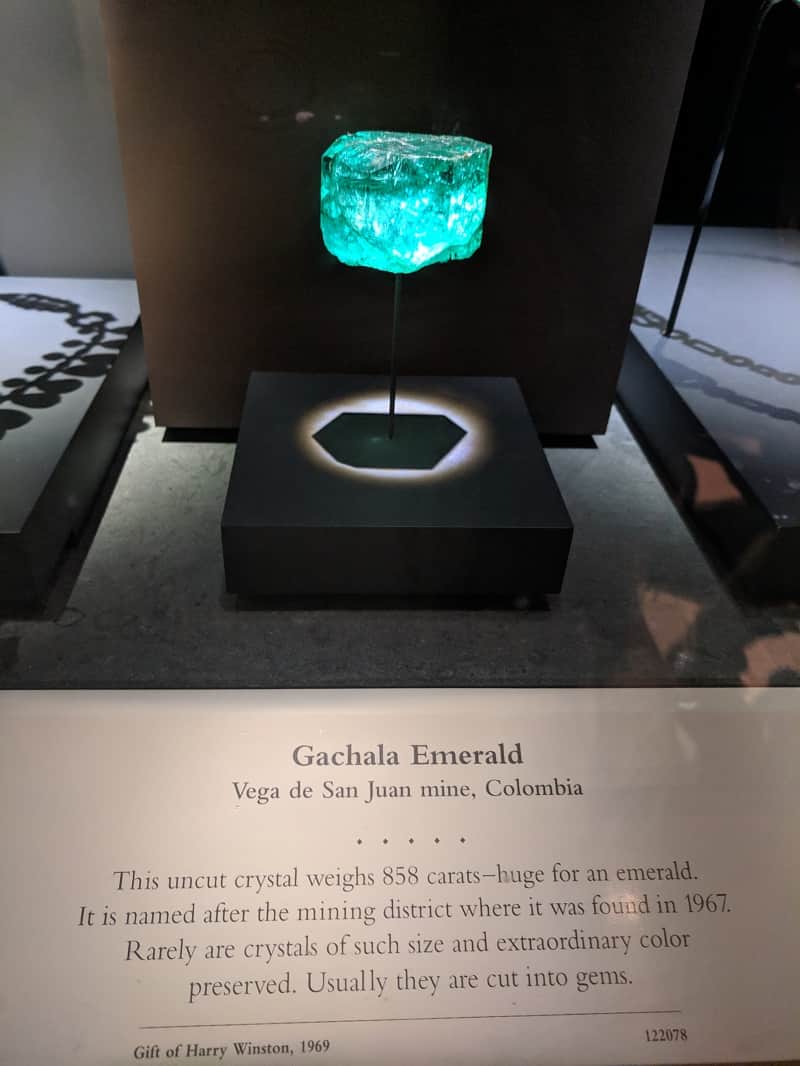
A few highlights from the gem collection
To the left, the Gachala Emerald weighing in at 858 carats. It’s rare for a crystal so large not to be cut into a hem. Harry Winston donated this gem in 1969. To the right, the Chalk Emerald weighs in at 37.8 carats. I learned here that the greener an emerald, the more valuable it is, thus the Chalk ranking amongst the most prized Columbian emeralds. There is an informative plaque under each gem where you will learn something new. You can really learn a lot of unique things by strolling around these museums.

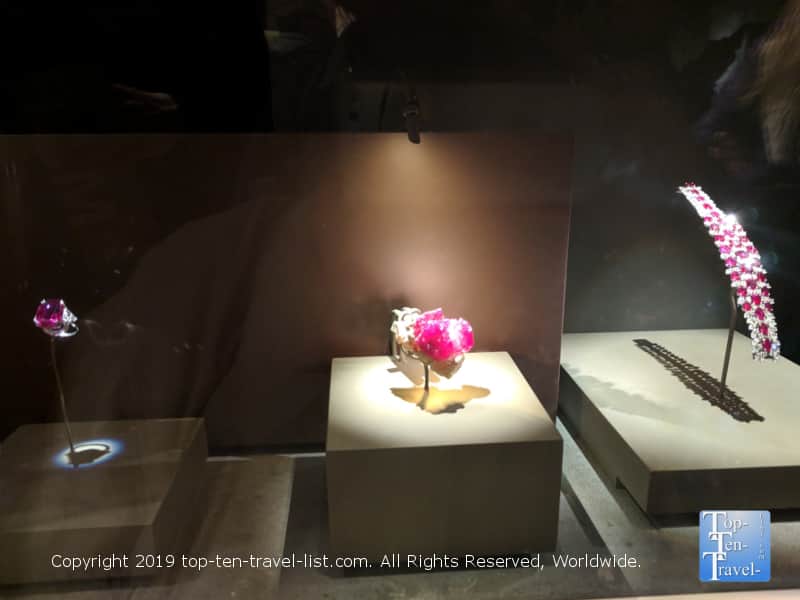
Pictured here is the 23.1 carat Carmen Lucia Ruby and a beautiful Burmese ruby bracelet, featuring 31 Burmese rubies and 107 pear, marquise and round brilliant cut diamonds. Burmese rubies are considered to be the most valuable. Unfortunately, with the bright lighting, my pictures didn’t turn out too well. All the more reason to explore this exhibit for yourself. It’s so much more dazzling to see these rubies (and all other gems) in person.
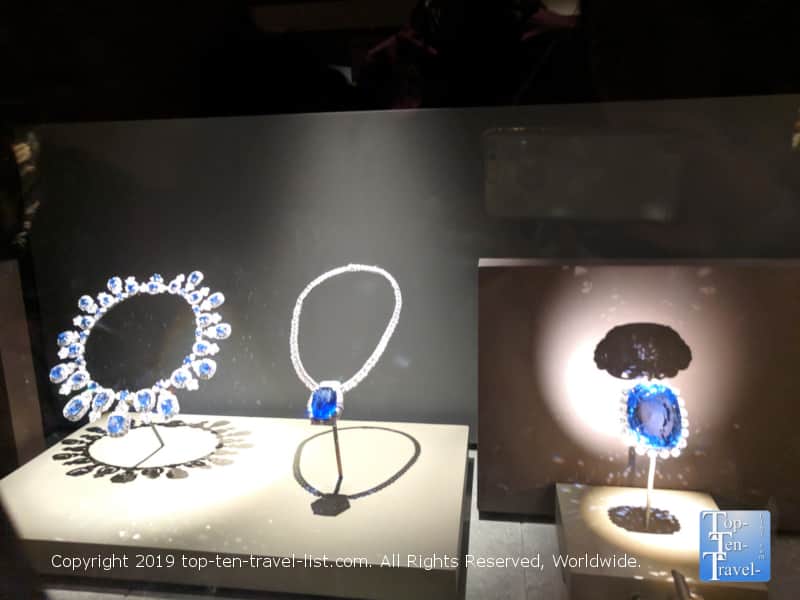
On the left, the Harry Winston designed Sapphire Hall necklace weighing in at 195 carats. In the middle, the 98.57 carat Bismark sapphire, which was designed by Cartier Inc. And lastly, the massive Logan sapphire. Weighing in at a whopping 423 carats, it is one of the largest faceted sapphires in the world.
Additional details
- Location: 10th St. & Constitution Ave. NW, Washington, DC 20560
- Hours: 10am-5:30pm, 7 days a week
- Admission is free!
**There is a lot more to do in this historical area including seeing all the famous monuments and touring all the Smithsonian institutions. Check out my full visitor guide where I detail the best attractions, food, and historic sites to explore in the Capitol Hill area.