Attraction of the Week: Saguaro National Park
Disclaimer: We are not paid to promote any restaurant, hotel, activity, product, or attraction. All opinions are subjective and based on our personal experience. Your experience may be different.
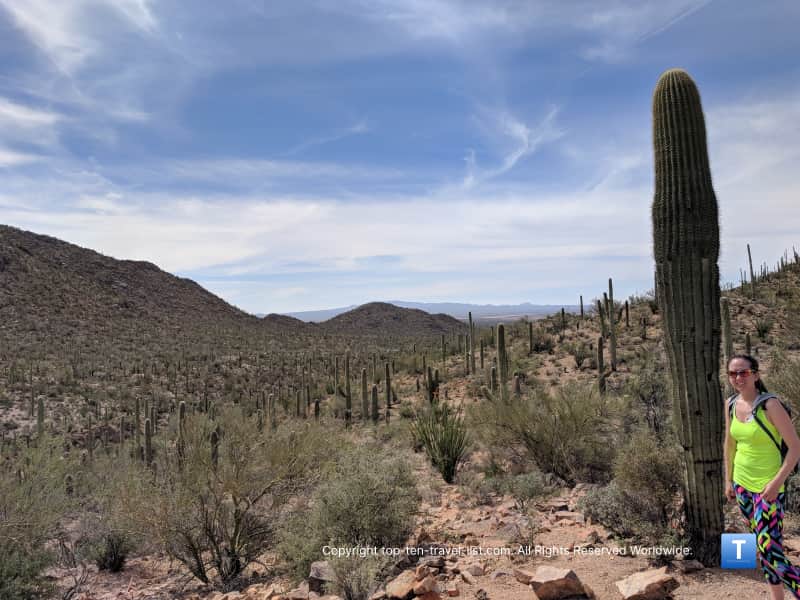
Saguaro National Park, named as so after the amazing plant found exclusively in the Sonoran Desert, is one of the country’s most unique national treasures. It’s one of my favorite places in the Southwest. Back when I was living in Flagstaff, I planned a weekend trip to Tucson to visit the park and fell in love with the landscapes. I later moved to the area and hiked here regularly. It’s a beautiful and unique national park that I recommend adding to your bucket list especially if you love cacti like me.
This massive 91,000 acre desert wonderland, spread out between 2 districts on opposing sides of Tucson, is a must-see for anyone interested in nature, hiking, and photography. I love everything about the desert – the gorgeous cacti, the stunning sunsets, the wildlife, the wide open spaces, and lack of foot traffic. This wonderful underrated park is a beautiful place to begin your desert adventures.
History of the Saguaro cactus
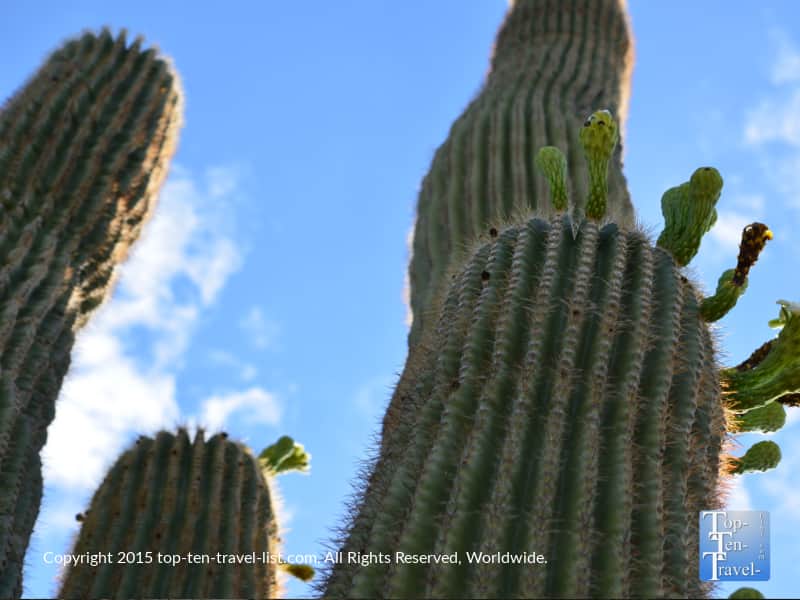
The Saguaro is quite unique because it only grows in the Sonoran Desert of Arizona, Sonora in Mexico, and the Whipple Mountains and Imperial County in California. Part of its’ appeal is its’ rarity, so really this is one of America’s most incredible parks to visit in person. Tucson itself is an underrated city and this is just one activity I recommend adding to your bucket list. Definitely take a trip out here instead of staying in a resort in Phoenix (also great, but this city is better for anyone who loves the rustic outdoor).
This national park was established in 1994 to protect this cactus. Interestingly, the Saguaro has come to symbolize the American Southwest, despite the fact that they only grow in southern Arizona.
For anyone interesting in learning more, you can sign up for a ranger program or read some interesting facts courtesy of U of A.
One pass: Access to 2 massive districts
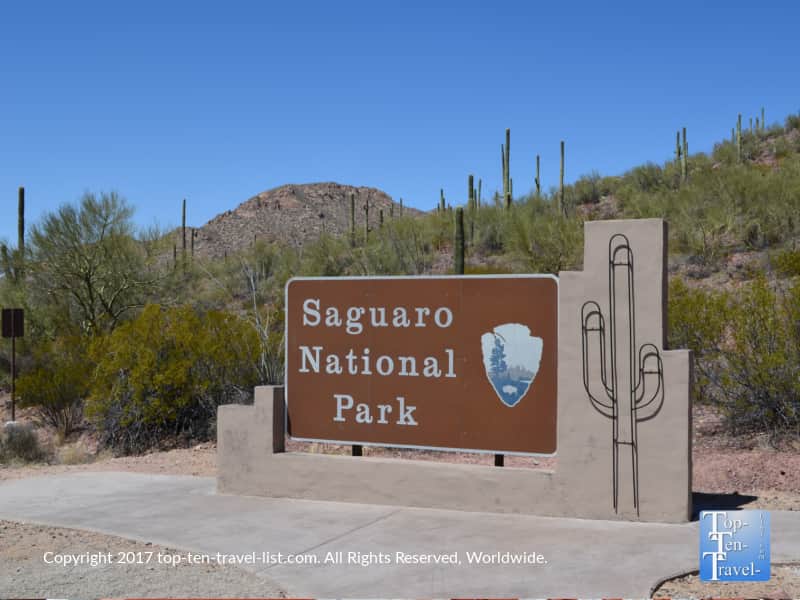
Visitors can enter via 2 entrances: the Tucson or Rincon Mountain District. While the Rincon Mountain District is known for its’ tremendous mountain views, the Tucson District is known for its’ high concentration of cacti. I love both and have explored the trails and drives at both parks numerous times (one of the benefits of living somewhere so beautiful!). The Tucson Mountain entrance would be my recommended choice if you only have time for one as there are more cacti here so it’s the most interesting choice for first time visitors.
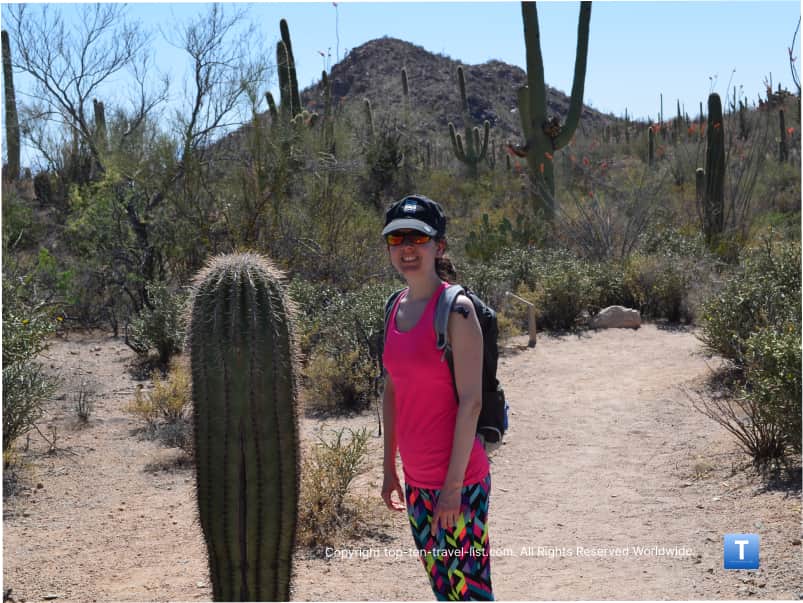
The real highlight of visiting Saguaro is witnessing the scenery change from urban city surroundings to gorgeous natural desert as you drive closer and closer to the park entrance. On this peaceful, remote drive, lined with all dozens of varieties of cacti on each side, you can truly immerse yourself in solitude of the desert. The ride is so incredibly scenic and rustic that it really is an attraction in and off itself.
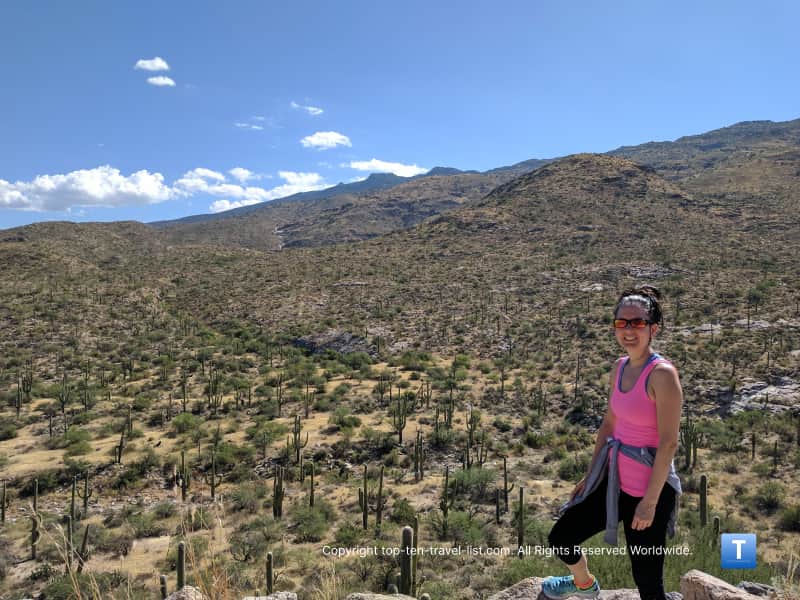
For those not interested in hiking, a scenic drive, a picnic lunch, and exploring the visitor’s center make for a pretty nice day out on their own.
Red Hills Visitor Center: A good place to start
I recommend new visitors start off at the Red Hills Visitor Center at the Tucson Mountain District (West Entrance). This is an awesome place to begin your journey. It is the bigger visitor center of the 2 parks and there is lots to do. You can view various informational exhibits, attend a ranger talk, and shop at a gift store selling books, posters, and souvenirs. There are also restrooms. From here, you can also access the Cactus Garden Loop, a really short and accessible trail with various informational signs about different types of cacti.
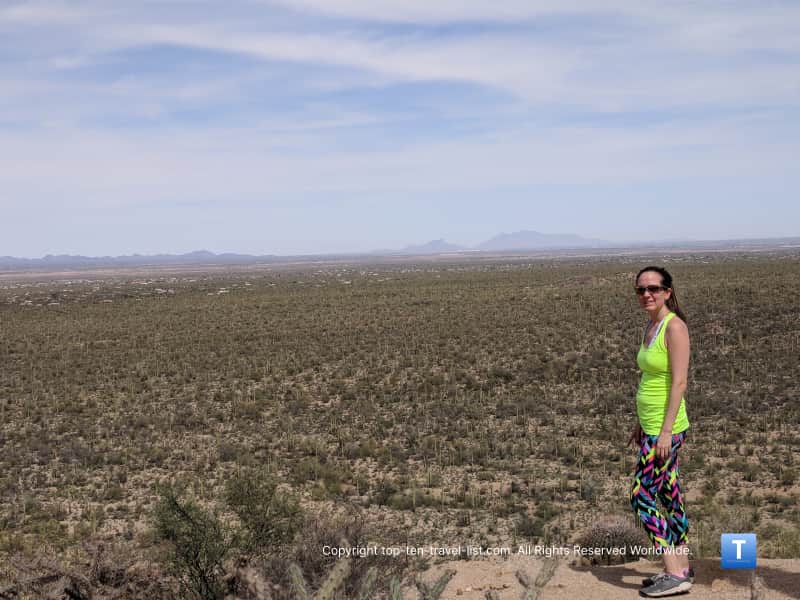
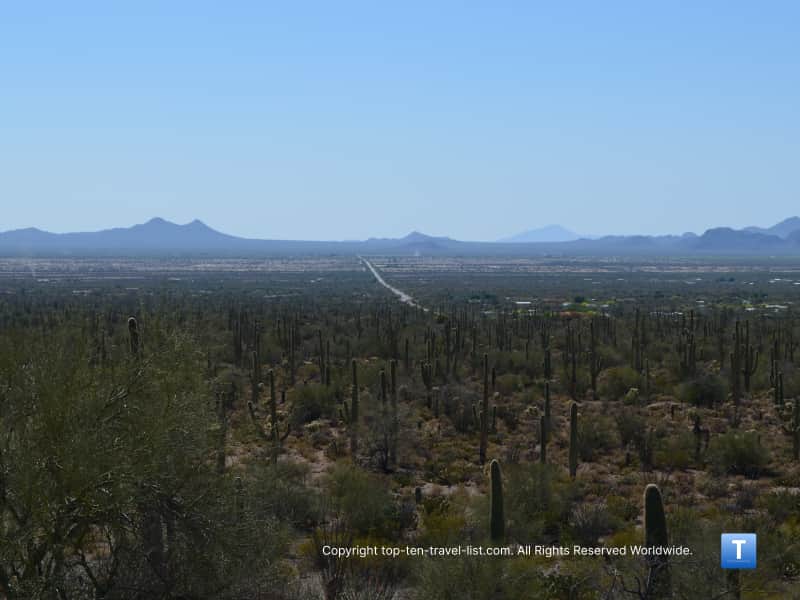
Most notably, this visitor center has the most incredible overlooks anywhere in the city. It’s the best place to look out upon the uninterrupted land with thousands upon thousands of cacti.
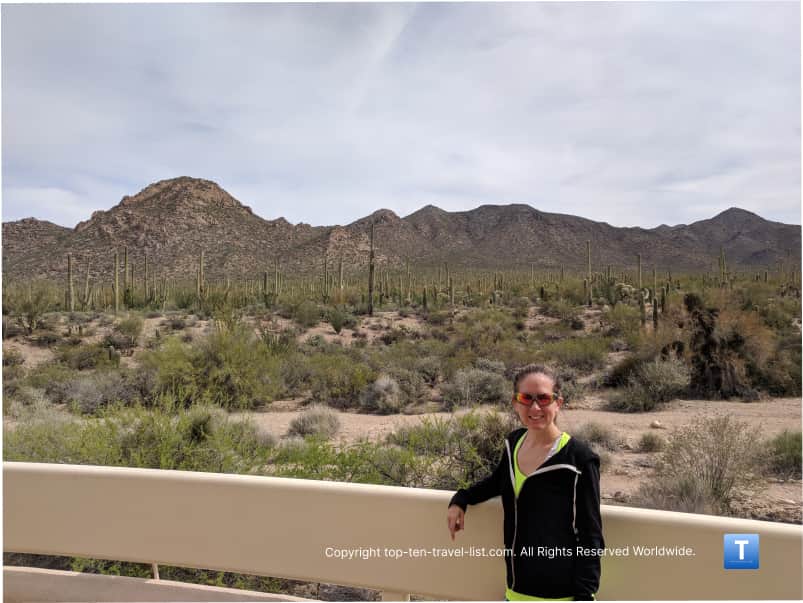
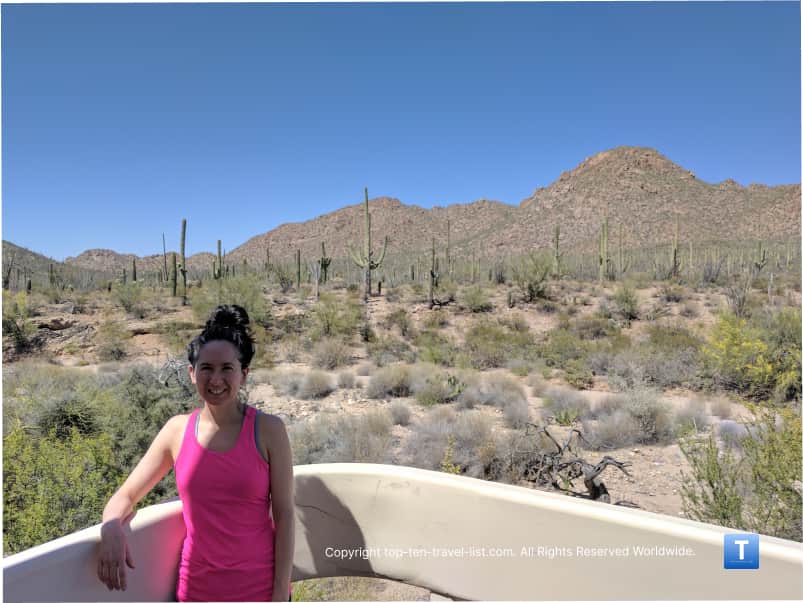
Hiking trails at SNP: Tucson Mountain District
Trails vary in intensity from super easy (under a 1/2 mile) to super advanced (5+mile all day adventures). The longest trail is the Hugh Norris trail at 5 miles each way (this hard hike takes you to Wasson Peak). There are various hard mountain hikes which you can explore via the trail map to see what suits your interest.
Several of the trails can be accessed via a 6 mile unpaved loop trail. These shorter trails are best suited for first timers and include: the 1/2 mile Desert Discovery Trail, the 0.8 mile Valley View Loop, and the 1/2 mile Signal Hill petroglyphs trail.
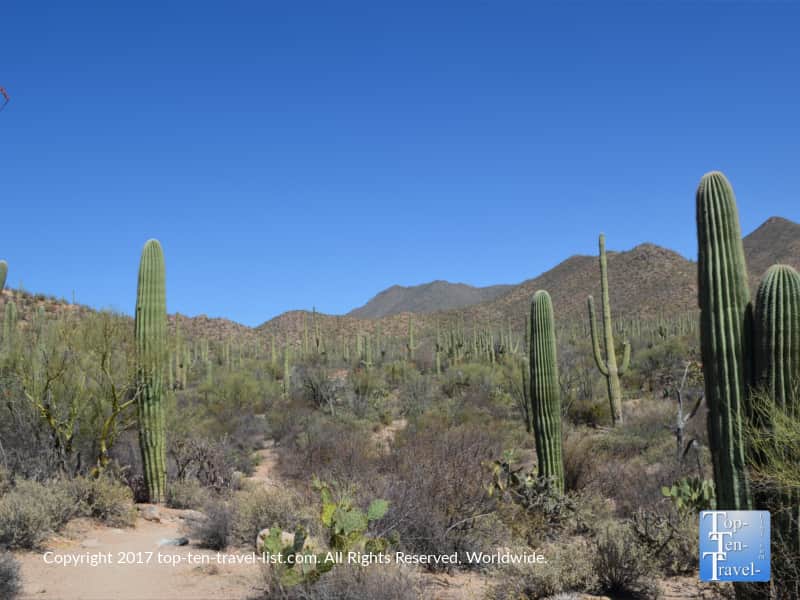
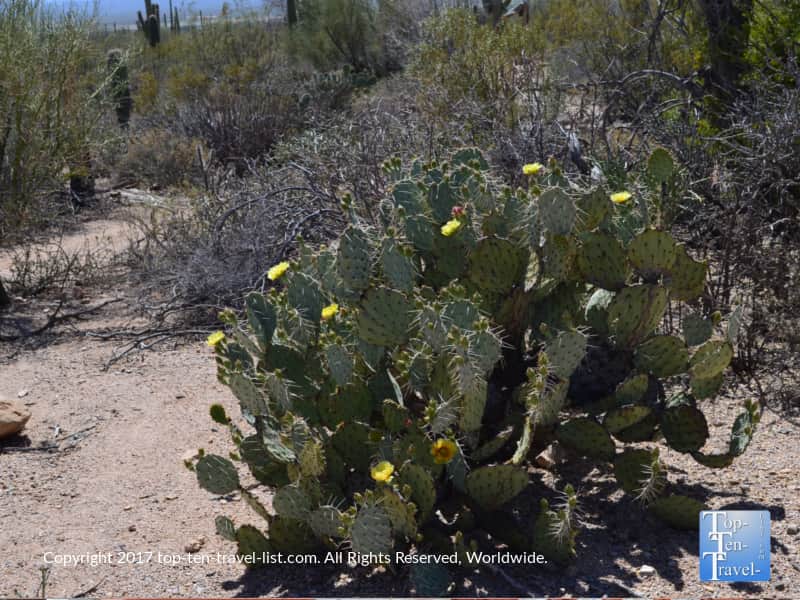
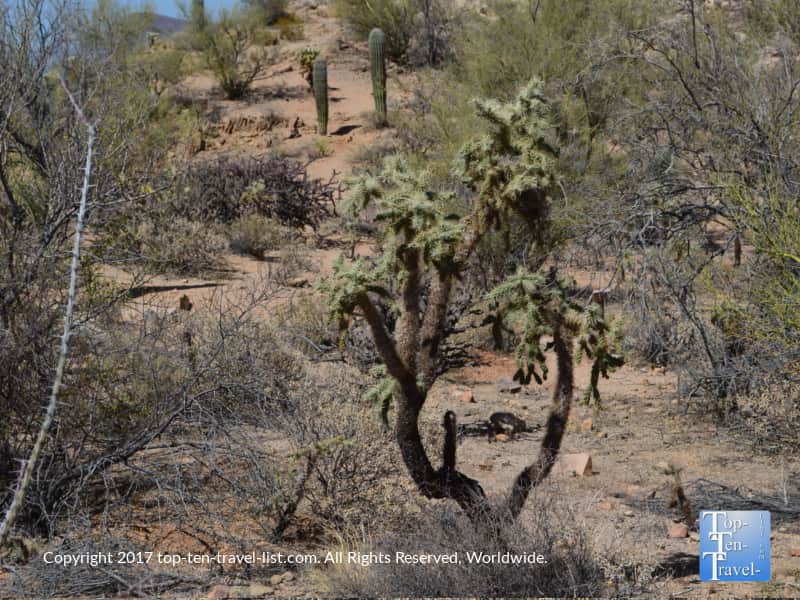
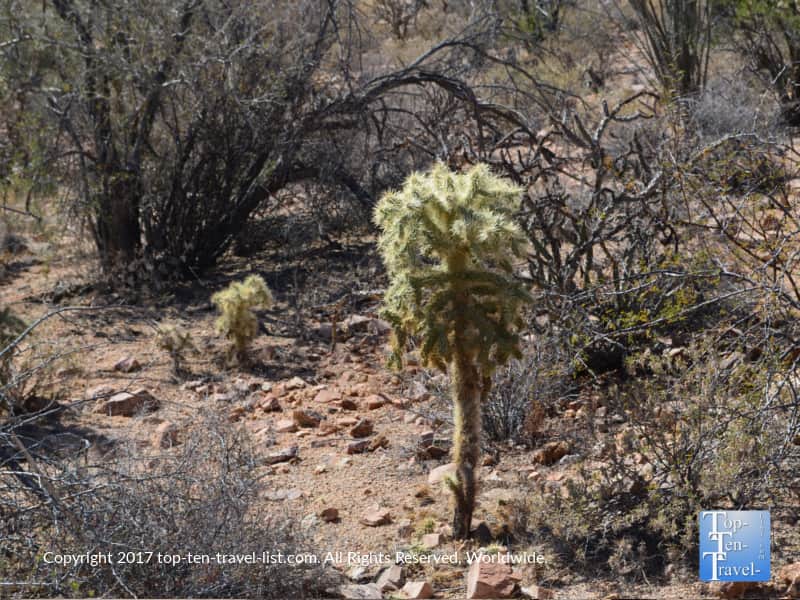
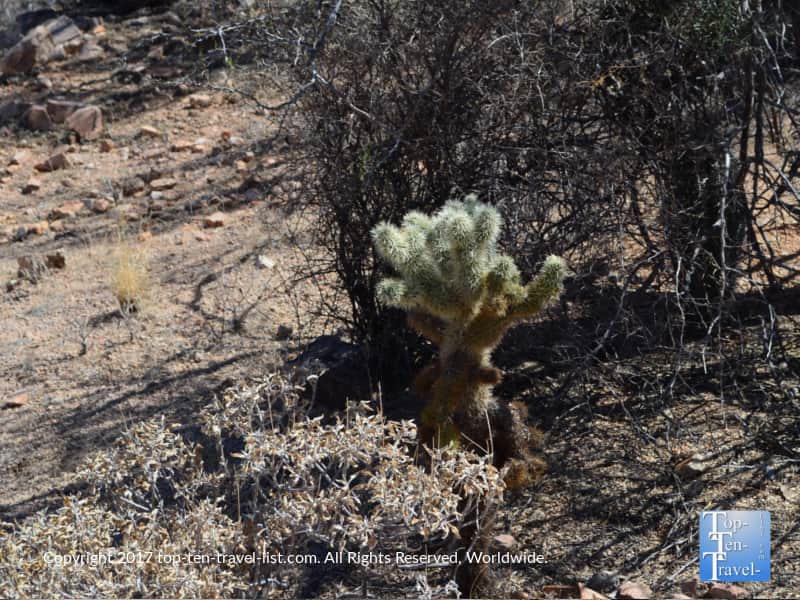
Of these trails, the Valley View Loop is probably my top choice for visitors of all skill levels. This trek is just 0.8 miles total (meaning its’ still doable early in the morning during the hot summer season) and leads you to a nice little overlook with great views of Picacho Peak. Diverse plant life including over 20 varieties of cacti species will keep your eyes and camera busy. The typical blooming season of the cacti is April-June, so you will be in for a real treat if your visit falls during these months.
Pics from the trail…notice the amazing variety of cacti!
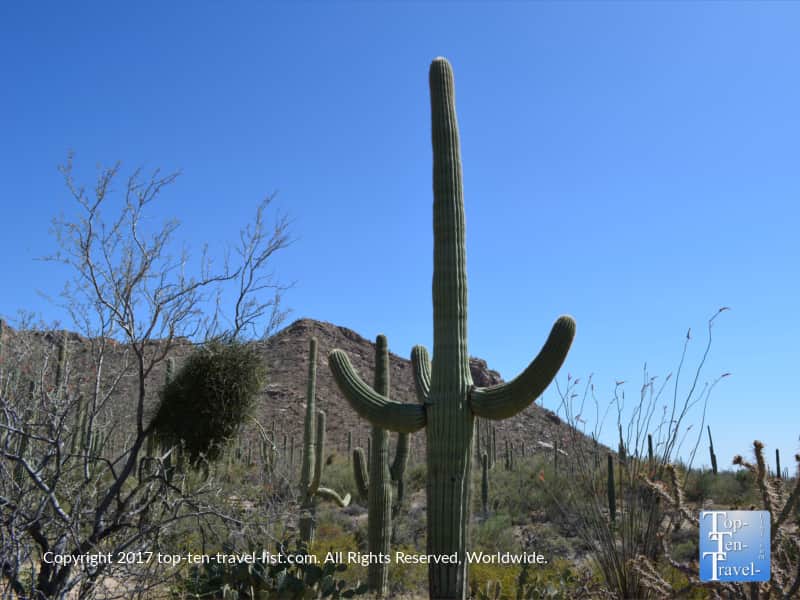
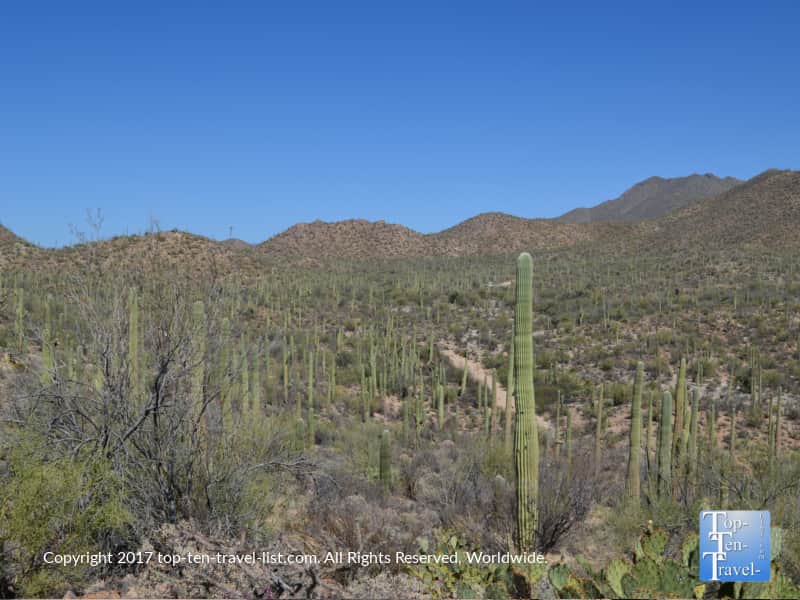
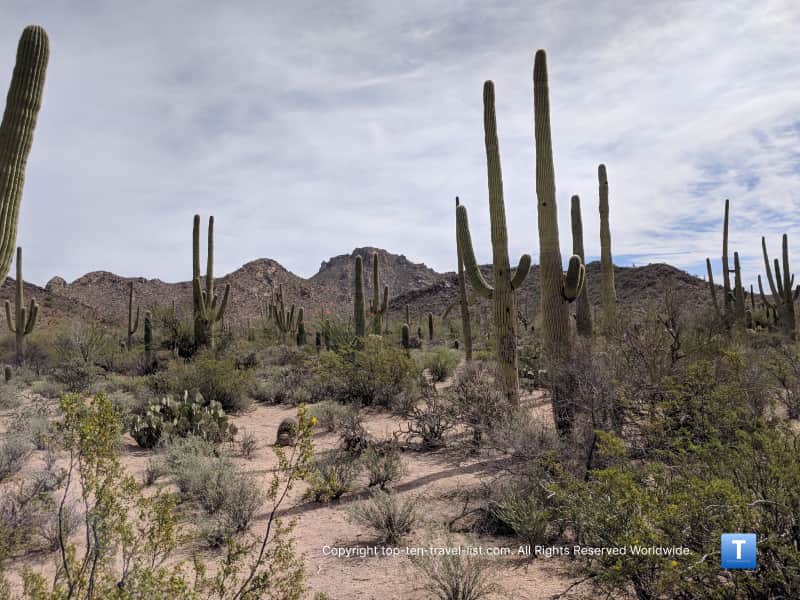
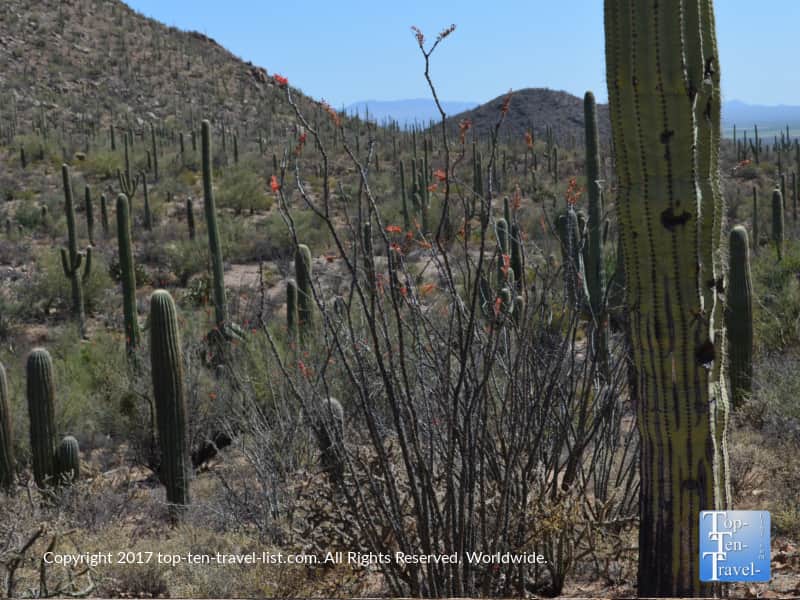
A few decent mountain views along the way:
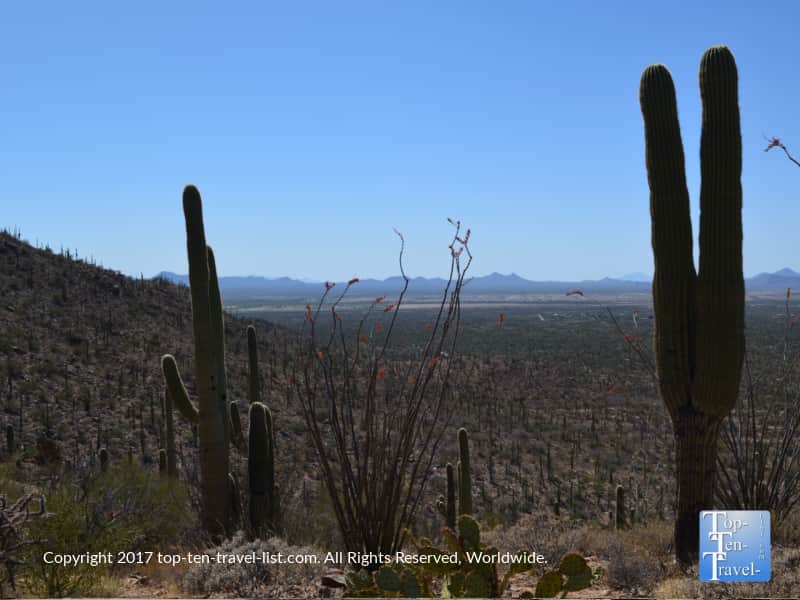
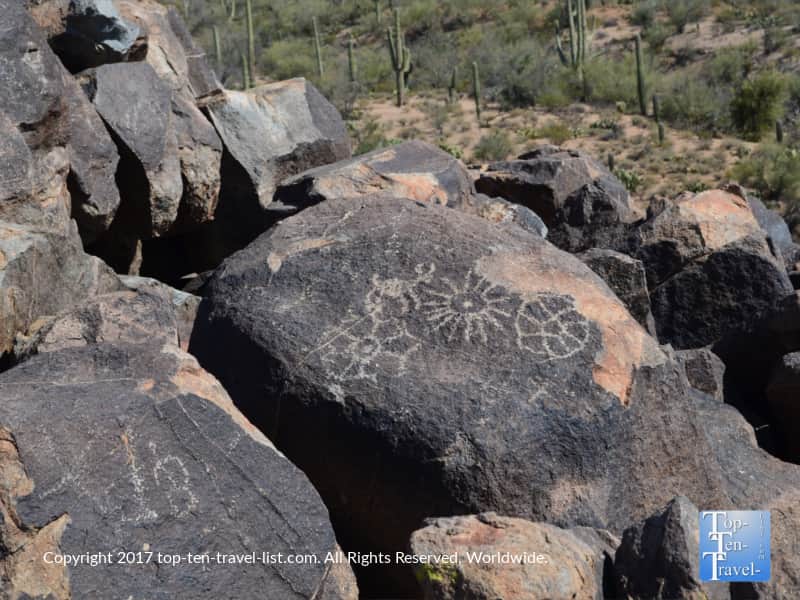
I also recommend another short hike, the Signal Hill hike, a short trek of just 0.3 miles up to a scenic overlook. Here, you will also be able to explore a number of ancient pictographs, most of which are over 800 years old. It’s a bit steep and involves some stair climbing, however, it should not take more than 20 minutes or so. I found it so interesting to explore all these ancient drawings, attempting to guess what the meaning was for each picture.
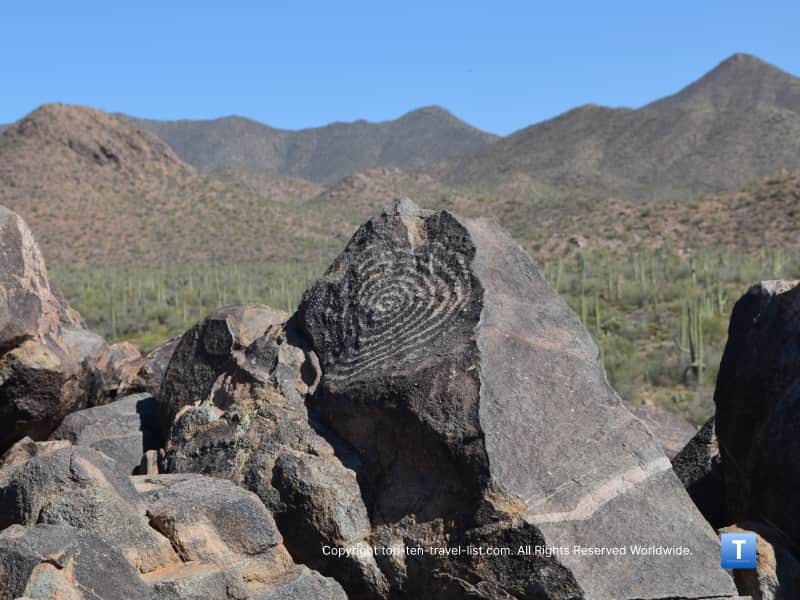
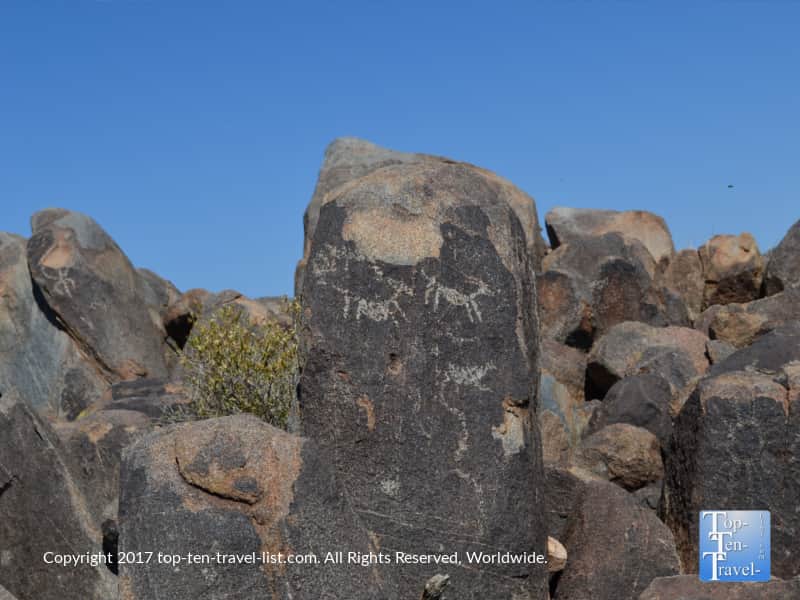
There’s also a decent mountain view in the distance:
Hiking trails at SNP: Rincon Mountain District
Trails are accessed via an 8 mile paved Cactus Forest Scenic Loop drive. The Desert Ecology trail is a really easy quarter of a mile trail. This trail is paved and features numerous interpretative signs. This is a great place to begin your journey if you are new to the desert. It’s also the only trail you can walk dogs on. This trail and the Mica View trail (0.7 miles) are 2 of the few wheelchair friendly trails in Arizona.
More difficult trails in this district include: the 5 mile Cactus Forest trail and the 6.5 mile Hope Camp trail, both of which are open to mountain bikers. These trails are hard and long, but take you into a more desolate part of the desert. Do not hike these during the summer months.
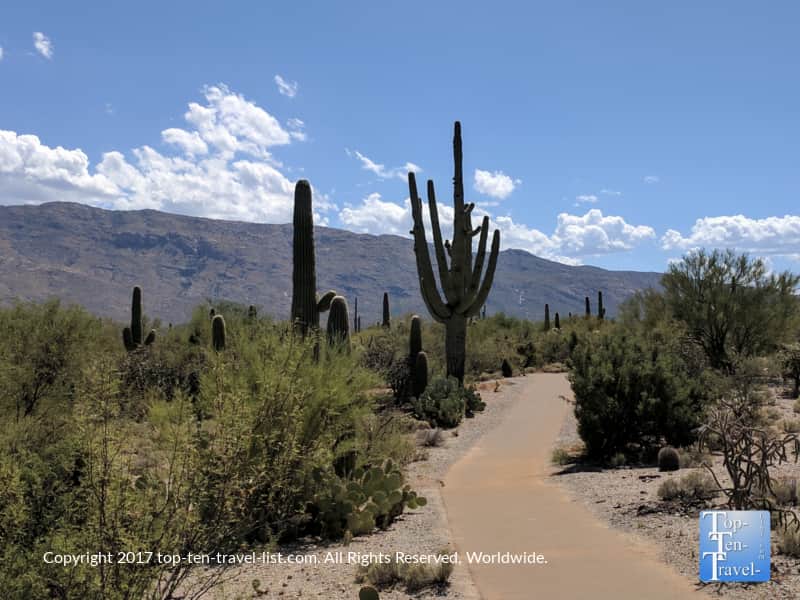
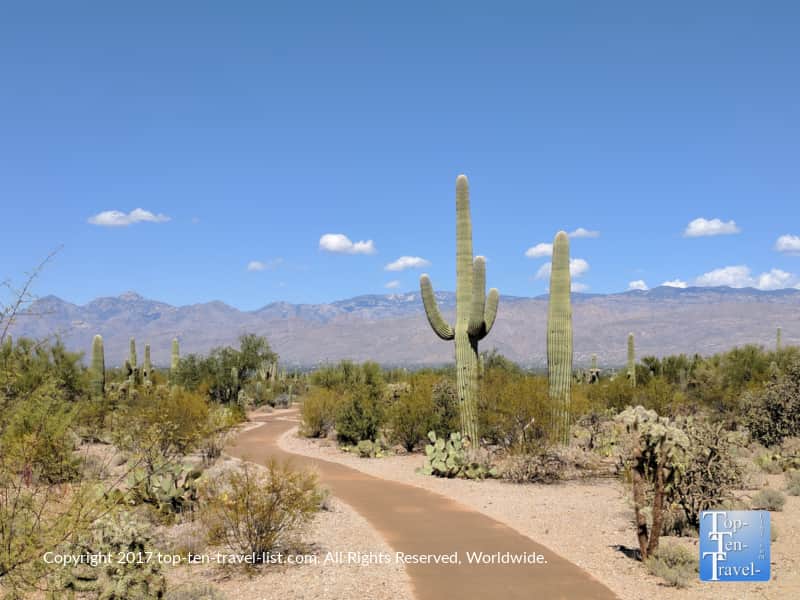
Here are some great views from the easy Desert Ecology and Mica View trails, which are the best choices for first timers. Both the mountain and cacti views are so pretty. There are lots of signs along the way, so you can also consider these more educational “intro to the desert” hikes.
Wildlife sightings
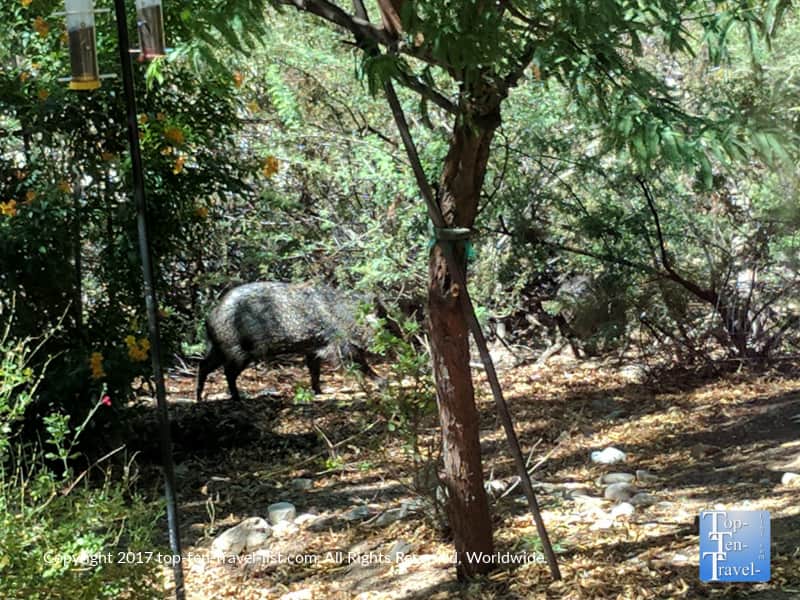
Although a range of wildlife make appearances in both districts, particularly during the early morning hours, sightings remain rare. Regardless of whether you see any, it’s surprising to find out how many species inhabit the desert, including mountain lions, javelina, mule deer, and even black bears (more common in the Rincon district).
To date, I have seen javelina although no evidence of bobcats or black bears! While it was pretty cool to see a javelina in person, they are actually quite dangerous. Keep your distance from any wildlife especially snakes. Thankfully, I’ve seen no snakes although 6 species of rattlesnakes as well as other snakes inhabit the park. You may want to check out the park’s guidelines for dealing with snake encounters.
Why visit?
Exploring this park is one of the best things to do if you are a newbie to the Tucson area. While there are many free hiking trails around the city, you can learn a lot more here via the visitor center and special programs. The trails are gorgeous and easy to follow. The Tucson Mountain District visitor’s center is super informative, not to mention home to a gorgeous overlook of the desert.
Both scenic drives are relaxing and beautiful. You can truly immerse yourself in the beauty of the desert in such a remote setting, thanks in part to the fact that this park does not get nearly as busy as some of the more popular western national parks.
Take the time to escape the city congestion to explore the unique plant life found only in the Sonoran desert. All in all, you have a nice little half day out in a uniquely gorgeous area of the country. For truly mesmerizing scenery, plan your visit around sunset – seeing a cactus silhouette truly is a memorable experience!
Where to eat?
Assuming the temps aren’t too hot, I recommend planning a picnic. There is a nice pickining area near the Signal Hill trail in the West District. The Javelina picnic area along the Bajada scenic drive in the West District is another option. If you prefer to dine out, Saguaro Corners is a cool pick right outside the park. It’s one of the city’s older restaurants and the food isn’t too bad considering the touristy location.

Fun facts about the Saguaro
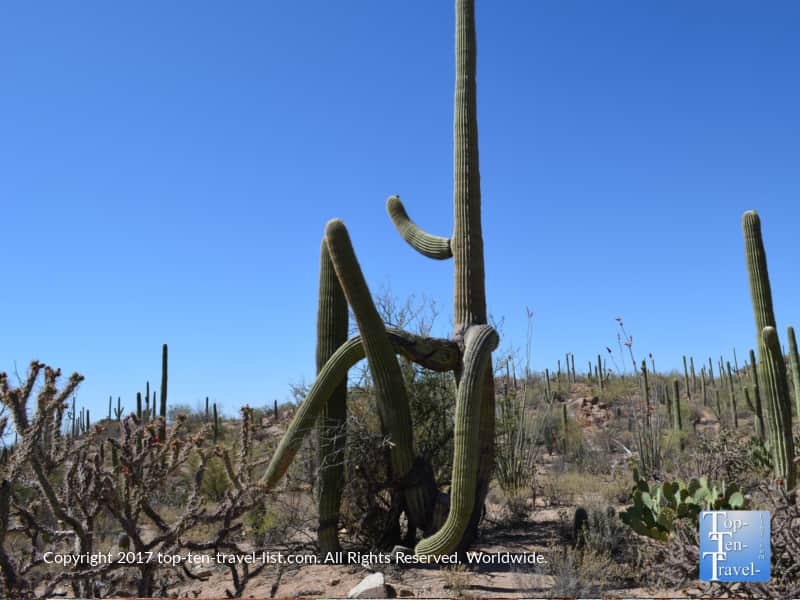
*A saguaro can have multiple arms which can either grow in any direction as pictured above.
*An adult averages 40-60 feet and can weight over 6 tons due to the cactus soaking in & storing rain from the monsoon season.
*These plants depend on the summer monsoon rains to germinate. This being the reason why you find them in Phoenix and Tucson, and not other desert areas like Las Vegas. Although all 3 areas are desert, Vegas sees just 3 inches of rain per year on average, while Tucson and Phoenix see 12 and 7 respectively.
*This cactus is a long lived desert species – with lifespan sometimes exceeding 150 years. Some even live past 200!
*The state flower of Arizona is the Saguaro cactus flower. The flowers begin to bloom between April-June.
*These cacti are a very, very slow growing species, reaching a height of a mere 1-1.5 inches by 8 years. The arms do not grow until the cactus reaches 50 years!
*The tallest reached a height of over 78 feet!
*They will die of frost at an elevation above 4000 ft, hence, why you will not find any above this altitude.
*Cutting down a Saguaro is illegal! I really love the natural landscapes surrounding this city!
Tips for a great visit
Bring with at least a gallon of water, especially if hiking. I always wear my camelbak for easy access. Dehydration is the most common threat in the desert. Drinking before you get thirsty is common sense in the desert! Electrolyte mixes like Gatorlyte are a smart idea as well.
Don’t hike in the summer. It’s way too hot in this region. Plan your visit very early in the morning to beat the heat. Desert temperatures vary dramatically, day to night. Avoid hiking between the hottest parts of the day (noon-3pm). Fall and winter visits preferable.
Wear sunblock and sunglasses as there is obviously no shade in this harsh environment!
Do not get too close to the cacti – it hurts very bad to get pricked by one – trust me!
Read up on wildlife safety. Mountain lions, rattlesnakes, Africanized honey bees…many threats exist in the desert.
Do not try to cram other tourist activities into the same trip. It’s tempting to visit nearby attractions like the Desert Sonora Museum, however, I recommend you dedicate at least half a day to exploring the beautiful SNP. You need to give your body time to recover as hiking in the harsh desert climate is much harder on your body!
Consider an annual pass if you frequently visit national parks. It’s just 80 bucks and good for 1 year, so it easily pays for itself in just a few visits. It’s worth considering if you plan to travel a lot in the upcoming year.
On a budget? Check the National Park website’s calendar of free days. More than 10 fee free days are spread out throughout the year so mark your calendar!
Sunrise and sunset are particularly majestic times to enjoy the desert scenery. Time and Date website will provide you will accurate sunrise/sunset times throughout the year.
Stop for breakfast to fuel up before your day at the park. Cup Cafe in Hotel Congress, Blue Willow, and Tohono Chul Garden Bistro are my recommended picks.
This isn’t the only place for scenic views in Tucson. My sightseeing guide covers more hikes and beautiful places to see while you are out here.
Directions and Pricing
East Rincon Mountain District Visitor’s Center is located at: 3693 S. Old Spanish Trail in Tucson. The Red Hills Visitors center of the Tucson Mountain District West is located at: 2700 N Kinney Rd. in Tucson. Visitor centers hours are 9am-5pm daily (closed Christmas). Tucson Mountain district is open sunrise to sunset. The Rincon Mountain District hours are 7am-sunset, although you can walk or bike in 24/7.
Entrance fees are $25 per vehicle (good for 1 week) or $15 per person/bicycle
Pet Policy: Leashed pets are welcome in the following areas: roadways, picnic areas (except the Mam-A-Gah picnic area in the Tucson Mountain District) and paved trails (Desert Ecology Trail & the Desert Discovery Trail).