Nostalgic Neon at The American Sign Museum in Cincinnati
Disclaimer: We are not paid to promote any restaurant, hotel, activity, product, or attraction. All opinions are subjective and based on our personal experience. Your experience may be different.
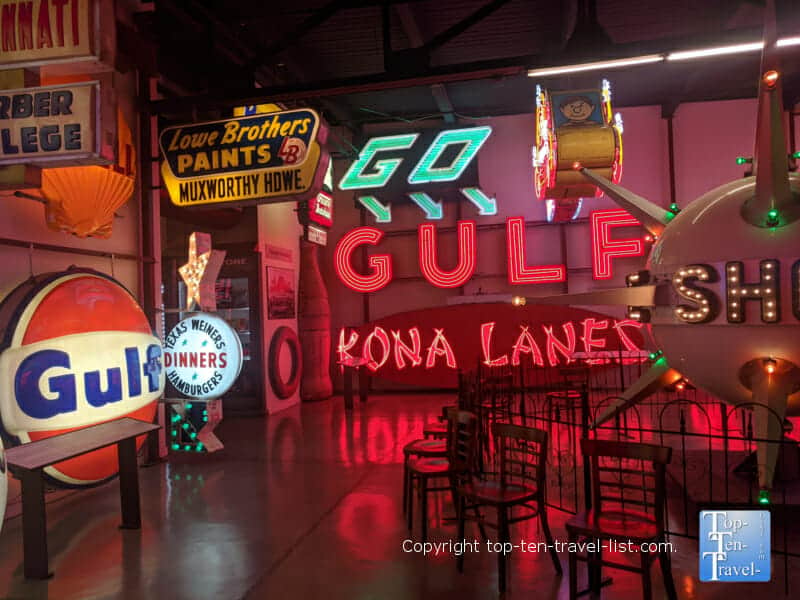
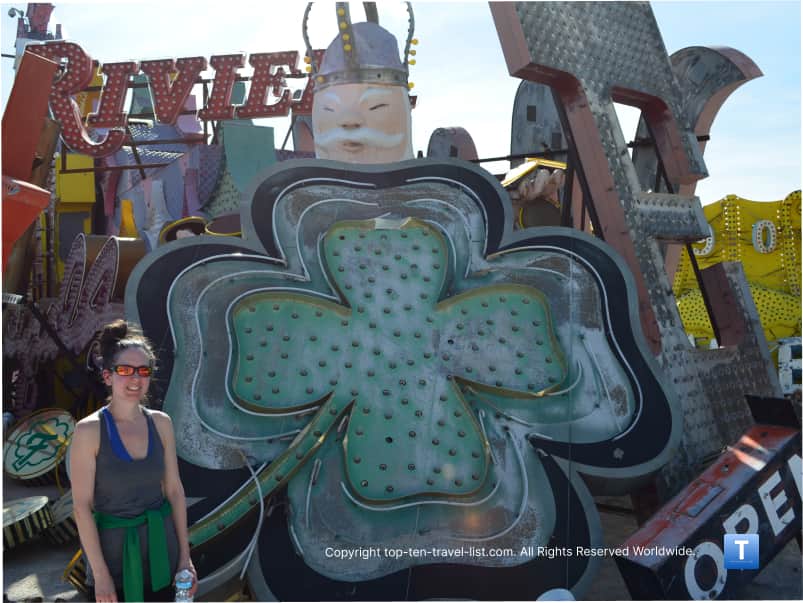
Mike and I decided to take a quick weekend trip to Cincinnati (it was an easy drive from Pittsburgh) mainly to check out one of the country’s top art museums. As we love anything retro, we were also interested in visiting The American Sign Museum. We love seeking out quirky retro attractions such as this. A few years ago we visited the Neon Graveyard in Vegas and had a lot of fun so we figured we would check this place out while living in close proximity. I recommend history buffs, art lovers, and/or fans of the strange & unusual to plan a visit here.
While the art museum, zoo, and The Great American Ball Park rate amongst the city’s most iconic attractions, there is always something off-the-beaten path worth exploring in every major city. In fact, I go out of my way on each trip to find something interesting to do that is often overlook by tourists. In Cincinnati, this is that place.
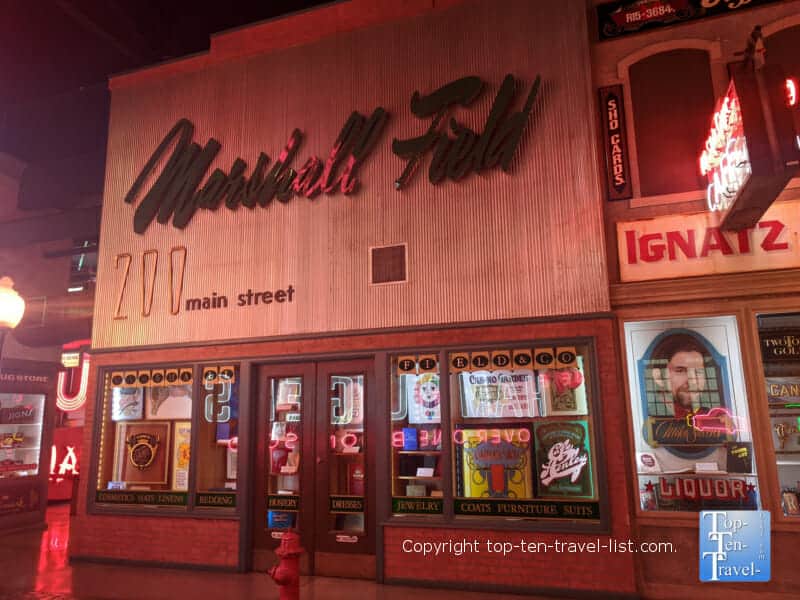
At this eclectic museum, you will be able to take a trip down memory lane, exploring various signs used at notable businesses throughout the decades. I loved seeing all the neon signs from long gone businesses like Marshall Fields.
The history of signs
Signs have been used as a marketing tool for centuries. There are few things that make a business more recognizable then its’ trademark sign, slogan, and advertising. Signs make popular brands easily visible when traveling.
I read up more about the historical significance after visiting this museum. The oldest known ad dates back to 3000 BC in Egypt. Signage was also used in Ancient Rome and Greece from 3000 BC-5AD. Signs were initially made out of simple common materials. Eclectic signs made a debut in the 19th century. Neon signs debuted in the next century.
Neon in America
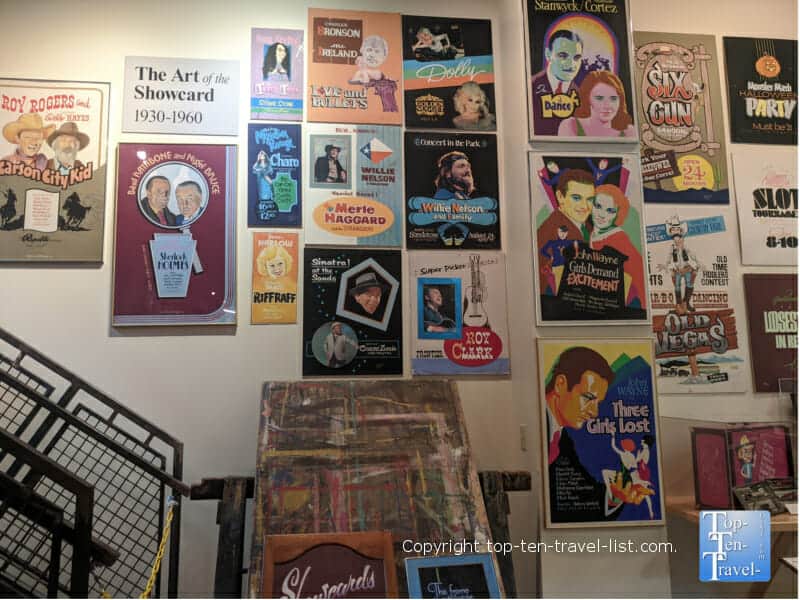
These colorful signs were first used throughout America beginning in the mid 20th century. In 1898, two British chemists (Sir William Ramsay and Morris William Travers) were credited with the discovery of the four gases eventually used in the creation of these signs: neon, krypton, xenon and argon.
Georges Claude created the first neon lamp. This new tech spread throughout the US. Many businesses proudly lit up their businesses with signs of “liquid gold.”
I have highlighted a few of the classic signs you will be able to see at the museum on your self-guided tour. You will notice a lot of these companies are still going strong today.
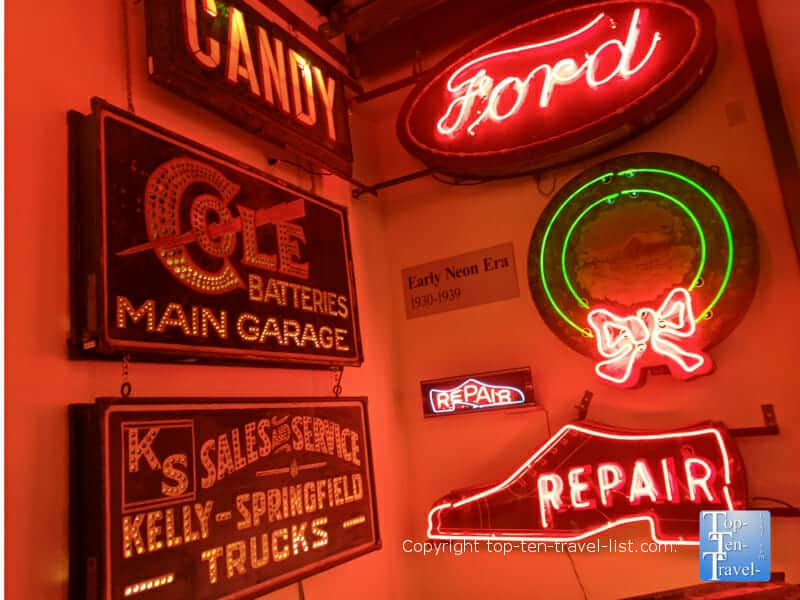
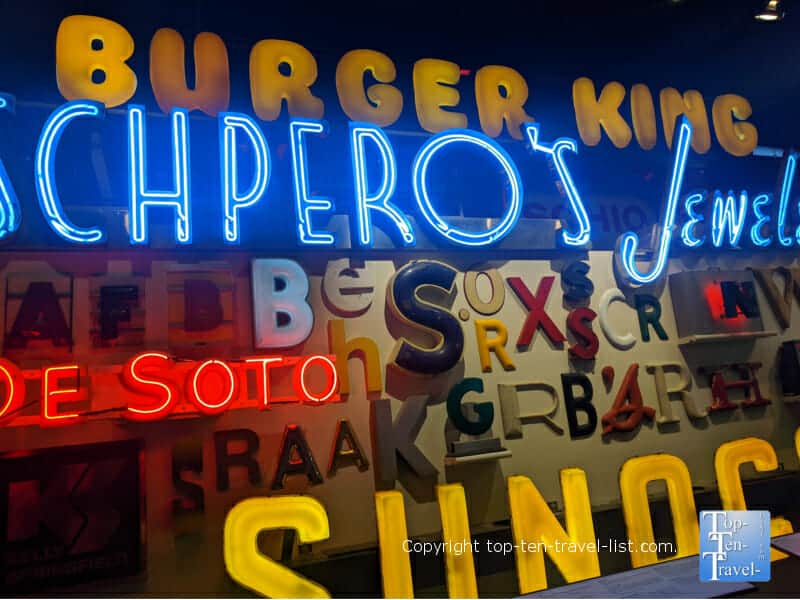
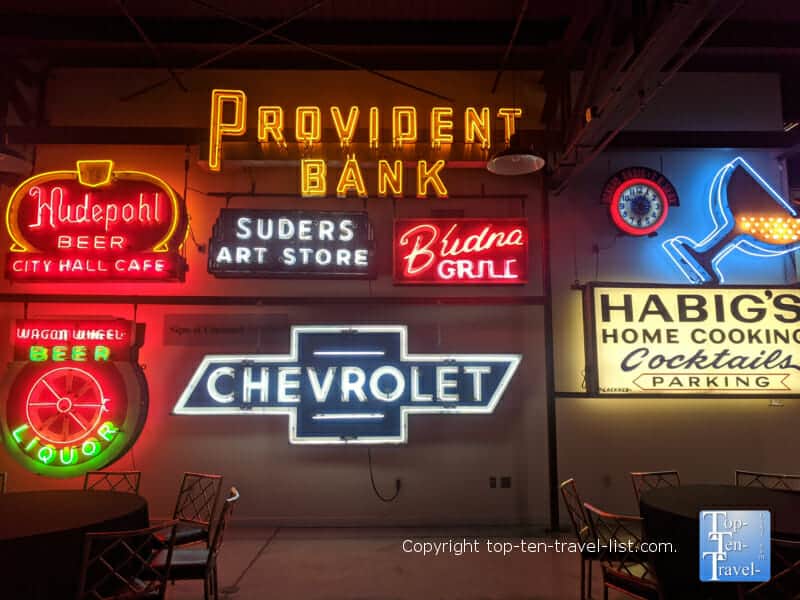
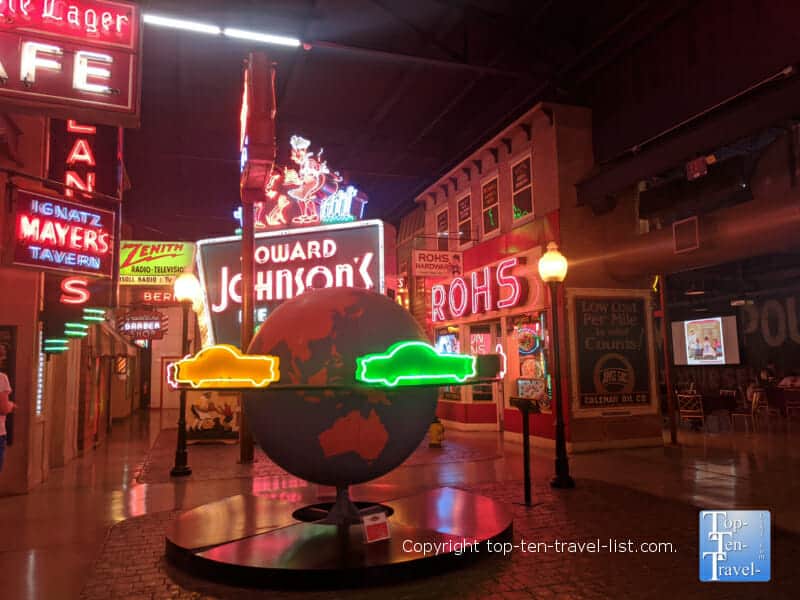
Cities eventually banned the signs for being too gaudy. As many people moved to the suburbs, plastic became more popular. Plastic is also cheaper and easier to maintain. However, what is old is always new again.
People nowadays tend to have a fascination with anything vintage (I count myself as one of these people). Thus, the resurgence of neon popularity and the opening of museums like The American Sign Museum in Cincinnati, The Neon Graveyard in Las Vegas, and The Museum of Neon Art in Glendale, CA.
I recommend reading more about the history of neon in this Smithsonian article.
It’s the largest public sign museum in the US
This unique museum displays popular American signs from the past 100 years. The 20,000 square foot facility is jam packed with signs. Everything from pre-electric gold leaf signs, early electric signs, colorful art-deco neon, and modern plastic-faced signs are incorporated into the museum. It’s a lot of signs crammed into a small space and it is fabulous.

A brief history of the museum…Tod Swormstedt worked on the Signs of the Times magazine for 26 years. He wanted to find a way to bring new life to old signs. In 1999, He opened the National Signs of the Times Museum (which was later reopened and renamed the American Sign Museum).
Once the collection became large enough, the museum was moved to where it stands today (in the Camp Washington area). Since June of 2012, tourists have been coming from all over to enjoy the nostalgic collection.
Read more about the museum’s origins
Self-guided tours
You can book a time slot online for a self guided tour. You will be able to explore the signage at your leisure. The museum is quite small and should not take more than 20-30 minutes to explore in its’ entirety. Guided tours are also available, on Saturdays at 12:30pm & 2:30pm and on Sundays at 2:30pm. These educational tours are 45 minutes long. I would say a tour would be a great option for anyone who would like a more in depth history lesson on the materials and processes used to make the signs. If you are just casually viewing, a self-guided tour should do.
My favorites!
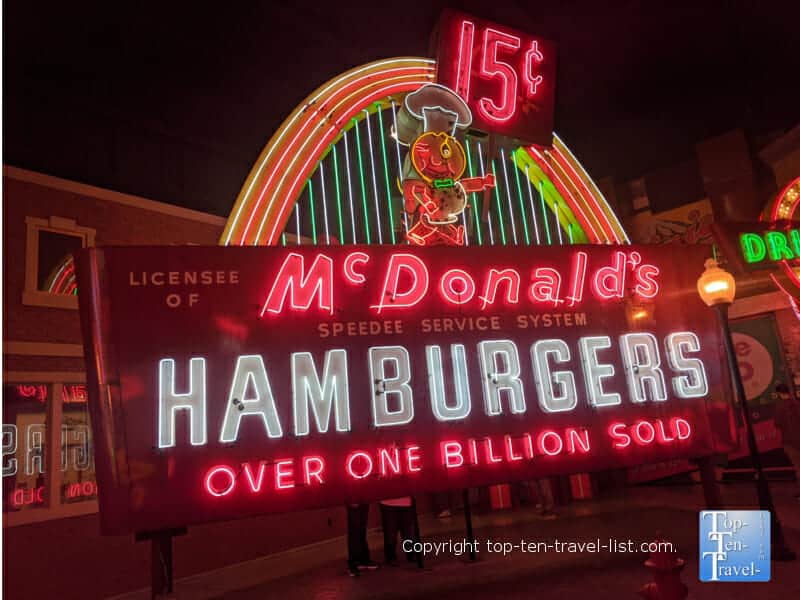
Single arch McDonald’s sign from Huntsville Alabama in the early 1960’s. McDonalds looks so boring and monotone today. I am sure you have seen the pictures of the colorful McDonalds in the 80’s vs. today’s grey sterile office looking buildings. Imagine how cool it looked in the past with this colorful sign!? Why are they taking the color out of everything today?
Being a Chicago native, I loved seeing this porcelain enamel Marshall Fields sign from 1955. To all Chicago locals it will always be Marshall Field and never Macy’s (it’s just not the same!). The full sign said ‘and Company,” however, due to size limitations it was shortened. On a side note, the first Marshall Fields opened in 1852 on Lake Street in Chicago.
Satellite Shopland – Sign from a shopping mall in Anaheim, CA during the Sputnik craze in the early 1960’s
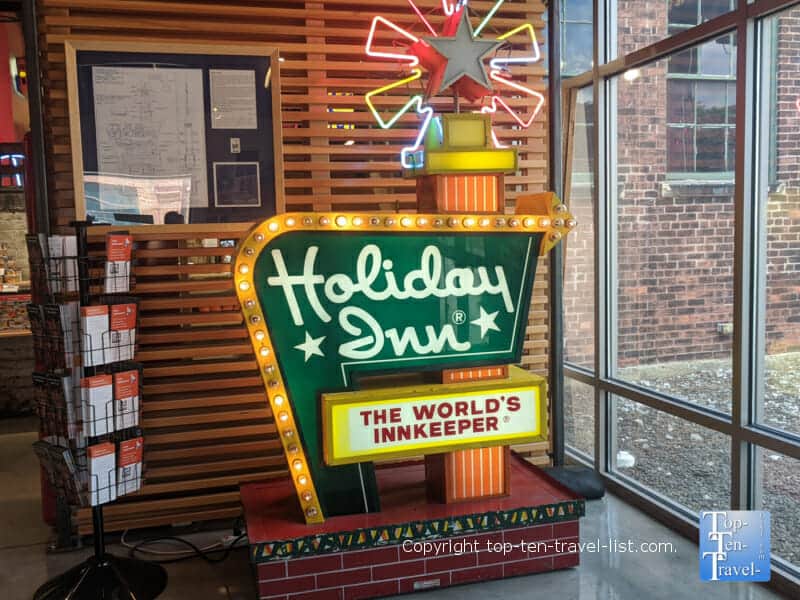
Holiday Inn sign from the 1960’s. It’s sad to see how much roadside motels have deteriorated in recent decades. In the mid-Century, they were reliable, family friendly properties conveniently located on major routes. These neon signs were often used to attract wearisome travelers driving at night.
Genie, 1960’s, carpet cleaning business in California
Admission and parking
Address: 1330 Monmouth Ave
Admission: $20 per adults ($10 for military & students, $15 seniors, children under 12 free). Pricing current as of 2026. Check the website for more details and special promotions. Discounts available for SNAP recipients.
Parking: Free.
Accessibility: The museum is all on one level and fully accessible. 2 manual wheelchairs are available at no cost on a first come, first served basis. Service animals are also welcome. Braille books available in several languages.
More to do: Here are some other attractions I recommend if you are a first timer looking for more great city activities.