Exploring the Beautiful South Rim of the Grand Canyon
Disclaimer: We are not paid to promote any restaurant, hotel, activity, product, or attraction. All opinions are subjective and based on our personal experience. Your experience may be different.
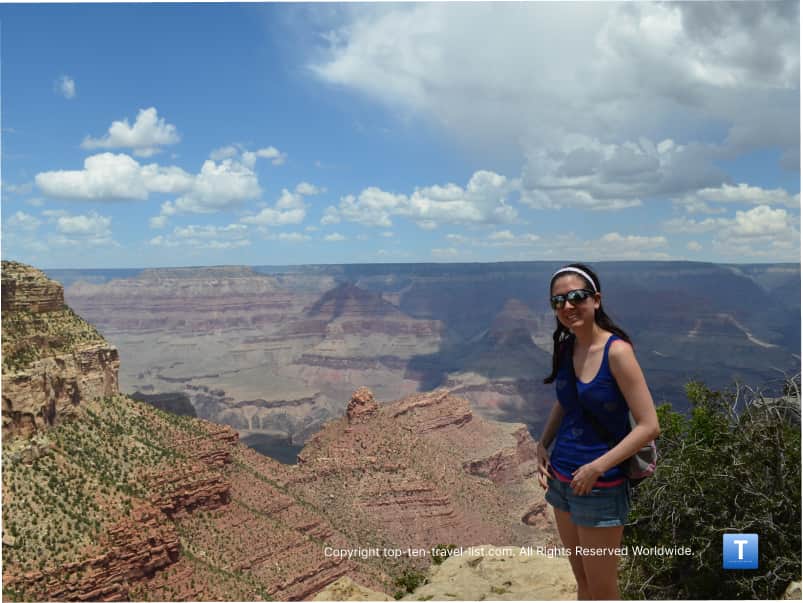
Living in Northern Arizona for several years, I had the unique opportunity to visit the Grand Canyon several times. As one of the Seven Natural Wonders of the World, I believe at least a quick stop should be on everyone’s bucket list. Anyone vacationing in Flagstaff should plan at least one day to explore the South Rim. It’s an easy hour and a half drive or you can opt for a historic train ride from Williams.
I have loved exploring all these bucket list worthy places in the Southwest since relocating to Flagstaff. It truly is the most amazing place in the country. I can’t imagine how much it would cost to fly out here separately to explore each place. And this is why I recommend a longer trip so you can check a few things off your must-see list in a single visit.
The amazing canyon is 1 mile deep, 18 miles wide, and 277 feet wide. Although the oldest rocks found at the bottom are approximately 2000 million years old, the canyon itself formed about 5-6 million years ago. You can read more about the history on the NPS site or better yet during your visit.
The North vs. South Rim
The Colorado River divides the Canyon into 2 separate rims. The South Rim is where most of the toursis head as it is open year-round and easier to get to. The North Rim is closed during the winter season due to snowy roads. The area may be open for day use depending on road conditions along Hwy 67, however, all food and lodging will be closed. Even though the distance across the Canyon is only 10 short miles, the driving distance between the 2 rims is 215 miles -5 hours!
Luckily, the South is the more scenic of the 2, more easily accessible, and home to more attractions. Don’t worry if you can’t plan a vacation to the North Rim due to the limited operating season. There isn’t as much to do here.
After multiple visits, I have organized a handy guide of South Rim attractions, lodging, transportation options, plus other helpful tips for a smooth visit.
Attraction Guide
From my experience, a single day visit is just not enough time to explore everything, however, you can see a lot if you arrive early enough. I recommend taking a look at my guide and picking a few options. Of course, if you are hiking, you will not have much time to do anything else. Also keep in mind that some activities like whitewater rafting and mule rides require advance booking (sometimes months ahead of time). I’ve yet to to book a smooth rafting trip but it looks like an amazing experience!
Grand Canyon Historic Village – Within this section of the park, you will find many historic landmarks including the Hopi House, the Bright Angel Lodge, Lookout Studio, the Grand Canyon Train Depot, El Tovar, Bucky O’Neils cabin, and the Red Horse cabin.
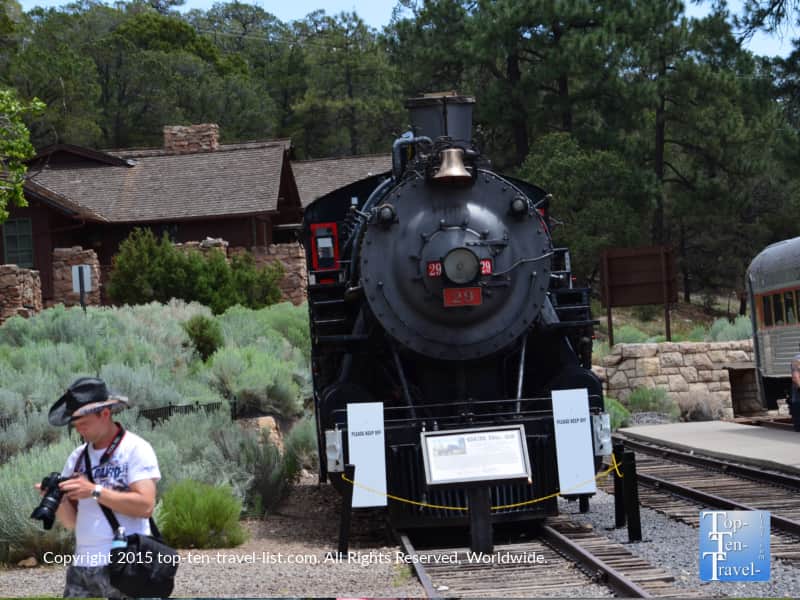
Many of these beautiful buildings are located on the National Register of Historic Places. Any history buff will want to check out the Bucky O’Neil cabin, built in the 1890’s, making it the oldest standing structure at the canyon. You will also find the Grand Canyon Railway Depot. Did you know that you can take a train ride from Williams to the Canyon. I took this ride once as visiting family members were really into trains. It was a fun one-time experience. The scenery was just ok, but the onboard entertainment consisted of a fun cowboy western type show.
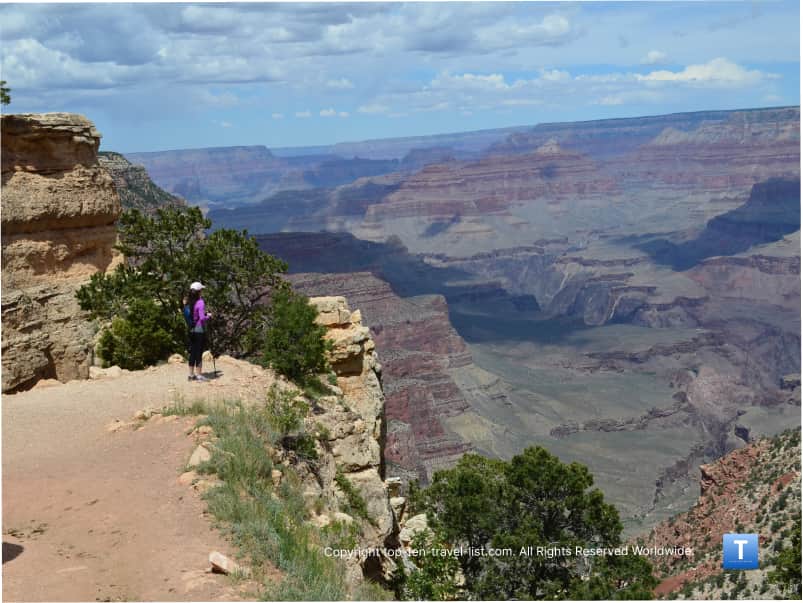
The Rim Trail – This a 13 mile hike from the South Kaibab trailhead to Hermit’s Rest. You can walk as little or as much as you like as free bus shuttles are conveniently located every mile or so along the route. Whenever you tire, just take the shuttle back. There are many wonderful scenic overlooks, several museums, and an interpretative Trail of Time to keep you busy along the way. There is definitely enough to do here alone on a single visit.
I would say this is the best option for first time visitors as you can learn more history and enjoy lots of great views. Be aware that those with a height phobia may get queasy. A visiting family member was pretty terrified even though this trail is a lot less scary than the hikes into the canyon. You have to purposely go out on lookouts to experience the steeper drops.
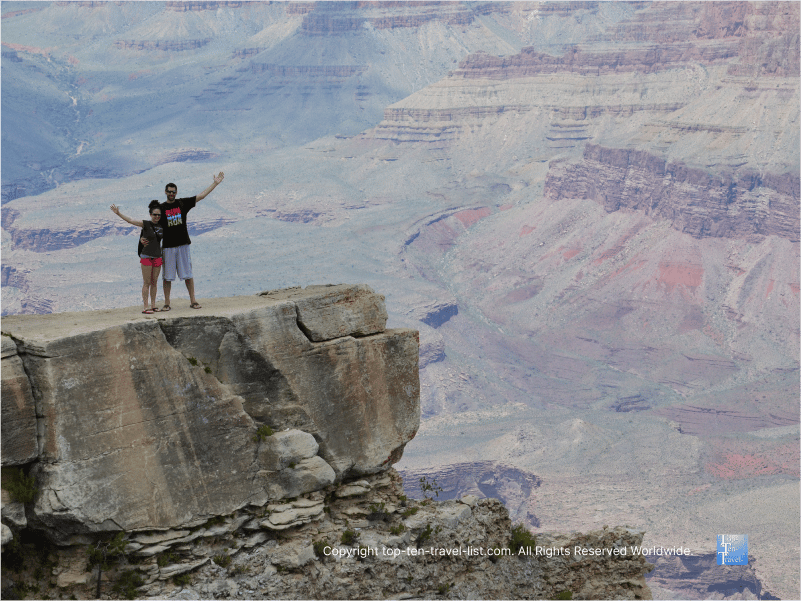
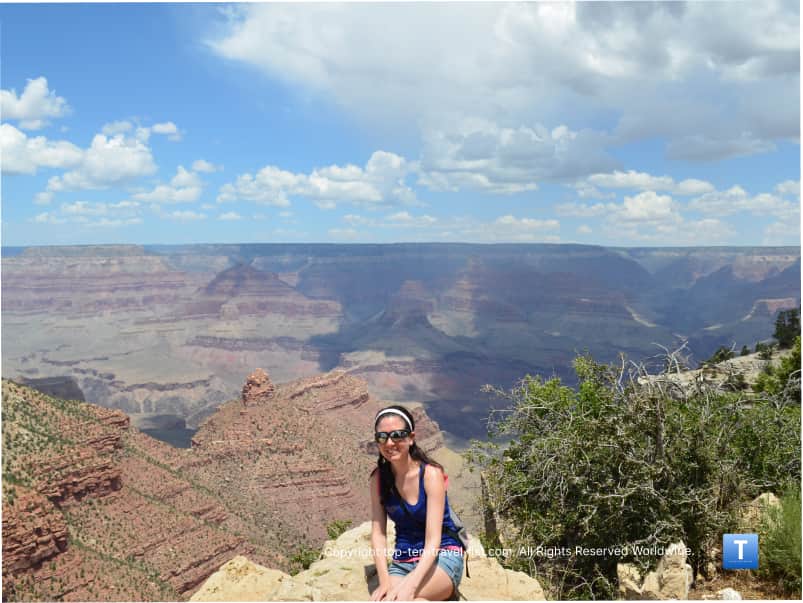
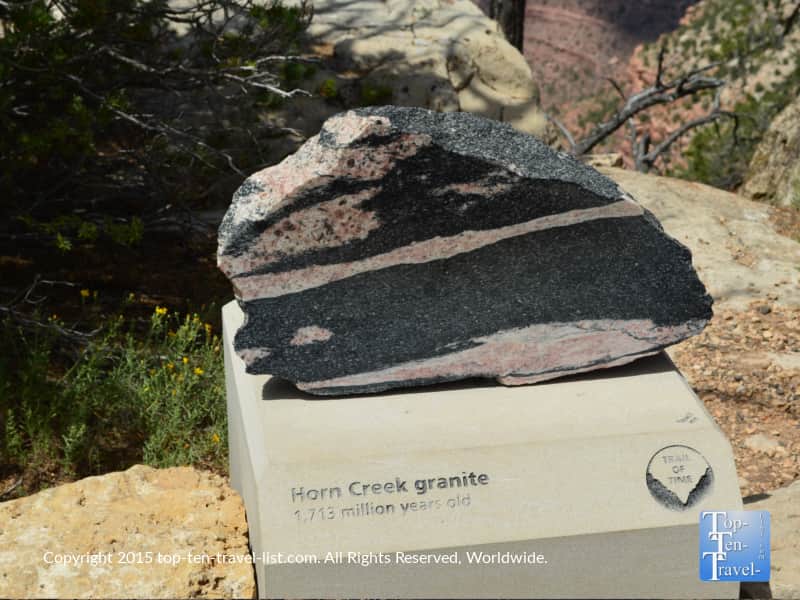
Trail of Time – This is a 1 mile interpretive trail, located between the Verkamp’s Visitor Center and the Museum of Geology on the Rim Trail. I liked seeing the million plus year old rocks and of course there are lots of great viewpoints here too.
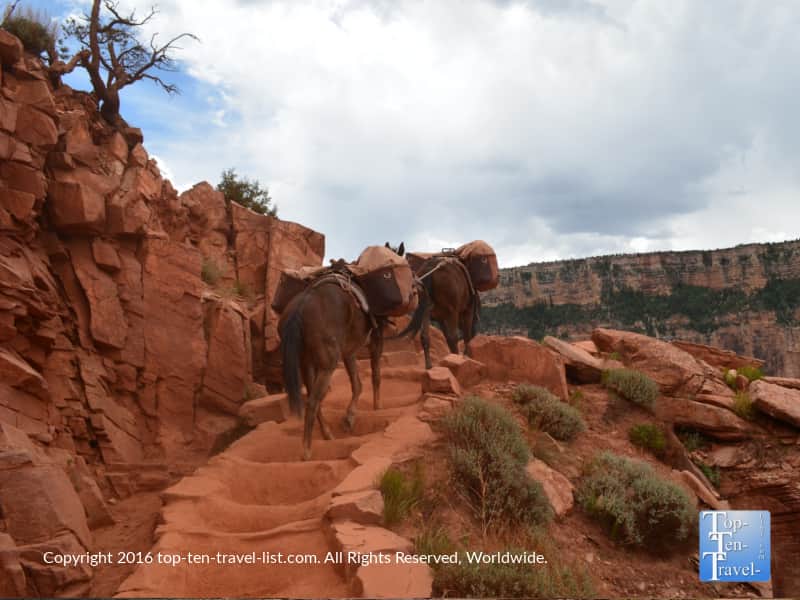
Mule rides – One of the most unique ways to explore the gorgeous scenery is by booking a mule ride, which will take you along the rim or down into the canyon. Some of these tours follow the same route as the hiking trails. When we hiked the Kaibab is was a bit scary because when you pass the mule groups, there is little space. I basically had to squeeze against the rock as they passed by.
While I prefer a more hands on experience like hiking, mule rides are a great alternative (that is unless you are scared of heights). I learned in a recent book I read (Over the Edge: Death at the Canyon) that there have been no mule deaths despite them walking so close to the edge! So the rides are pretty safe despite the scary drops offs and you relinquishing all control to your mule.
You can check the variety of mule rides available and definitely book far out as trips fill fast.
Helicopter tours – Maverick Tours offers 45 min tours which departs from the airport. Although pricey at over 400 bucks per person, it’s a small price to pay for a once-in-a-lifetime experience.
Whitewater Rafting – I’ve only been whitewater rafting once (in the Smoky Mountains), but it was an amazing experience. I can’t image how incredible it would be to take a trip down the canyon. Single-21 day adventure trips are available, many of which include hiking and camping. Learn more about the variety of canyon rafting trips available.
Lookout Studio – This is a great gift shop (I found several great books here) and an amazing overlook. If you are severely limited on time, it’s one of the best easily accessible lookouts.
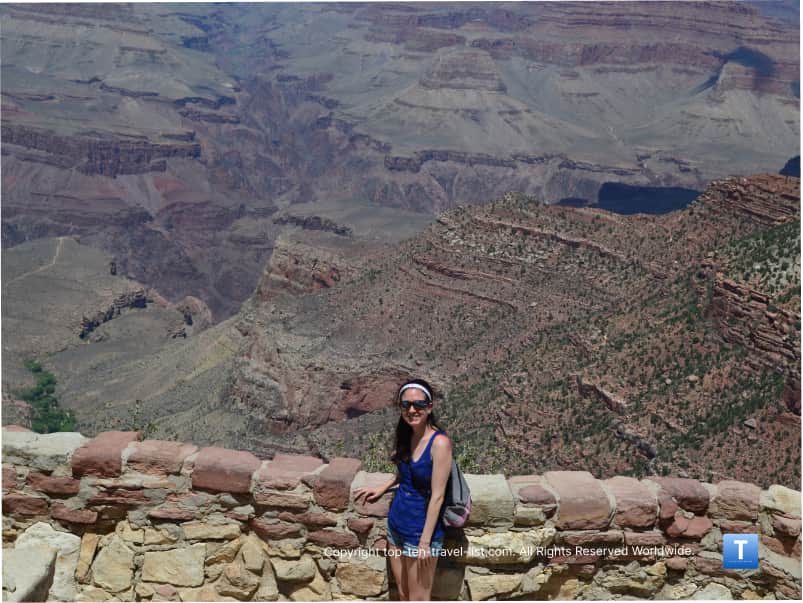
Yavapai Point – This observation area offers fantastic views of the river.
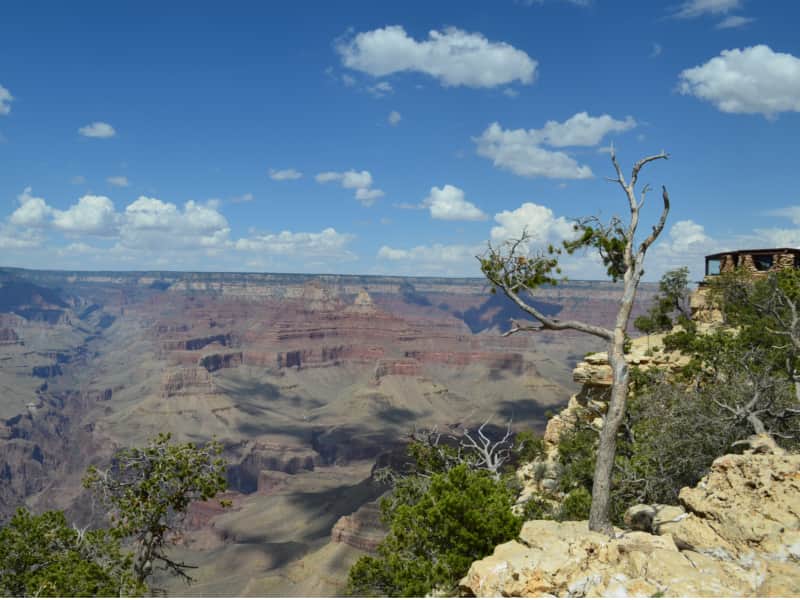
Geology Museum – You can learn about the history of the canyon, and shop for unique souvenirs here.
Desert Point View – At this scenic overlook, you can climb to the top of a 70 ft watchtower and take in fabulous overviews of the entire area.
Take a scenic drive – You can drive Hermit’s Rest (which follows a 7 mile course from the west end of the Grand Canyon Village to Hermit’s Rest) from December-February only. Another option is the 25 mile scenic Desert View Drive, located east of the Grand Canyon Village.
Ranger programs – The park offers a variety of free programs. Examples of events I’ve seen recently include: guided hikes into the canyon, fossil discovery walks, and condor talks.
As you can see, there is almost too much to do. I’ve taken several trips and even have a National Parks Pass and I feel I’ve only seen a tiny bit. It is not possible to explore every single sight on a 1 day visit.
If you have a flexible schedule, a guided hike with a ranger is a great idea. And, if you are limited on time, a walk along the Rim trail will still allow you to take some great photos and learn some history. Lookout Studio or Mather Point are 2 of my favorite overlooks on the Rim trail I recommend checking out.
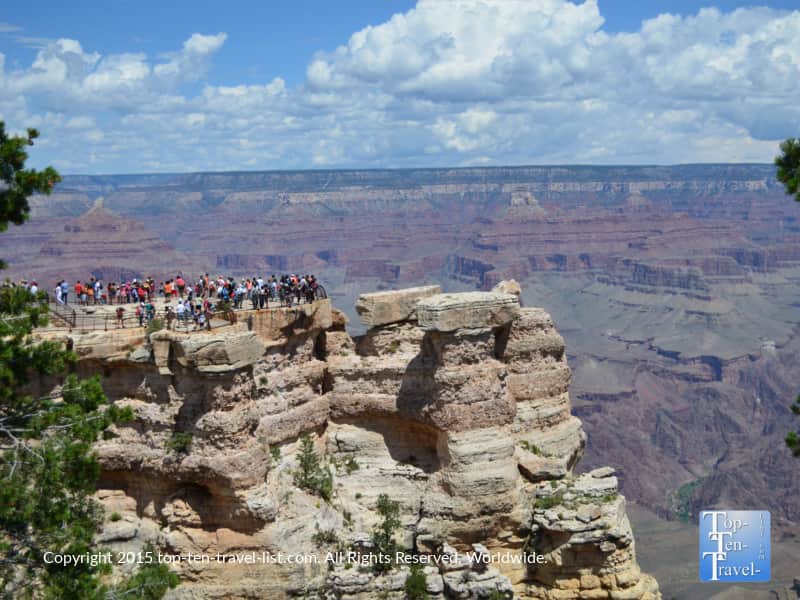
Hiking the Canyon
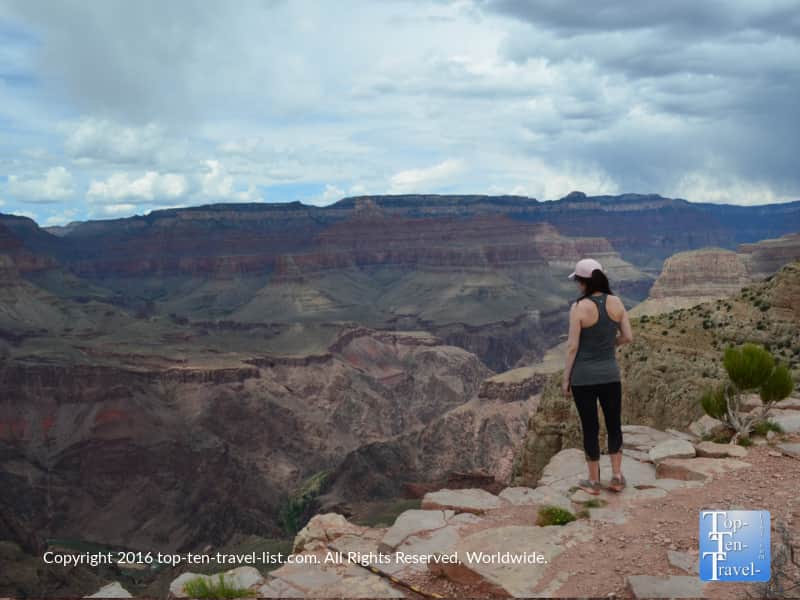
If you have the fitness ability, I highly recommend a hike into the canyon. My uncle, a longtime Phoenix resident, told me a long time ago about his experience hiking here. At the time, I had no idea what he was talking about and didn’t even know you could hike here. After relocating to Flagstaff several years later, it was #1 on my bucket list.
Trails range from easy to arduous treks only for the most advanced hikers. The 13 mile Rim Trail is one of the most popular due to the great views and relatively easy nature. This is my pick for first time visitors as it is easy and you can go out to your comfort level. The 2 main trails that travel into the canyon are the Bright Angel trail and the Kaibab. I recommend looking into the Ranger Programs seasonal listing of events for free guided hikes throughout the year.
I had an amazing experience hiking the Kaibab. This is an extremely steep hike into the heart of the canyon not for the faint of heart or anyone afraid of heights. There is no water along the way, so wear a camelbak or bring plenty of water bottles.
You have the choice of taking a 1.8 mile round-trip journey to Ooh Aah Point, a 3 mile trip to Cedar Ridge, or a 6 mile trip to Skeleton Point for views of the river. Plan your hike for early in the morning and do not complete a longer hike during the hot summer months. It’s best to hike in the cooler fall or spring months. If you are up for a challenge, this is one of my top hiking experiences to date: it’s so amazing.
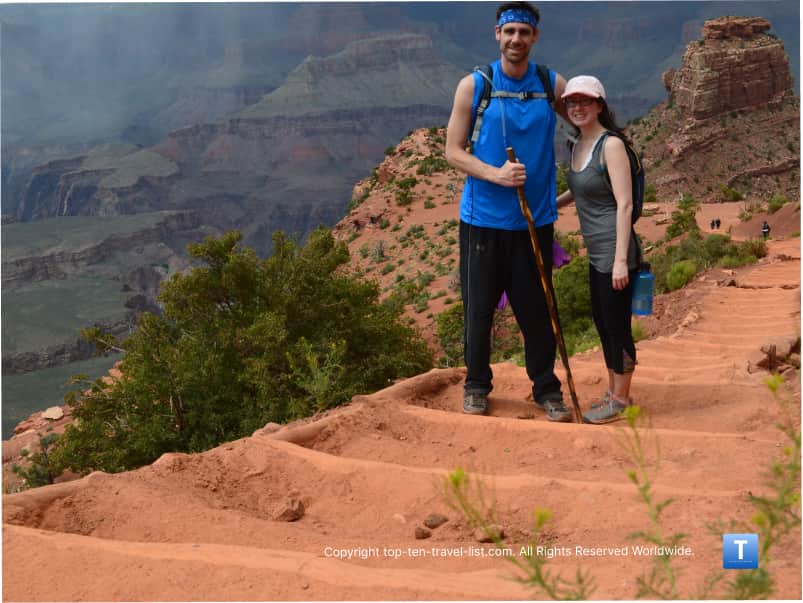
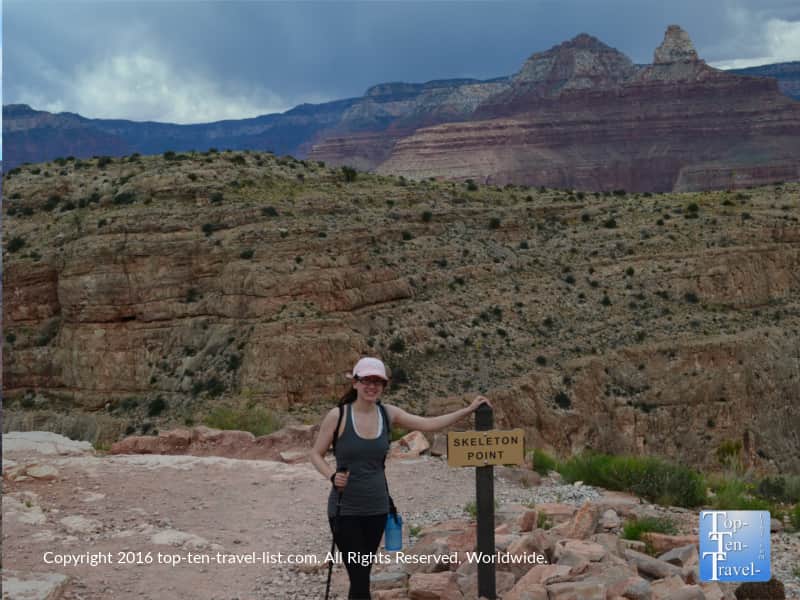
I haven’t hiked it yet, but The Bright Angel trail is another option. This is a more challenging trail which is very steep and 9.5 miles in total length if you complete the entire trek. Like Kaibab, there are various turn around points. Despite being so steep and difficult, it is considered one of the safest trails due to the presence of a ranger station mid way and several drinking stations along the way.
Hermit’s Trail – An unmaintained, steep, difficult trail for the more advanced hiker. You can hike a 5 mile round trip journey to Santa Maria Spring or a 7 mile journey to Dripping Springs. The trailhead must be accessed via a shuttle bus ride to Hermit’s Rest.
The Grandview Trail – This is an extremely steep trail for advanced hikers only. It begins at Grandview Point along Desert View Drive. Here, you can take the 2.2 mile round trip hike to Coconino Saddle or the 6.4 mile trail to Horseshoe Mesa. Rangers recommend going no further than Coconino during the summer months due to the rougher conditions thereafter.
There’s no water so bring plenty! Be sure to read some of my desert hiking safety tips before heading out. Also keep in mind that altitude sickness is a thing and it isn’t fun. Because the air is thinner, you have less oxygen available. I had a difficult time the first few days moving here and it took a while to get my fitness back up. Please read up on altitude safety tips before embarking on any hike here.
Getting around
First off, definitely plan on getting here as early as possible so you have more time. If you only have a day, you will want to free up as much time as possible by taking the free shuttle around to different attractions and scenic viewpoints.
Although the trails are nice, hiking takes up lot of time. When you add in the extra energy needed to walk in the higher elevation, you will need to plan even more time. I recommend everyone start with the Rim trail and plan a hike on a separate day as it will take up almost all of your energy.
The shuttle bus connects various lodges, restaurants, shops, visitor centers, and scenic overlooks. Buses leave every 15-30 minutes. Along the Rim Trail, you will find a bus stop every mile or so you can take a ride when you tire out. View the full shuttle bus schedule to plan your stops.
Wildlife
In addition to endless bird watching opportunities, you may just get lucky enough to see some larger species during your visit. Elk are probably the most common, and we were lucky enough to see 2 while riding a shuttle (unfortunately due to the crowds, we were unable to snap a photo quickly enough!).
Other animals occasionally seen include: mountain lions, California condors, bighorn sheep, wild turkeys, and coyotes. As at all parks, keep your distance, never feed animals, and brush up on wildlife safety tips. Surprisingly, we didn’t see any wildlife on our hike despite it being complete desolate (we were one of about 5 hikers who went to Skeleton). There was a monsoon on the way so maybe they were hiding.
A High Desert Four Season Climate
The park is open 365 days a year. You need to be prepared for drastic differences in temperatures, humidity, and precipitation throughout the year. Each season has its’ advantages and disadvantages. The summer season is more crowded and temperatures can get pretty warm, especially at the lower level if you plan on hiking. However, you do not have to worry about any snow or road closures.
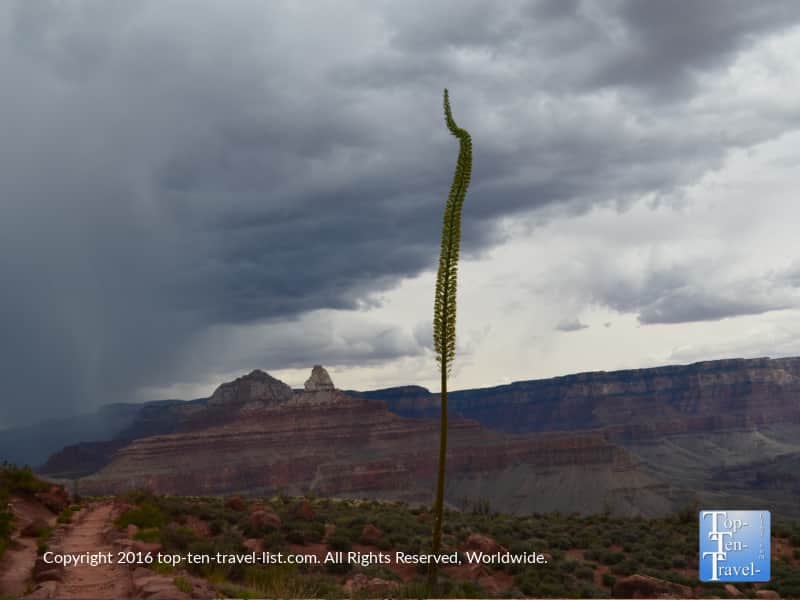
However, you do have to be aware of monsoons, which happen frequently from June-August. These intense storms often come on suddenly even when the weather looks clear in the morning. I have been caught in 2 monsoons even though it was sunny beforehand. One time, we were walking around the historic village so we ran into the El Tovar for lunch until the storm passed.
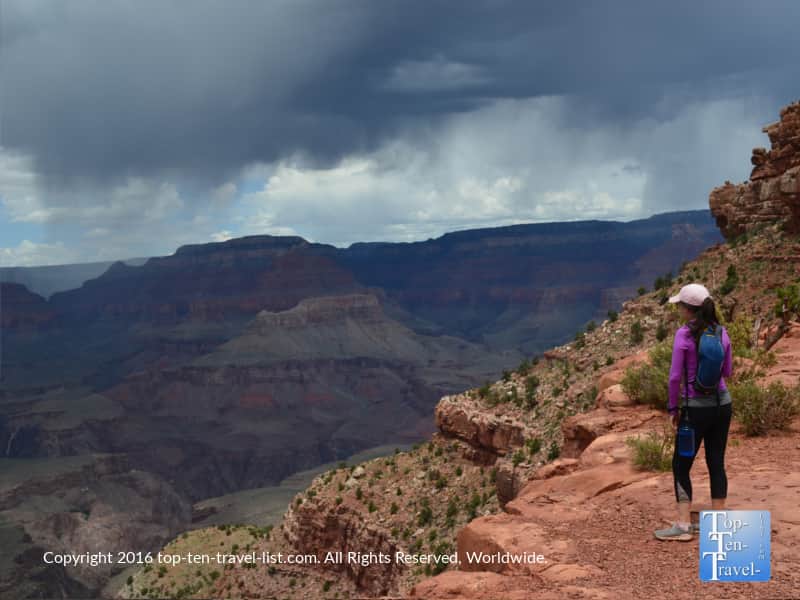
The next time we were hiking the Kaibab. It was a bit scary being the only one on the trail with a monster storm on the way. As you can see in my pic, the skies turned pretty dark. Even scarier, there have been a number of lighting deaths (you can read more about these in the book I recommended earlier, Over the Edge).
What weather can you expect
At 7000 feet elevation, the weather can vary dramatically over the course of the year. Unlike Southern Arizona, Northern Arizona sees four distinct seasons. Summer temperatures are usually in the 80’s, although it can get up into the 100’s near Phantom Ranch. It also can be much colder in the morning and we often put a sweater on and eventually take it off later in the day. Afternoon storms are common during monsoon season (July-September). Lows can drop into the 40’s and 50’s.
Fall temperatures are typically in the 50’s-60’s or 70’s-80’s along the river. This is my preferred daytime temp for hiking. Along the rim, night temps can fall below freezing. It’s generally dry with little rain during this time. Be prepared for sudden dramatic weather changes (such as an early snowstorm). I’ve experienced random snow, monsoons, and about everything else since moving to the region.
In the winter, you need to be on the lookout for road closures due to heavy snow. I recommend checking the park website for alerts prior to your visit. Snow typically begins in November and can last until April. The real cold begins to arrive by December, with afternoon highs in the 40’s and lows in the teens. Average snow is 50-100 inches so this isn’t the time to hike. As detailed in Over the Edge, some scary deaths have occurred during the cold months. I would love to photography the canyon with snow but it’s harder to access this time of year and plan before it melts.
Spring temps vary from the 50’s-60’s early in the season to 70’s-80’s. Low temps are typically in the 40’s-50’s. Snow is still possible and the area can see strong winds, although rain isn’t common. This is still an enjoyable time to hike in my opinion.
Read more about the yearly temperature patterns and road closures on the National Park website’s Weather and Road Conditions page.
- 1
- 2