Diana’s Dare: The Hardest Hike at Indiana Dunes National Park
Disclaimer: We are not paid to promote any restaurant, hotel, activity, product, or attraction. All opinions are subjective and based on our personal experience. Your experience may be different.
Indiana Dunes is one of the country’s newest national parks, becoming the 61st addition in February of 2019. Honestly, I didn’t even know it was a national park until I received a national park challenge magnet map as a gift. From 1966-2019, it was simply a National Lakeshore. I am on a mission to visit all 63 parks. As of 2024, Mike and I had checked 14 national parks off our bucket list. As we are currently residing in the Cleveland metro, we decided to check number 15 off our list since the Dunes is an easy 4.5 hour roadtrip from our current location. We are always up for a challenge, so we decided Diana’s Dare, the hardest and steepest trail in the park, needed to be on our itinerary.
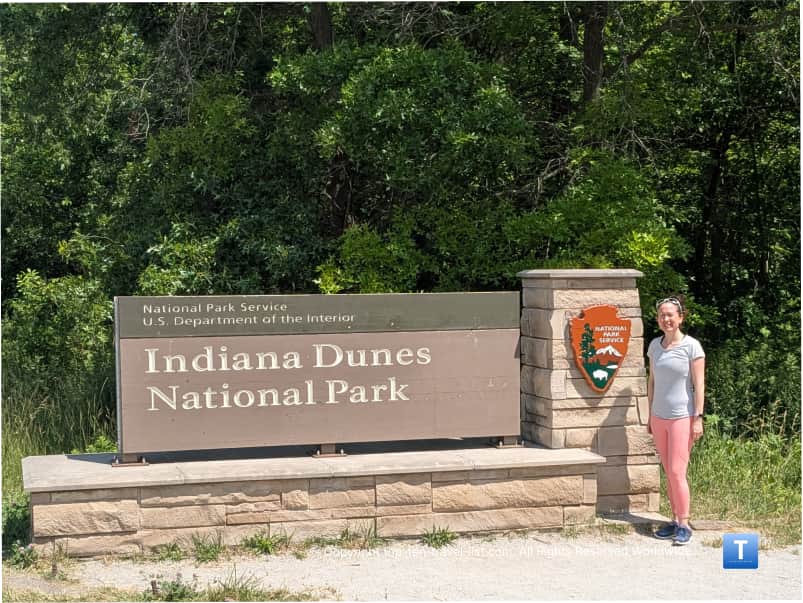
Who is Diana of the Dunes?
Diana’s dare hike is named after Alice Mabel Grey who lived in the dunes for 9 years in the early 1900’s. Despite being a University of Chicago graduate, Alice chose to live in the dunes. Because of her unconventional lifestyle, the Chicago native was referred to as “Diana of the Dunes.” You can read more about her story while completing the challenge or take a look at this NPS article for more historical details.
A Hard Climb that Rewards
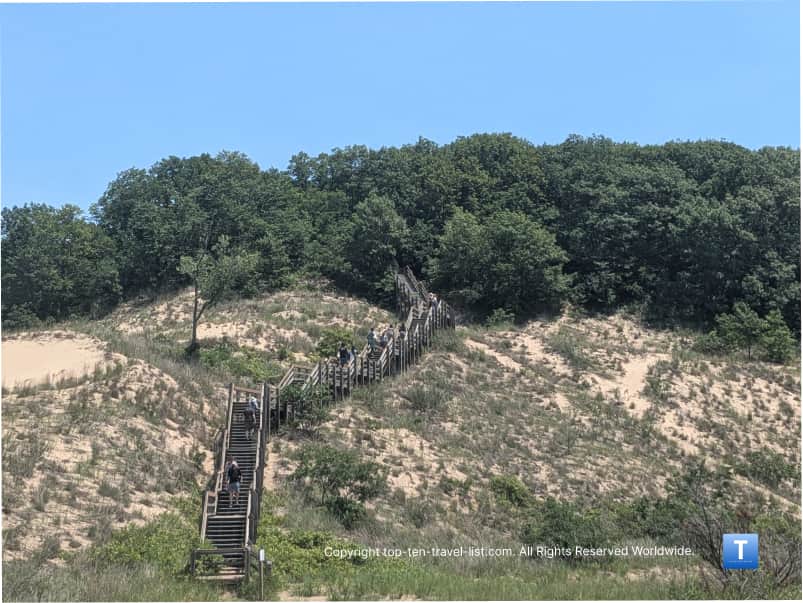
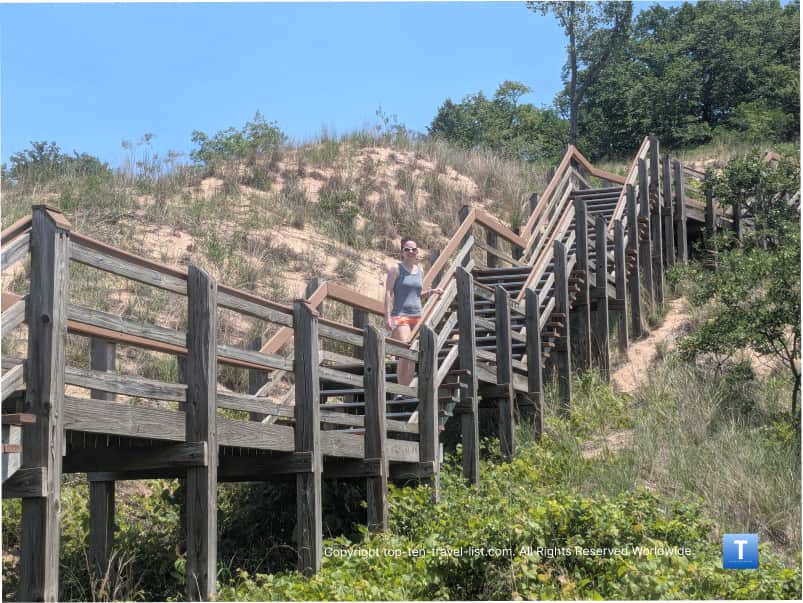
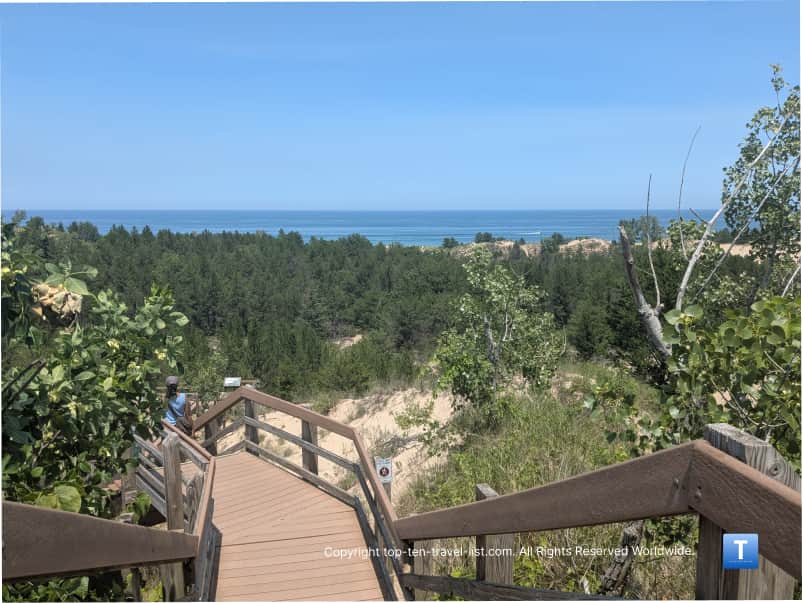
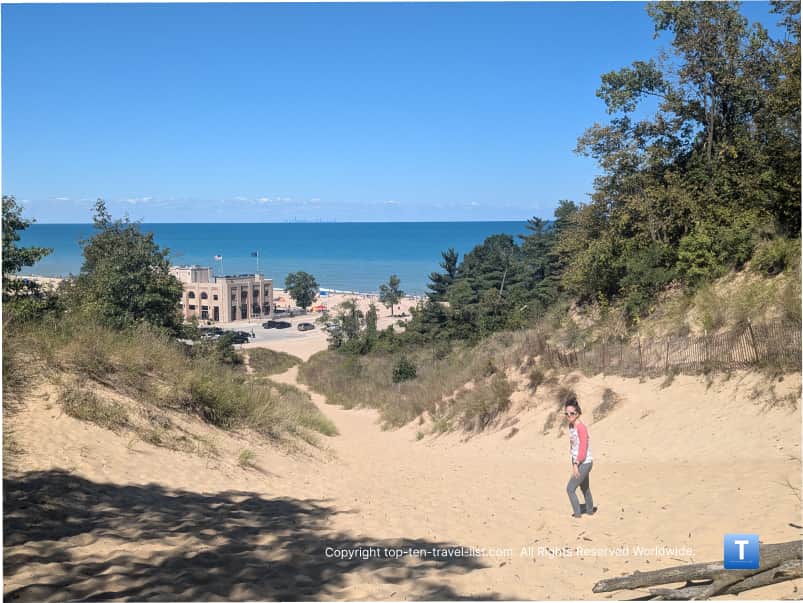
This newish hike opened fairly recently in 2021. It is beautiful and well marked. This hike involves a challenging 270 step climb up a staircase. While it is a workout, I didn’t find it quite as challenging as the Three Dunes Challenge at the state park. I find climbing stairs much easier than trekking up and down sand dunes. However, some with bad knees or joint problems may find the stairs more challenging. The first portion of the trail starts with the stair climb, so you get the hard part over with right away. Once you reach the top of the staircase, you will be rewarded with a great view of Lake Michigan and Chicago. I thought the beautiful scenery was a great reward for the moderate climb.
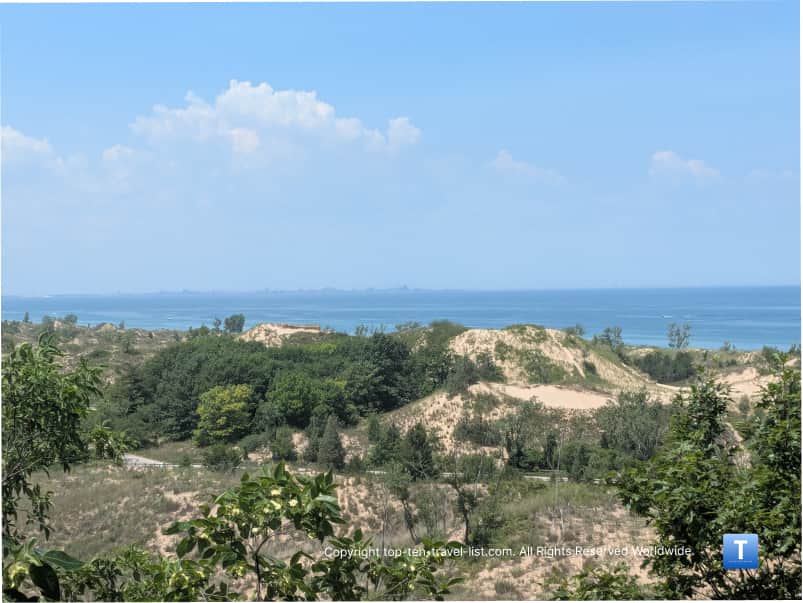
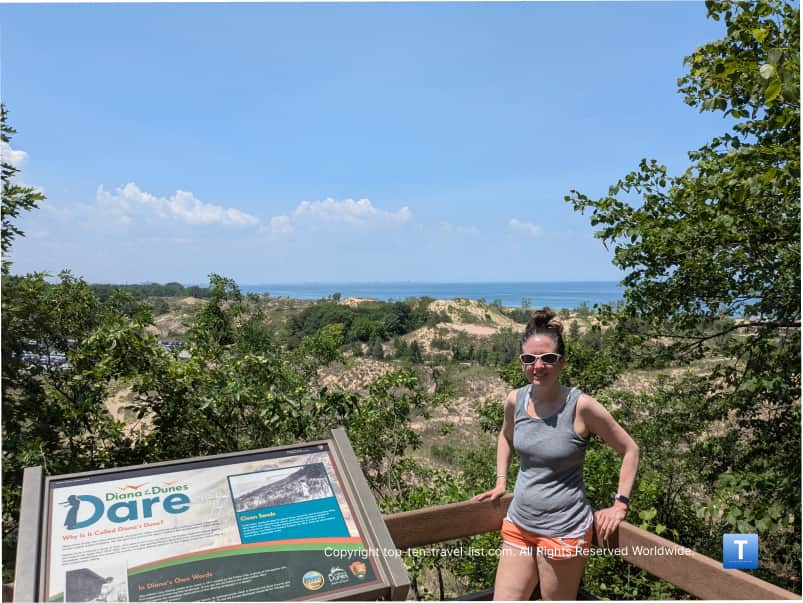
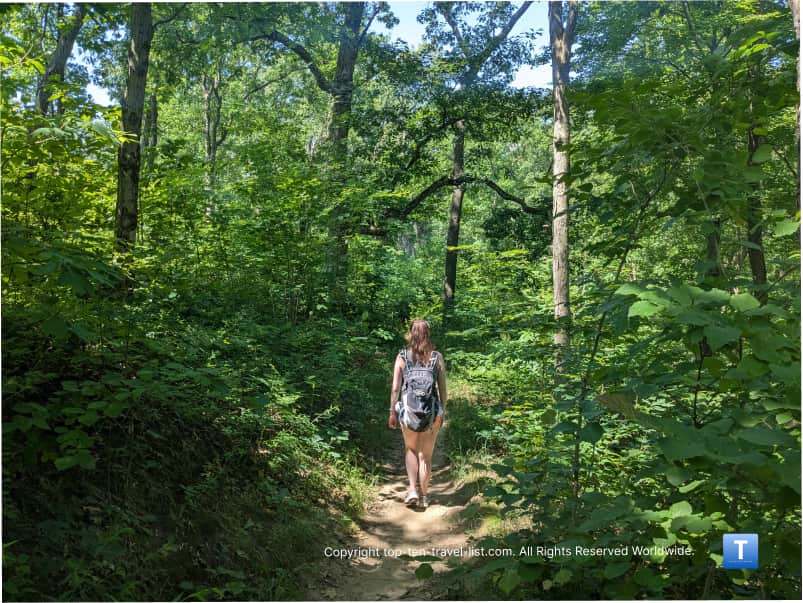
The next portion of the trail takes you down a staircase through a nice shady forest. The temps felt at least 15 degrees cooler, which was a relief after climbing the stairs in the direct sunlight. You can birdwatch and get back to nature, and most of all cool down before coming out into the hot sun again. Unfortunately, we hiked mid afternoon on a hot & humid 85 degree day which I do not recommend. This is the only time we could fit the hike into our schedule, but I would like to come back and hike under better conditions, say in the fall. We did take advantage of cooling down in beautiful West Beach post-hike.
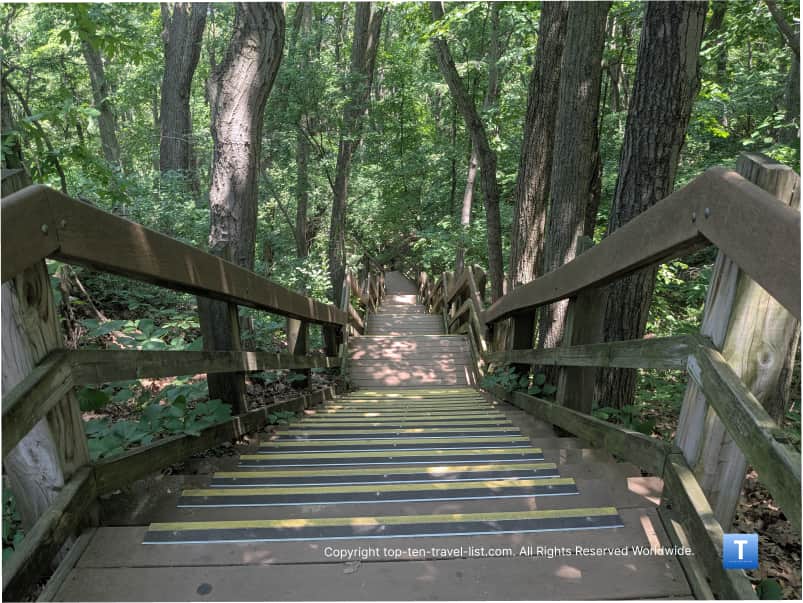
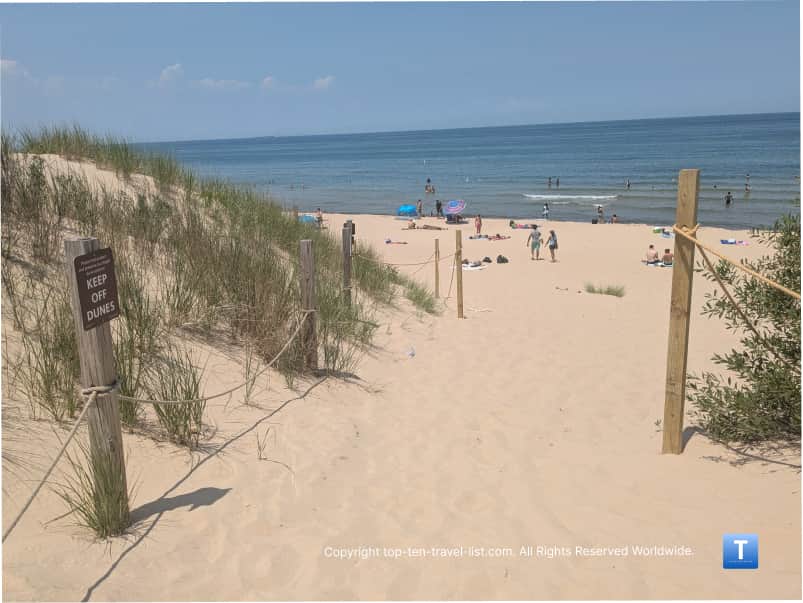
Next, you will walk along a boardwalk trail as you pass a jack pine forest. Finally, you will climb up a small sand dune before landing on West Beach. This is was the most miserable part of the trail as the bright sun was beating down on us. Also, it’s hard to trek through sand, when you are already overheated. When you get to the beach, you will turn left and head back to the pavillion/parking lot. From here, you can walk back to your car, change clothes, pick up a concession snack, or enjoy the beach for a while. Mike and I brought our swimsuits with and enjoyed a long afternoon at the beach post-hike. At the visitor center, you can pick up a free sticker to show off that you completed the Diana Challenge.
Visit the NPS home page to learn more about the dunes ecosystem.
Where does this hike start?
The climb begins at West Beach located at: 376 N. County Line Rd., Gary, IN 46403.
There is a $25 fee to access the national park. Your pass is good for 7 days. I recommend planning at least a weekend trip if you plan on hiking multiple trails and relaxing on the beaches.
Amenities at West Beach include: showers, rinsing stations, a small snack stand (the fries and cheesesticks were actually delicious), restrooms, and water fountains.
What else to do?
WIthin the park system, there are more than 50 miles of trails, of varying distance and difficulty. You can visit the NPS website for full details.
The Dune Ridge hike is a nice short (0.7 mile) trek through diverse habitat. Most of this trail was pretty shady which made it tolerable for the summer season. I would not recommend any longer hikes this time of year.
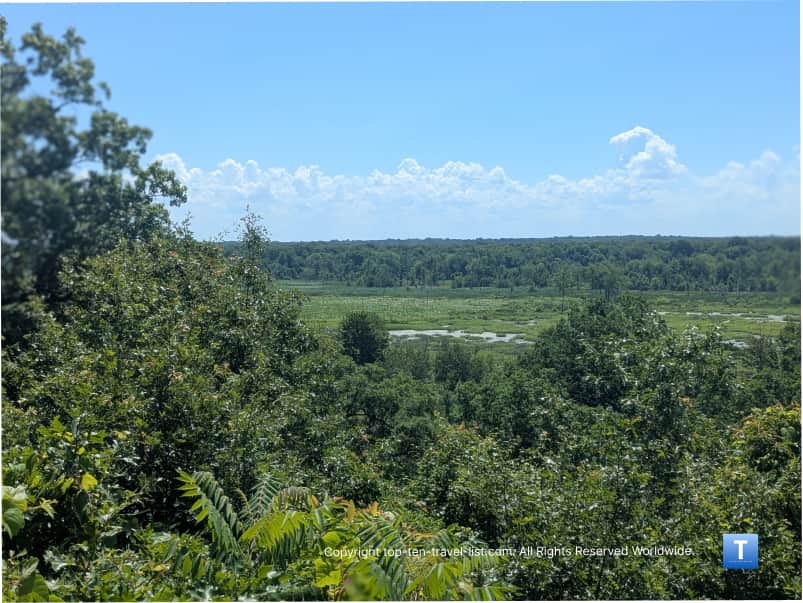
I also recommend swimming at beautiful West Beach. Indiana Dunes beaches are really nice. I use to come here occasionally during the summers as a kid (I am a Chicago native), but forgot how beautiful they are. Both the state & national park beaches are super clean, with white sand and beautiful clean water. Let’s just say, the beaches surprised me in a good way. As someone who is hesitant to swim in most lakes, I had no problem swimming here. Or maybe I was just so overheated from the Diana’s dare!
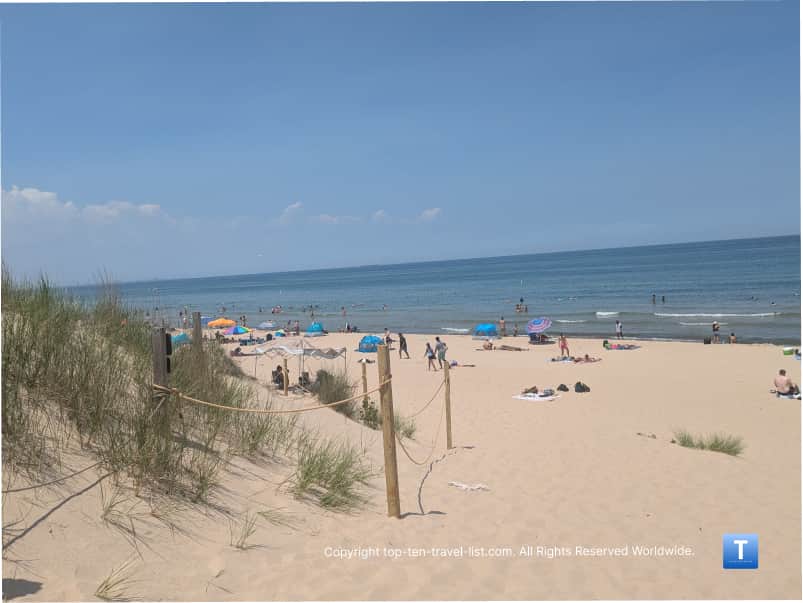
Porter Beach is a nice quieter alternative if you want to avoid the big crowds at West Beach. Note that the sand is incredibly hot to the touch. I couldn’t take my shoes off until I was just a step or 2 from the water.
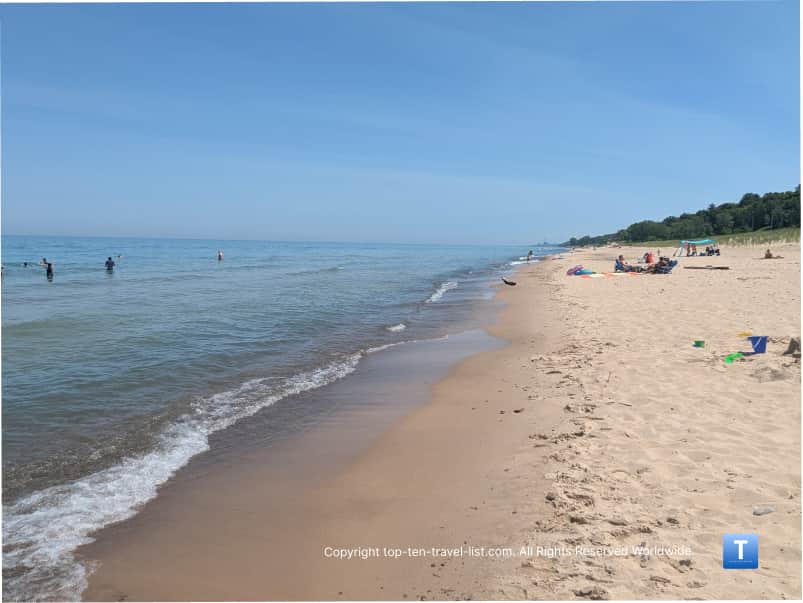
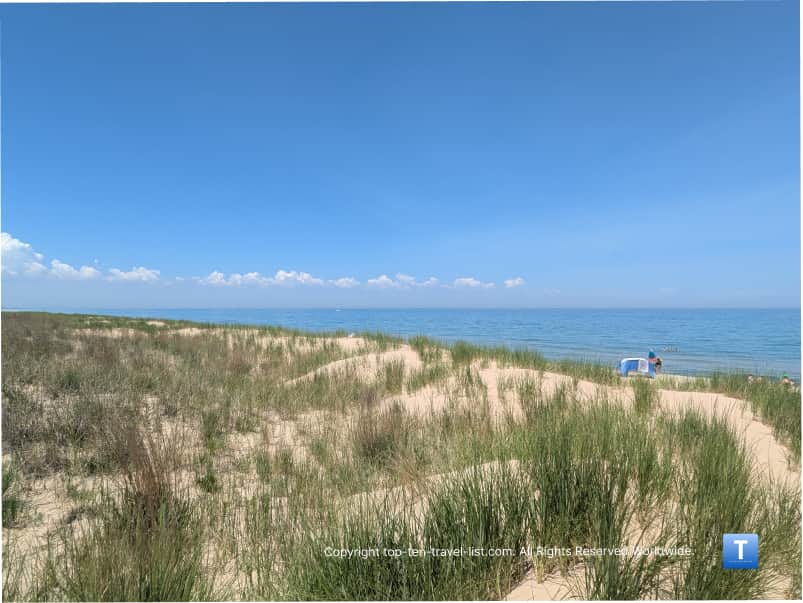
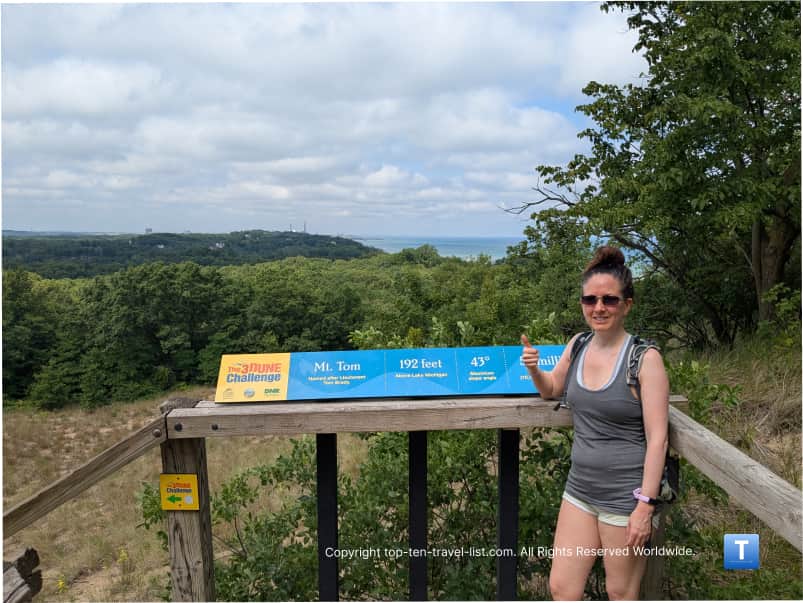
I also recommend visiting Indiana Dunes State Park while you are in the region. Unfortunately, there is a separate admission fee ($12 for non locals $7 for locals). I loved challenging myself to the 3 Dunes Climb (starts at the state park nature center). Also, there is a huge sand dune known as Devil’s Slide that starts right at the beach. Indiana Dunes State Beach is definitely the most beautiful in the area. The sand is so clean, soft, and white. And there is lots of space to sunbathe or play in the sand. Best of all, on a clear day you can see the Chicago skyline.
Where to stay?
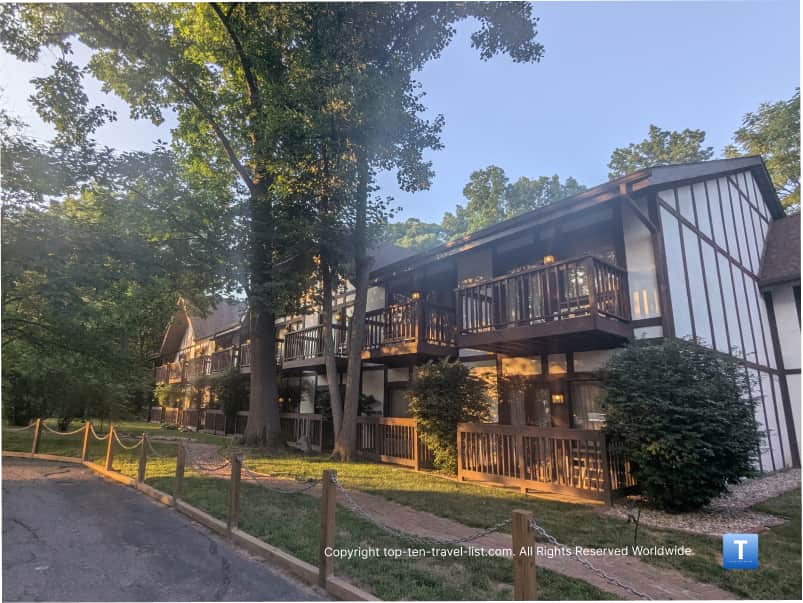
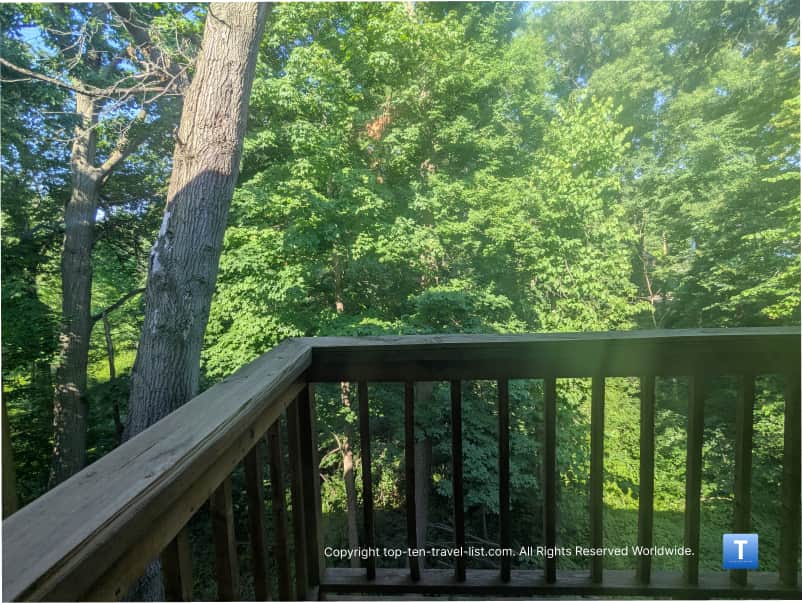
Mike and I found this quaint little inn called Spring House. I really loved the quiet setting, the beautiful antiques, and all the trees surrounding the property. It was affordable and the rooms were spacious for the price. There is a small breakfast spread each morning and it is walkable to an Uno’s (their pizza isn’t too bad for a chain – I haven’t seen one in forever!) and most important, it is located within an easy drive to both the national and state parks.